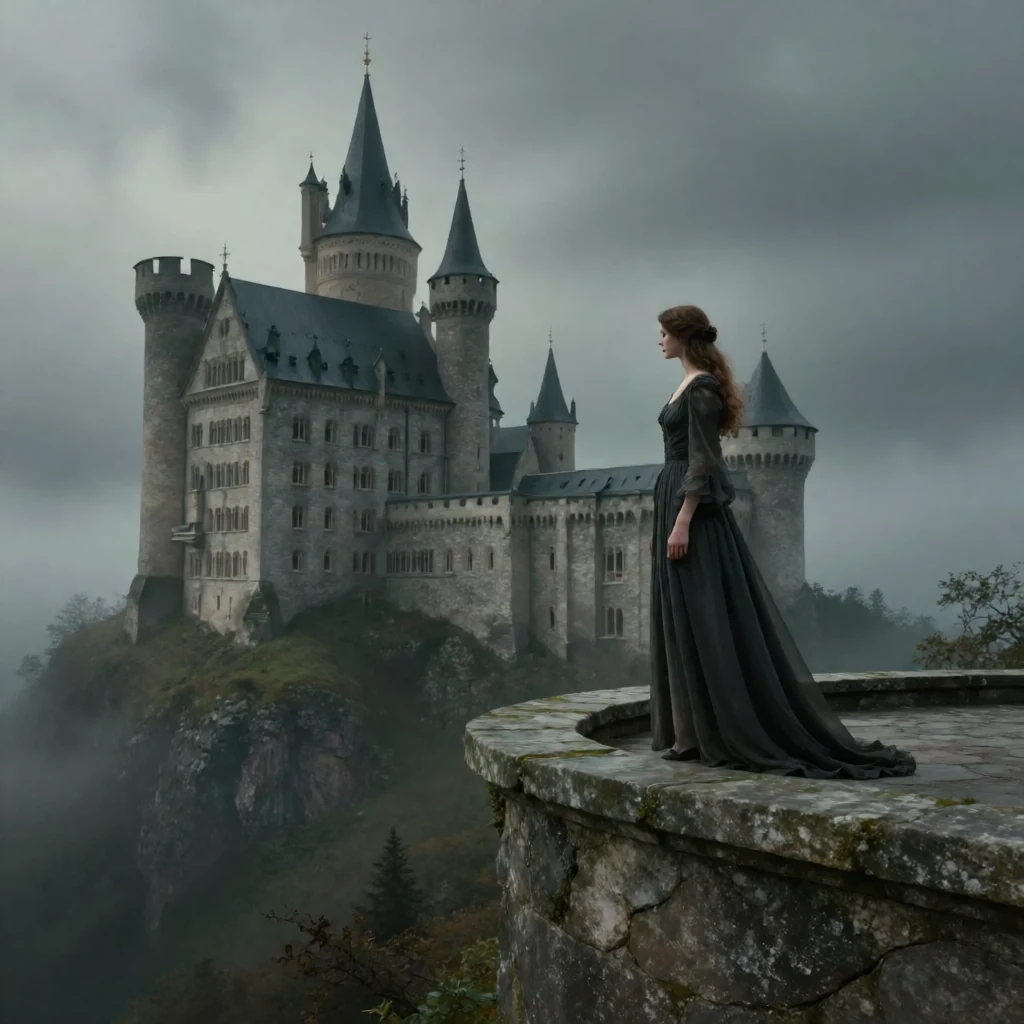
The Minstrel’s Ode to Nature’s Charms
An epigraph from “The Minstrel” celebrates nature’s boundless charms—the woodland, shore, groves, fields, morning light, evening song, mountain shelter, and heaven’s magnificence—asking how one could renounce such beauty and hope to be forgiven, and promising that these charms will bring eternal health, love, gentleness, and joy.
St. Aubert’s Scenic Pyrenees Detour
St. Aubert deliberately chooses a longer, more winding route over the Pyrenees rather than the direct road along their feet, seeking more extensive views and greater variety of romantic scenery. The travellers proceed on their journey, ascending the heights.
Farewell to M. Barreaux
St. Aubert turns slightly out of his way to bid farewell to M. Barreaux, whom he finds botanizing in the woods near his château. Barreaux expresses unusual concern at the purpose of the visit, and they part with mutual regret. Barreaux remarks that nothing but the pleasure of accompanying St. Aubert could tempt him from retirement, and that he will await his return with impatience.
Melancholy Farewell to the Château
As they ascend the heights, St. Aubert repeatedly looks back at the château in the plain below, overwhelmed by tender images and the melancholy thought that he will never return. He continues gazing until distance blurs his home into the general landscape. Both he and Emily remain sunk in musing silence for several leagues, from which melancholy reverie Emily is the first to awaken.
Emily’s Awe at the Mountain Landscape
Emily’s young fancy yields to delight at the grandeur around her. The road descends into glens confined by stupendous walls of grey, barren rock fringed with shrubs, where wild goats browse. It then leads to lofty cliffs offering magnificent landscape views.
Panoramic View of the Southern Plains
Emily cannot contain her transport as she looks over pine forests upon vast plains enriched with woods, towns, vines, and plantations of almonds, palms, and olives stretching until they merge harmoniously into the horizon. Through this glorious scene the majestic Garonne winds from its Pyrenean source toward the Bay of Biscay.
Rest at the Cliffside Spring
The travellers reach a cliff-top summit bright with palm trees, offering shade and a fresh spring that tumbles from rock to rock. This pleasant spot is chosen for rest and a meal; the mules are unharnessed to browse on the savoury herbs.
St. Aubert’s Grief for His Late Wife
Seated beneath the palms, St. Aubert points out geographical features to Emily, but suddenly falls silent and thoughtful, with tears swelling in his eyes. The scene resembles a favourite one of the late Madame St. Aubert near the fishing-house; both father and daughter realize she will never again open her eyes upon this world. St. Aubert recalls the last visit there with his wife and his presaging thoughts, now realized. He abruptly walks away to a private spot to grieve, then returns with recovered serenity, presses Emily’s hand in silence, and asks the muleteer about a mountain road toward Rousillon.
Detour Towards Rousillon
The muleteer Michael, though uncertain of the mountain roads, calculates they could reach a hamlet before evening if they take a route sloping more southward toward Rousillon. St. Aubert, who does not wish to travel after sunset, decides on the latter course. After the meal, Michael pays homage to a roadside cross before driving recklessly onward.
Perilous Valley Descent
Michael rattles at full gallop along the edge of a precipice, terrifying Emily almost to faint. St. Aubert, fearing greater danger from a sudden stop, trusts his fate to the mules, which demonstrate more discretion than their master by carrying the travellers safely into the valley and stopping at the edge of a rivulet.
Rugged Mountain Valley Scenery
The travellers enter a narrow valley screened by piled rocks, partly scorched by lightning, partly green with ivy. Barrenness is interrupted by larch and cedar branches. No living creature appears except lizards scrambling on dangerous rock points. The scene resembles one Salvator would have painted; St. Aubert keeps his hand on his travelling arms, almost expecting banditti to emerge.
The original text of this work is in the public domain. This page offers a compressed quick-read summary for educational purposes.