Blanche’s Chamber
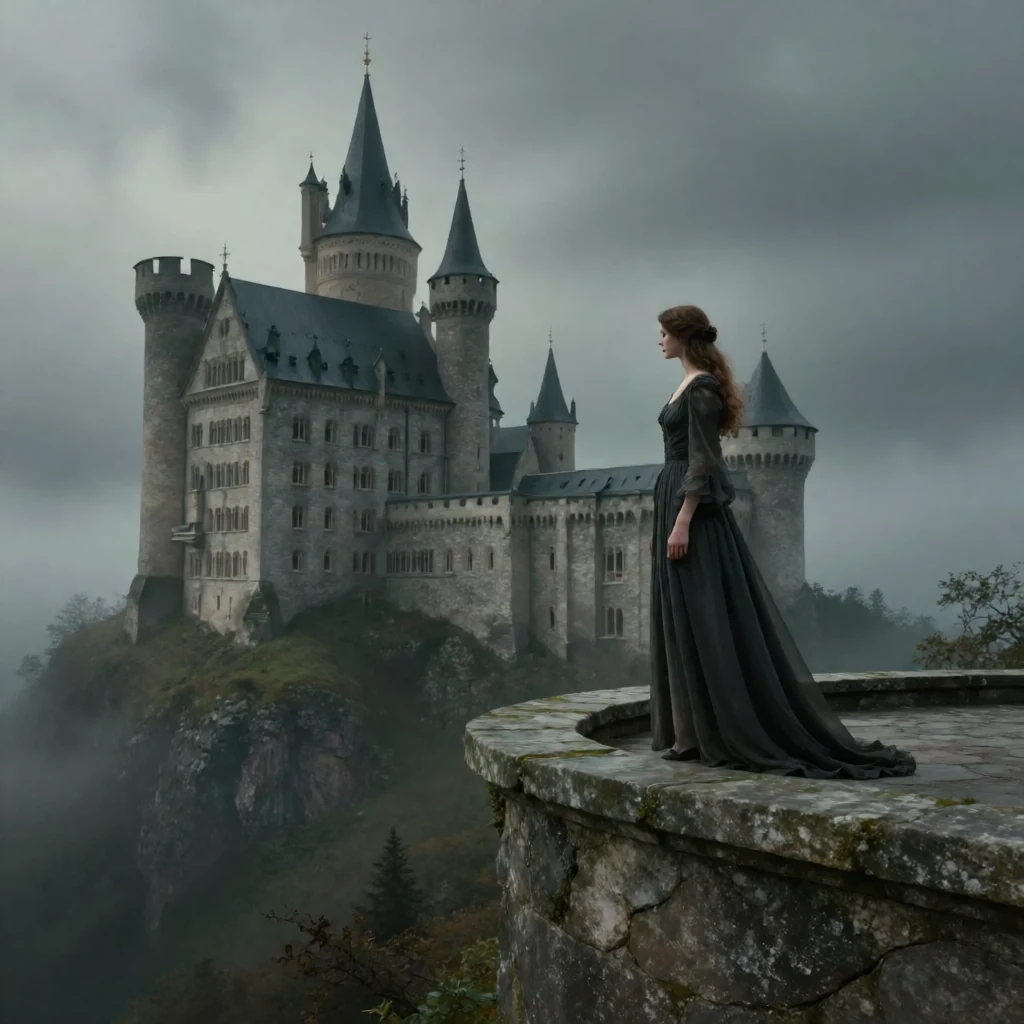
After the party separates early due to the day’s fatigue, Blanche retires to her chambers through a long oak gallery; her room is spacious, lofty, and gloomy, with antiquated furniture including a blue damask bed with tarnished gold trim and a high tester, and faded tapestry lining the walls, leaving her initially unsettled by its remote location in the ancient building.
The Tapestry of Troy
Blanche examines the faded tapestry hung in her chamber, realizing it depicts scenes from the Trojan War, though the nearly colourless worsted now mocks the vivid actions it once portrayed. She laughs at the absurdity at first, but then feels melancholy reflecting on the weavers, long dead like the poet whose work they tried to depict, and nearly weeps.
Night Contemplations
After instructing her maid to wake her before sunrise, Blanche opens a high casement to dispel her gloom, and is cheered by the still, starry night scene of earth, air, and ocean. She offers a quiet prayer of devotion, more heartfelt than any she said in the cloister, then remains at the window until midnight, before retiring to bed with happy visions of the next day and falling into peaceful slumber.
CHAPTER XI
This chapter opens with an epigraph from Thomson celebrating the joy of natural landscapes, then follows Lady Blanche as she wakes late at the Château-le-Blanc, delighted by morning views of the sparkling sea, fresh woods, plains, and sunlit blue mountains, which fill her with devotional gratitude for the natural world.
Morning at the Château
Blanche sleeps through the hour she had eagerly anticipated because her fatigued travelling woman does not call her until breakfast is nearly ready. Her disappointment fades instantly when she opens her casement to take in the sweeping coastal and mountain views. She leaves her room immediately, bounding to the breakfast room where the Count is already seated, his earlier melancholy lifted by the bright sunshine. Henri arrives soon after, followed by the Countess and Mademoiselle Bearn; the whole party is cheered by the scenic setting, though the Countess only maintains her good humour once, when she complains the location is a “barbarous spot” and asks if there are neighbours who can make it tolerable, and whether the Count believes she can survive there without amusement.
Blanche’s Reverence for Nature
Blanche reflects on the appeal of convents, questioning who first invented them and persuaded people to enter under the pretence of religion, when the glories of God’s creation are shut out. She argues that God is best pleased by a grateful heart, and that she feels far more devotion in the few hours she has spent at the château, surrounded by natural beauty, than she did during her many dull years in the convent, where she could only adore God in her inmost heart.
Breakfast with the Count
The breakfast scene unfolds with the Count in an enlivening mood, his cheerful tone resonating with Blanche. The rest of the party joins, and the pleasant influence of the sunlit setting lifts even the Countess’s spirits enough for her to receive her husband’s civilities with complacency, barring her single complaint about the château’s isolating location.
The Countess’s Ennui
After breakfast, the group disperses: the Count goes to the library with his steward to survey the château’s premises and visit tenants; Henri hurries to the shore to inspect the boat planned for the evening voyage and adjust its silk awning. The Countess, attended by Mademoiselle Bearn, retires to a modern apartment with sea-facing balconies that block her view of the “horrid” Pyrenees. She reclines on a sofa, gazing out at the ocean, and indulges in ennui while Mademoiselle Bearn reads aloud a sentimental novel on fashionable philosophy; the Countess holds infidel opinions that are eagerly sought after by her social circle.
Blanche’s Woodland Walk
Blanche hurries to the wild woodwalks surrounding the château to indulge her new enthusiasm for nature. Her initial gay spirits shift to pensive complacency as she wanders: she moves solemnly under thick, dew-damp branches, then skips playfully along sun-dappled paths where diverse tree foliage creates vivid colour and form contrasts. She rests on a rustic seat in a deep wood recess, and glimpses the Mediterranean, white sails on its surface, and sunlit mountains, feeling an exquisite delight that awakens her poetic fancy. The quiet is broken only by bees and other insects flitting among flowers, and Blanche watches a butterfly move from bud to bud, which inspires her to compose a set of stanzas.
The original text of this work is in the public domain. This page focuses on a guided summary article, reading notes, selected quotes, and visual learning materials for educational purposes.