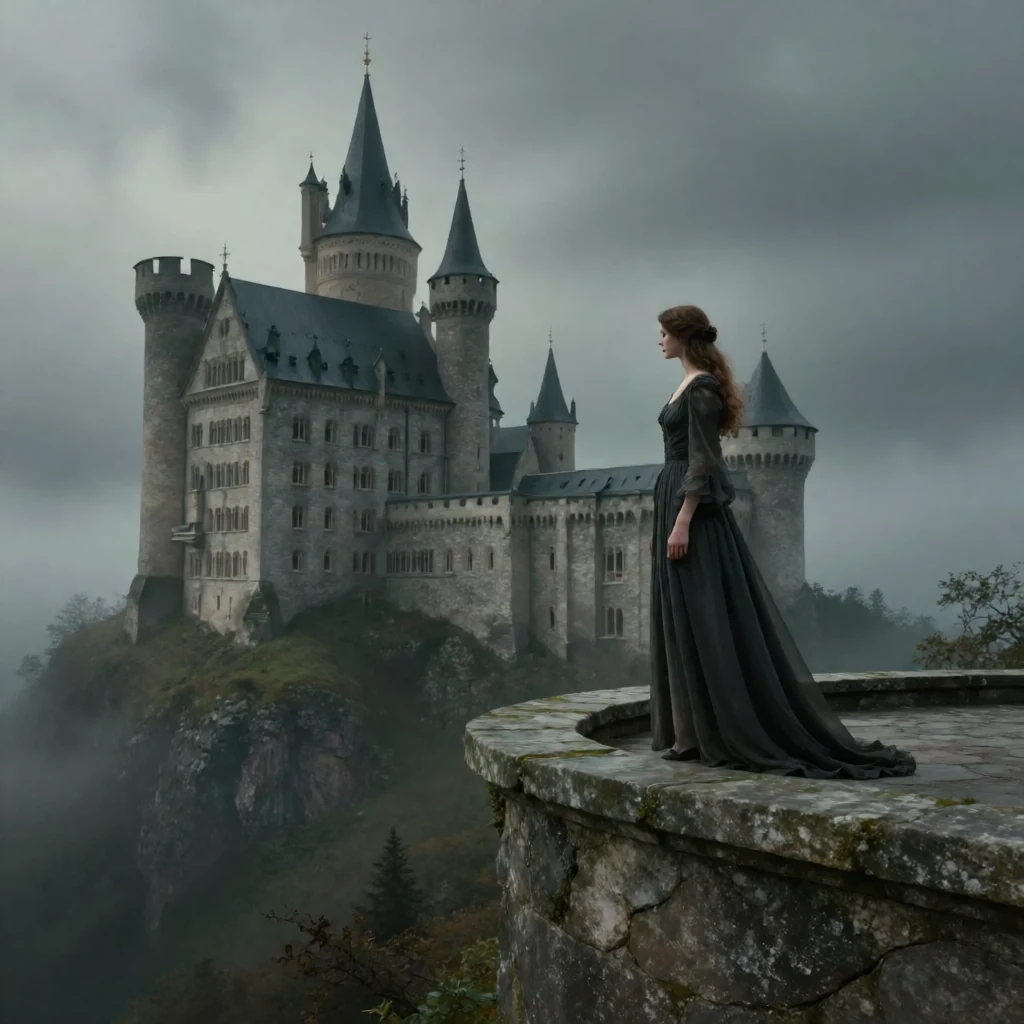
Supper at the Convent
After a short, formal conversation with the superior, the travelers are shown to the apartment where they will eat supper. A friar escorts Valancourt to retrieve Michael and the mules, and he convinces the anxious muleteer that there is no danger before settling him in a cottage on the edge of the woods for the night. Valancourt returns to join St. Aubert and Emily for a simple, sober meal provided by the monks; St. Aubert is too unwell to eat much, but Emily, anxious for her father, forgets her own concerns to care for him, while Valancourt watches her with soft, tender concern, which St. Aubert notices without displeasure.
Emily’s Nighttime Anxieties
The party retires to their separate rooms early. Emily is shown to her chamber by a nun, whom she is glad to dismiss, as her mind is heavy with worry over her father’s declining health, which she attributes more to his frailty than the difficulty of their journey. Overwhelmed by gloomy thoughts, she falls asleep.
The Midnight Hymn of the Monks
Roughly two hours later, Emily is awakened by the sound of a bell and quick footsteps passing along the gallery outside her chamber. Initially fearing her father is ill, she pauses to let the people pass before realizing the bell is the monks’ call to prayer. The bell falls silent, and she chooses not to go to her father’s room, instead opening her casement to look out at the still, cloudless night, where barely a leaf stirs in the air.
Emily’s Devotional Contemplation
As Emily looks out over the moonlit landscape, the monks’ midnight hymn rises softly from a chapel on a lower cliff, and her thoughts turn to adoration of the divine. Reflecting on the vastness of the night sky and the beauty of the sleeping earth, she feels a deep, pure devotion that lifts her above worldly concerns, and she is moved to tears of love and awe. She stays at the casement watching the moon set and the valley sink into shadow before eventually returning to bed and falling into peaceful sleep.
CHAPTER V
St. Aubert journeys with Emily and Valancourt through the wild and romantic Pyrenees toward Rousillon, where magnificent mountain scenery of towering crags, pine forests, and pastoral valleys alternately charms and awes the travelers. St. Aubert observes the tender exchanges between Valancourt and Emily with mixed pleasure and resignation, noting Valancourt’s generous spirit and Emily’s gentle seriousness as they stroll together through the landscape. The party becomes lost in a wooded mountain pass but finds a shepherd’s cottage, where they learn that gypsies have stolen sheep belonging to a poor family, threatening their livelihood and the shepherd’s employment with a harsh master. Moved by the family’s distress, Valancourt gives away nearly all his money to help them, an act that fills his heart with such lightness and joy that he exclaims over the beauty of the very scenery he has always admired. From a high summit, the travelers behold an extensive prospect of Rousillon’s green lowlands stretching toward the Mediterranean, contrasted against the majestic and desolate Pyrenees peaks, while a rocky pass toward Gascony reveals a gibbet and crosses that cast a shadow over their enjoyment of the sublime landscape. They descend into the cultivated beauty of Rousillon, arriving at Arles as evening falls, where the approaching separation of Valancourt from St. Aubert and Emily casts a melancholy gloom over their final evening together.
Journey to Rousillon Through Mountain Scenery
St. Aubert, sufficiently restored by a night’s repose, sets out with his family and Valancourt for Rousillon, hoping to reach it before nightfall. The scenery through which they pass is wild and romantic, with beauty occasionally softening the landscape into smiles. Little woody recesses appear among the mountains, covered with bright verdure and flowers, or pastoral valleys open in the shade of cliffs with flocks and herds along rivulet banks. St. Aubert frequently must alight to walk along rugged precipices and climb steep, flinty mountains, but the sublime variety of prospects repays him for the fatigue. He finds great pleasure in conversing with Valancourt, admiring his fire, simplicity, and the justness and dignity of his elevated mind.
The original text of this work is in the public domain. This page offers a compressed quick-read summary for educational purposes.