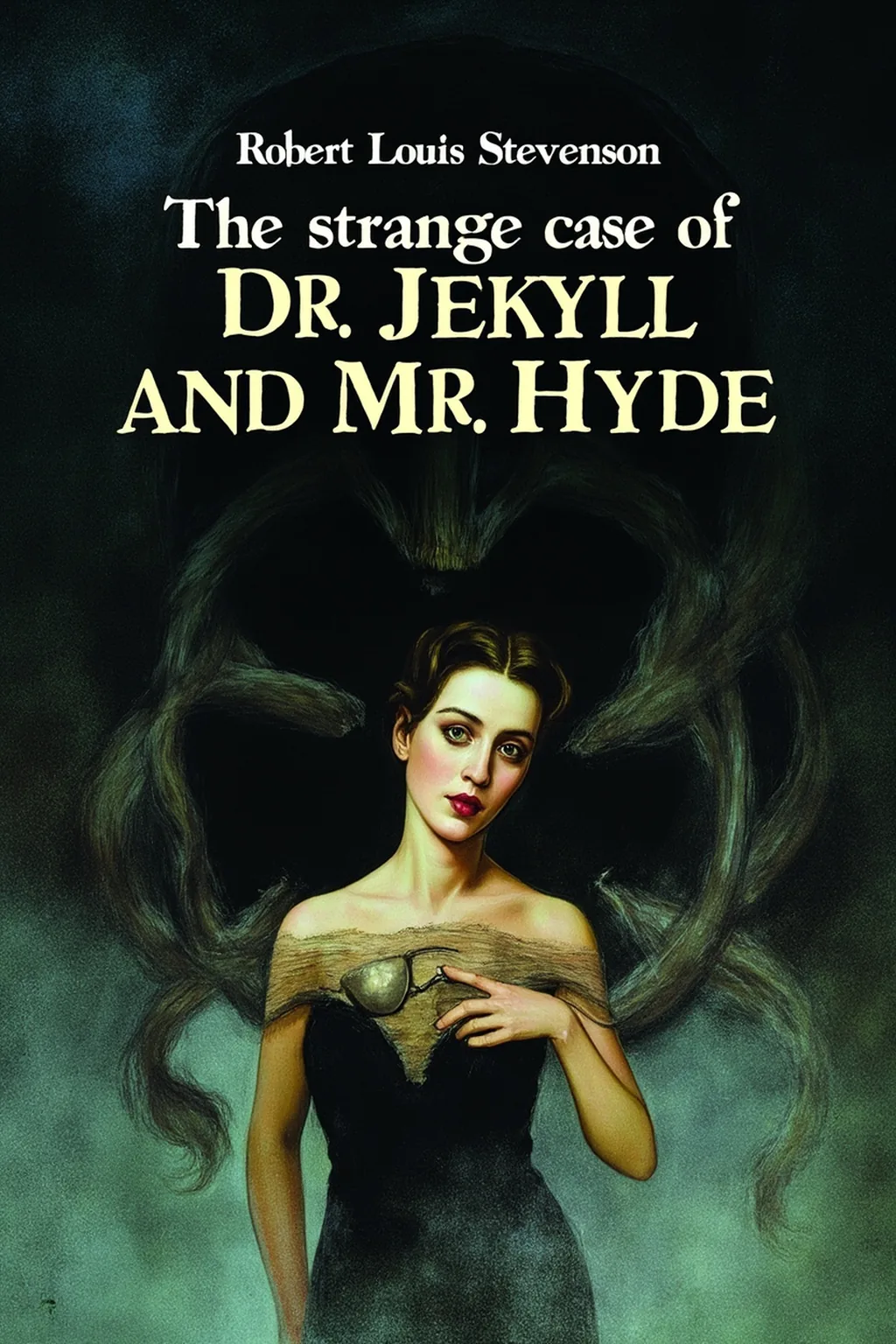
When Mr. Utterson, a London solicitor, learns that his old friend Dr. Jekyll has secretly bequeathed everything to the detestable Mr. Hyde, he embarks on an investigation that leads from fog-shrouded doorways to murder and finally to a terrible revelation: Jekyll has been chemically transforming himself into his own darker counterpart, only to find that Hyde grows stronger with each emergence while the drug that sustains him slowly fails. The consequences of playing God with one's own soul unfold with relentless inevitability toward a conclusion where neither self survives intact.
On a bright January morning in Regent’s Park, Jekyll sat warming himself in the sun, congratulating his own active benevolence against the lazy indifference of others. Pride swelled within him. At that instant, nausea and violent trembling seized his body. When the faintness passed, his mind had altered—bold now, contemptuous of consequence, freed from obligation. He stared at his lap: withered limbs, a dark and corded hand. He had become Hyde without the draught, a hunted murderer exposed in daylight.
Hyde’s mind sharpened to the emergency. Home was impossible—servants would deliver him to justice. But he retained one fragment of Jekyll: the handwriting. He found a cab, fought down murderous rage at the driver’s amusement, and reached an inn. There he composed desperate letters to Lanyon and Poole, dispatching them by registered post. Through the day he waited, consumed by dread. At night he rode the streets in a closed carriage, then walked alone through darkened roads—a figure muttering to himself, striking down a woman who approached him.
The transformation at Lanyon’s house returned him to himself. His old friend’s horrified condemnation reached him as if in a dream; the journey home passed in the same fog. He fell into deep sleep, though terrible dreams tormented him, and woke weakened but desperately relieved—safe, near his drugs, the fear of the noose replaced by dread of becoming Hyde again.
The reprieve lasted hours. Crossing his courtyard after breakfast, the warning sensations returned. He barely gained the cabinet before Hyde seized him. A double dose restored Jekyll; six hours later, the change came again. Now began the true torture. Transformations struck at any moment, especially in sleep—he always woke as Hyde. Jekyll condemned himself to sleeplessness, his body and mind wasting away, possessed by fear of his other self.
Hyde grew stronger as Jekyll sickened. Jekyll saw him as something from the pit—formless evil given voice and motion, bound into his flesh more intimately than marriage, struggling to be born at every weakness. Hyde answered with spite: defacing Jekyll’s books, burning correspondence, destroying his father’s portrait. Only terror of death restrained him from ruining them both.
Then the final blow fell. The salt that empowered the draught ran low. New supplies proved useless—the original batch had contained some unknown contaminant essential to the transformation. Without it, no return from Hyde was possible.
The original text of this work is in the public domain. This page focuses on a guided summary article, reading notes, selected quotes, and visual learning materials for educational purposes.