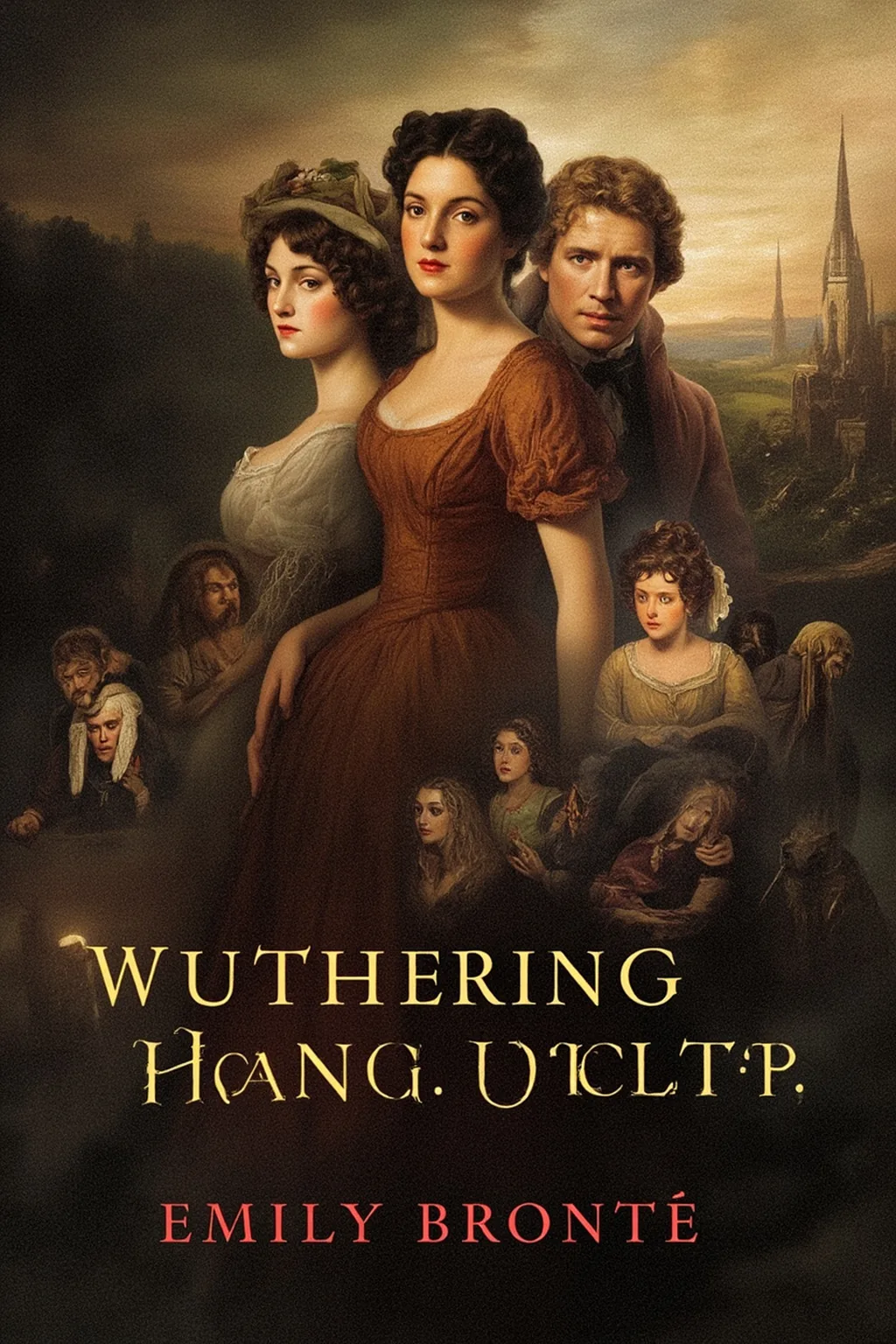
Cathy’s Transformation and the Fracturing of Friendship
Chapter VII chronicles the pivotal Christmas of 1777, when Cathy’s return from Thrushcross Grange marks a decisive turning point in her relationship with Heathcliff. During her five-week absence, the Lintons have systematically cultivated her into a refined young lady—teaching her manners, clothing her in fine silks, and instilling a new sense of self-importance. When she reappears at Wuthering Heights, riding a handsome black pony and sporting a feathered beaver hat, she is virtually unrecognizable. Even Hindley marvels at the transformation. This return marks the beginning of an irreversible divide between Catherine and Heathcliff, as her exposure to the cultured, genteel world of the Lintons introduces aspirations and expectations that Heathcliff can never fulfill. The friendship that once bound them on the moors begins to fracture under the weight of class consciousness and social aspiration.
The Fracturing of Households
Chapter VIII constitutes one of Wuthering Heights most structurally pivotal passages, consolidating several narrative trajectories while simultaneously introducing new tensions that will drive the novel toward its tragic culmination. Ellen Dean’s retrospective narration traces the consequences of Frances Earnshaw’s death through the complete dissolution of Wuthering Heights as a functioning household, the permanent estrangement of Heathcliff from Catherine’s affection, and the crystallizing of Catherine’s divided loyalties. When Frances dies of consumption shortly after giving birth to a son named Hareton, Hindley’s grief transforms into bitter alcoholism and tyrannical parenting. He forces young Hareton to work as a servant in his own home, denying him any education or kindness. Meanwhile, Heathcliff, sensing his opportunity for revenge, begins to cultivate a mysterious plan that will unfold over years.
The Depths of Forbidden Love
This pivotal chapter of Wuthering Heights interweaves two parallel crises: the destructive alcoholism of Hindley Earnshaw and Catherine Linton’s agonizing choice between duty and desire. The chapter opens with Hindley’s drunken return home, where his violent threats against Nelly Dean and terrorization of his own son, Hareton, demonstrate how completely he has succumbed to grief and vice since his wife’s death. When he holds a carving knife to Nelly’s teeth and dangled Hareton over the banister, we witness a household in complete moral collapse.
The passage marks a turning point in Wuthering Heights, chronicling a night of violent weather that mirrors the emotional turmoil consuming Wuthering Heights. Catherine’s stubborn vigil for Heathcliff—whom Hindley has sworn to drive out—proves both her loyalty and her undoing. Her famous declaration that she is Heathcliff, that “whatever our souls are made of, his and mine are the same,” defines the spiritual bond that transcends social class and earthly circumstances. Yet this same declaration leads her ultimately to choose Edgar Linton over Heathcliff, marrying for security and status what her soul truly craves.
The Return of Heathcliff
This chapter marks a pivotal turning point in the novel, as Nelly Dean’s narrative shifts from the Earnshaw household’s past to its uncertain future. Lockwood, confined by illness and restless for stimulation, requests the housekeeper to continue her story of Heathcliff. She picks up where Catherine and Heathcliff’s fates diverged: Catherine, now married to Edgar Linton, settled comfortably at Thrushcross Grange, while Heathcliff vanished for three years.
Nelly describes Catherine’s early married life as remarkably harmonious. The Lintons doted on her, and the refined environment suited her temperament. Yet beneath this domestic contentment, Catherine languished, growing restless and haunted by memories of Heathcliff. The return of Heathcliff shatters this fragile peace. His years of absence have transformed him into a gentleman of mysterious wealth, and his motives for returning remain unclear. He visits Thrushcross Grange and encounters Isabella Linton, sparking a dangerous obsession in her heart—her ill-fated passion for Heathcliff—and the devastating consequences that unfold when Catherine, with deliberate cruelty, begins to manipulate both her sister-in-law’s feelings and her husband’s patience.
Memory and the Cycles of Destruction
Nelly’s journey to Gimmerton becomes a meditation on how the past lingers in Wuthering Heights’ world. At the old guide-post marking roads to the Grange, the Heights, and the village, she experiences what she calls a “gush of child’s sensations”—the intrusive memory of Hindley as a child, scooped earth beside her, their shared childish hoarding of treasures in the stone’s hollow. The vision is so vivid that she momentarily believes the adult Hareton is the ghost of that playmate. This intersection of past and present, memory and reality, establishes the novel’s preoccupation with time as a destructive rather than healing force.
The original text of this work is in the public domain. This page offers a compressed quick-read summary for educational purposes.