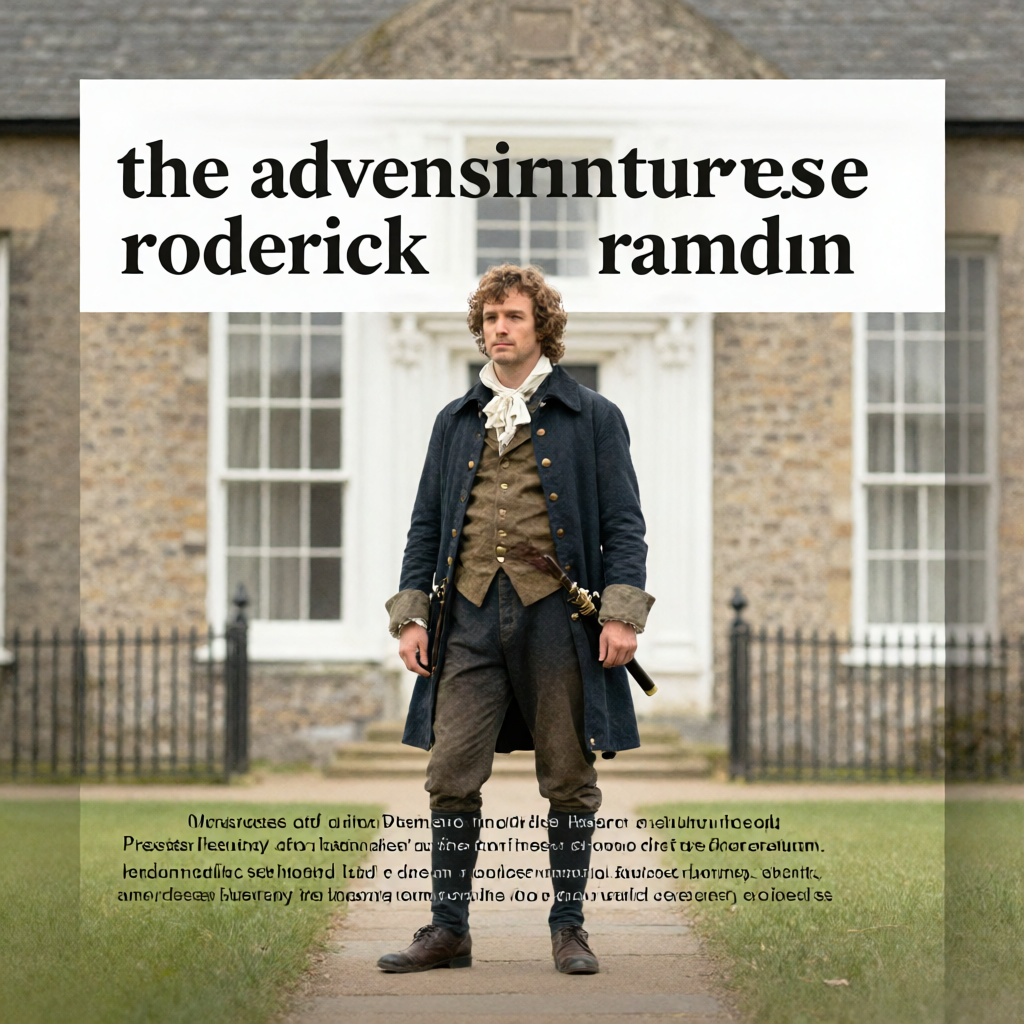
Finding the Lady in Distress
While sitting alone in his garret contemplating his misfortunes, the narrator hears a groan from the adjacent chamber. He rushes in to find a woman stretched on a miserable truckle bed, apparently lifeless. When he revives her with a smelling bottle, he discovers she is the very lady who once captured his heart and whom he had expected to marry. Her situation is deplorable—she confesses she had a base design against him and is now dying from a dangerous illness that has made her repulsive to herself and others. An advertising doctor has fleeced her of all her money and abandoned her three days ago in worse condition than before. She has pawned or sold everything she owned and now faces being turned out into the street.
Relieving Her Misery
The narrator immediately forgives her past intentions against him and pledges to share his last resources with her. He runs downstairs to procure cinnamon water while applying remedies to revive her. She recovers and reveals she has not eaten for forty-eight hours. After restoring her with mulled wine and a toast, he proposes that she lodge in the same room with him to save expense, and he offers to cure her affliction using his own medical knowledge. She accepts with gratitude and proves to be not only an agreeable companion who alleviates his melancholy but also a faithful nurse. When the narrator expresses surprise that a woman of her beauty, sense, and education could fall so low, she replies that these very advantages were the cause of her undoing, prompting the narrator to request the full particulars of her story.
CAPÍTULO XXII.
This chapter presents the first-person narrative of Miss Williams, chronicling her life from childhood through her entanglement with a deceitful lover, her descent into grief and vengeful rage, her elopement to London, and her pact with a stranger to avenge her betrayal, ending with the stranger’s return bearing a letter for her.
Early Life and Education
Miss Williams opens her account by describing her early life: her father was a prominent city merchant who retired to a small country estate after sustaining major financial losses when she was 8 years old. She was left in the city for her education, boarded with a rigidly Presbyterian aunt who imposed strict religious confinement, assigning her religious texts to read until she grew weary of her aunt’s doctrines.
The Freethinker’s Education
A female acquaintance encouraged Miss Williams to reject her aunt’s narrow prejudices, advising her to read freethought authors including Shaftsbury, Tindal, and Hobbes to form her own independent beliefs. She eagerly studied these works, became a professed freethinker, gained a reputation as a formidable debater, and grew vain of her intellectual prowess, even attempting to convert her aunt to her views. Her aunt reported her “heresy” to her father, who ordered her to return to the country at age 15.
Return to the Country
Back in the country at 15, Miss Williams detailed her beliefs to her father, who found them far less unreasonable than her aunt had claimed. Initially melancholy about leaving the city’s social pleasures, she grew accustomed to solitude, spent time managing the household (her mother had died three years prior) and enjoying the family’s extensive library, and was regarded as an unusual, extraordinary figure by local residents due to her love of poetry and romance, paired with limited practical judgment.
Assault in the Wood
One evening, while reading in a wood bordering the high road near her father’s house, Miss Williams was accosted by a drunken local squire who called her a “charming creature,” dismounted, grabbed her in his arms, and assaulted her. She screamed and struggled with all her strength to resist his violence.
The Rescue
A passing male horseman witnessed the assault, dismounted, and rushed to her aid. The squire, furious at being interrupted, ran to his horse, drew a pistol, and fired at the rescuer, who was unharmed. The rescuer knocked the squire to the ground with the butt of his whip, seized the squire’s second pistol, and threatened to kill him for his cowardice and treachery until Miss Williams intervened and begged for his life. The rescuer agreed to spare the squire only after he apologized and swore he had only intended to steal a kiss, then unloaded the squire’s remaining pistol and discarded the flints before releasing him.
The original text of this work is in the public domain. This page focuses on a guided summary article, reading notes, selected quotes, and visual learning materials for educational purposes.