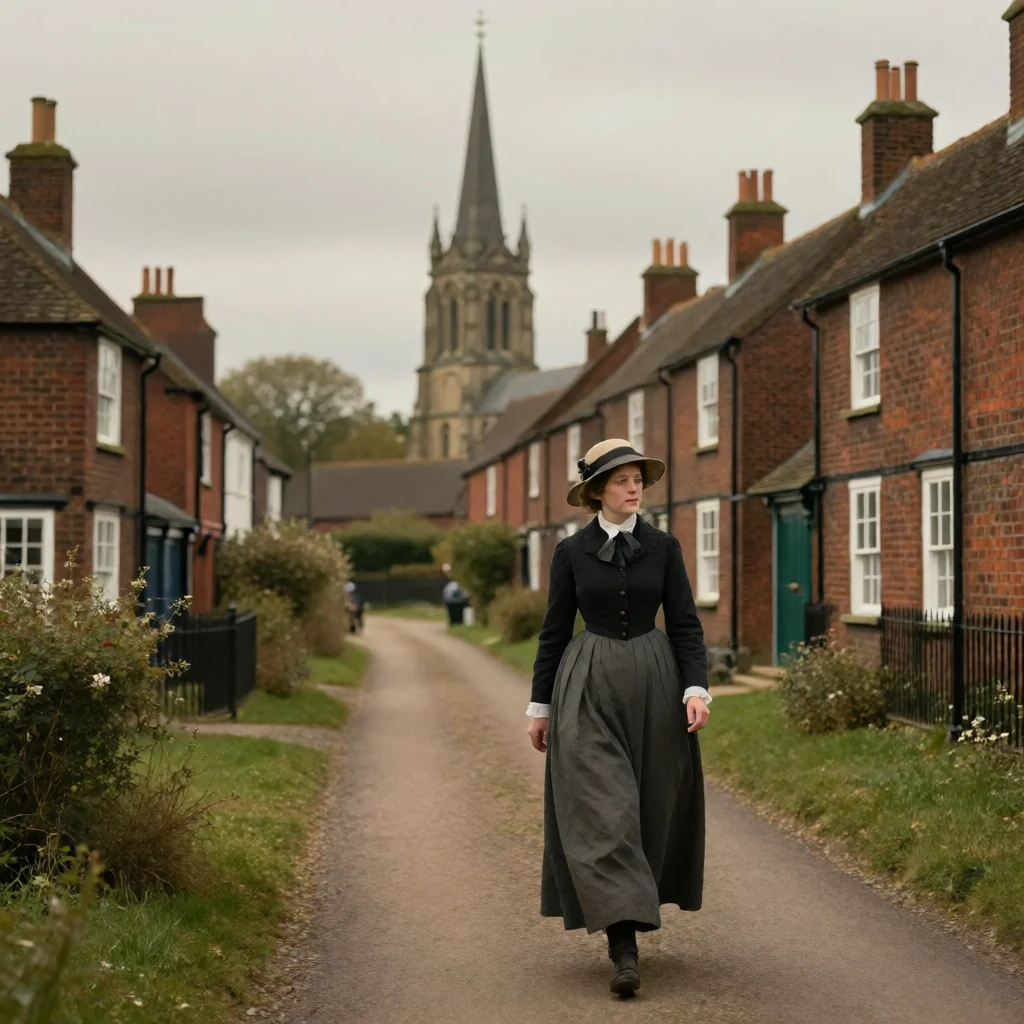
Mary’s Employment Prospects
Mary announces her determination to take a teaching position at a school in York, preferring institutional instruction over private family tutoring. Mrs. Garth gently rebukes her daughter’s reluctance, finding teaching delightful, but Mary curtly acknowledges her inconvenient preference for the outside world. The children chime in with their own critiques of girls’ schools. Caleb, overhearing, learns the position offers thirty-five pounds annually plus extra pay for piano instruction. Mrs. Garth suggests Mary’s earnings could help send Alfred to Mr. Hanmer’s, prompting Alfred to affectionately call her “an old brick” and bringing tears to Mary’s eyes despite her laughter.
Sir James Chettam’s Letter
Caleb reads a letter from Sir James Chettam offering him management of the Freshitt estates, with a request from Mr. Brooke of Tipton to resume agency of the Tipton property as well. Sir James expresses hope that the double agency can be arranged on agreeable terms and invites Caleb to the Hall. Mrs. Garth rejoices that her husband’s former employers have recognized the quality of his work, comparing his vindication to Cincinnatus. She enjoins him to insist on fair pay, and Caleb estimates the combined position will yield between four and five hundred pounds. He immediately instructs Mary to abandon her York plans and remain home to help her mother.
Caleb’s Delight in Honest Labor
Caleb savors the prospect of returning to honest labor, planning new tenant agreements, crop rotations, and exploring clay deposits for brickmaking. He declares his preference for meaningful estate stewardship over fortune, calling it the most honorable work—a great gift from God. Mrs. Garth affirms that such good work constitutes a blessing to his children even if his name be forgotten, and she cannot press him further on the question of pay. Caleb’s satisfaction extends to practical hopes: he wishes Christy had chosen business so he might have help, and he has resolved that Alfred must pursue engineering.
An Evening Visit from Mr. Farebrother
In the evening, with Caleb resting over his pocket-book and the women at their sewing, Mr. Farebrother arrives through the orchard walk in the August light. He explains he comes as an envoy on behalf of Fred Vincy, whom he has known since boyhood. Despite his customary evenings at the Vincys’, the Vicar holds the Garths in deep respect. Caleb notes they have not seen Fred for months, and Mr. Farebrother explains that home had grown too uncomfortable for him after Lydgate advised against immediate study. The Vicar shares Fred’s current troubles and solicits the family’s goodwill.
Fred Vincy’s Unpaid Debt
Mr. Farebrother explains that Fred Vincy cannot bear to visit the Garths personally, so tormented is he by his unpaid debt and his inability to discharge it. Caleb waves away the concern, insisting the money no longer matters now that his circumstances have improved through the new agency. Fred has resolved to study for his degree before term, and the Vicar has counseled him against entering the Church, believing he lacks the vocation. Mary feels uncomfortable when Farebrother mentions she once told Fred he would become one of those ridiculous clergymen who discredit the clergy, but she deflects lightly. Mrs. Garth mildly reproves her daughter for speaking evil of dignities, though Caleb defends Mary’s sharpness as having some truth. Fred’s chief anxiety, Farebrother reveals, is having offended Mrs. Garth and forfeiting her good opinion.
CHAPITRE XL.
Chapter XL brings together several threads in the Garth household and its environs. Caleb confides a long-held secret to Farebrother about Featherstone’s dying request to Mary, Farebrother parts from Mary in the orchard and reflects inwardly on his own position, Caleb proposes a new path for Fred Vincy, and the chapter closes with a discussion of the tangled land dealings involving Rigg Featherstone and Bulstrode. The chapter blends domestic intimacy, moral reflection, social observation, and the slow-turning machinery of property and reputation in Middlemarch.
Caleb’s Secret About the Will
With Mary and Letty out of the room, Caleb tells Farebrother a secret known only to himself and Susan. On the night he died, Featherstone offered Mary money to burn one of his wills while she sat up with him alone. Mary refused. The will in question was the final one, and had she destroyed it, Fred Vincy would have inherited ten thousand pounds. Though Mary acted rightly, she feels the weight of the unintended harm done to Fred, and Caleb shares that feeling. He asks Farebrother’s opinion, and Mrs. Garth responds that Mary could not have acted otherwise, even knowing the consequence. Caleb insists the feeling itself is real, and Farebrother agrees it is not mistaken, though no man should make a claim upon it. Caleb asks Farebrother to keep the secret from Fred; Farebrother promises, but notes he can share the good news that the Garths can afford the loss Fred caused them.
The original text of this work is in the public domain. This page focuses on a guided summary article, reading notes, selected quotes, and visual learning materials for educational purposes.