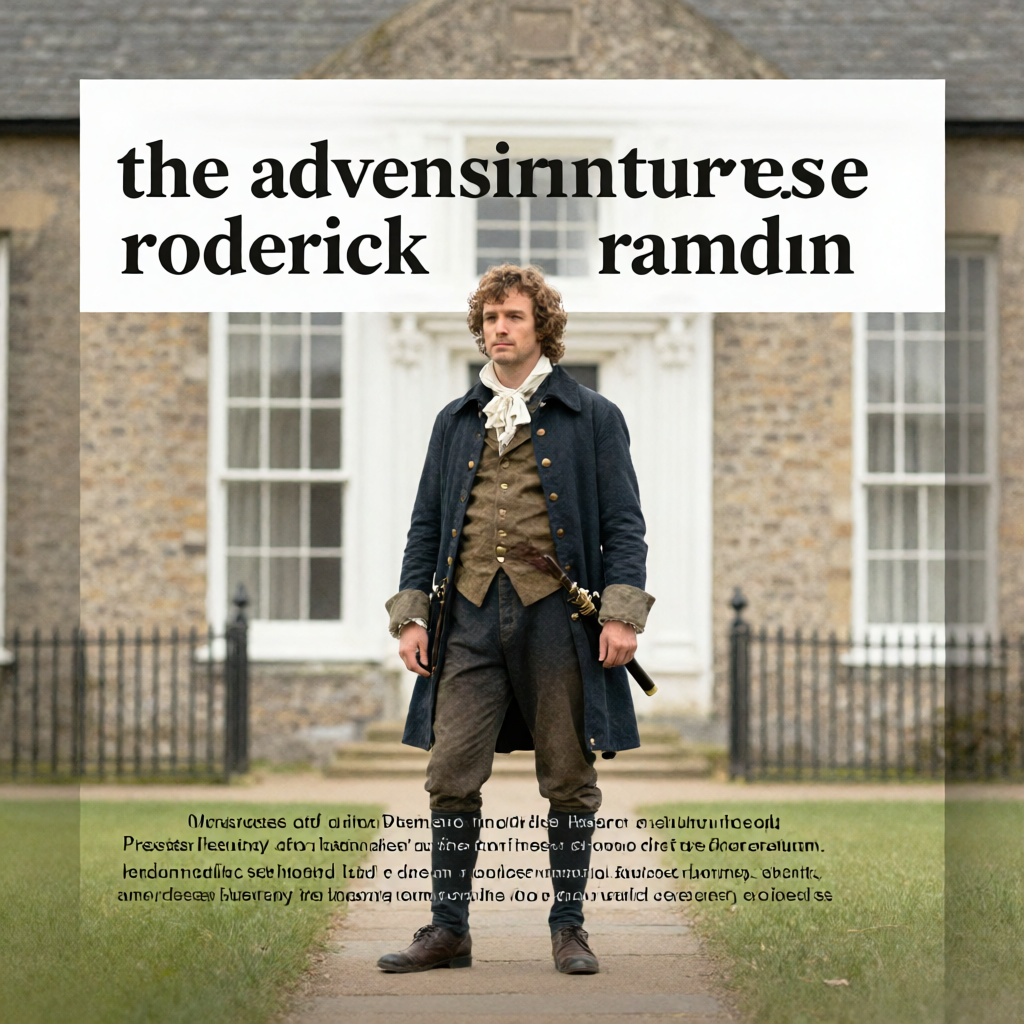
Landlord Comments on Exciseman and Curate Shuffle
When the exciseman departs after paying his own reckoning, the landlord shakes his head and comments that not every sinner receives their deserts. He observes that victuallers must not displease excisemen and suggests that if Parrot Shuffle and the exciseman were weighed together, adding a straw to either scale would tip the balance. He adds that this conversation is “under the rose,” meaning it should be kept confidential.
CHAPITRE X.
Chapter X chronicles the capture and escape of the highwayman Rifle, the subsequent detention of Roderick and Strap as witnesses, and their continued journey through various lodgings where they encounter a nighttime disturbance and a classically-educated schoolmaster whose hospitality comes with an unexpectedly steep bill.
Apprehension of Highwayman Rifle
The highwayman Rifle is overtaken by two servants on horseback, his inferior mount having failed him. After discharging his pistols in futile resistance, he is taken prisoner amidst the triumph of country people. At the inn, the once-terrifying Rifle appears pitiful and dejected, filling Strap with enough courage to challenge him to a fight for a guinea—though Roderick dissuades him from this reckless venture.
Detention as Evidence Against the Highwayman
Despite their desire to depart, Roderick and Strap are detained by the captors to serve as evidence against the imprisoned highwayman. With no alternative but compliance, they join the procession carrying Rifle to a justice of the peace. Their fortunes appear aligned with their intended route as they travel toward the magistrate’s village in the twilight hours.
Highwayman Rifle’s Escape from Custody
Upon arrival at the justice’s residence, they discover the magistrate has departed to visit a gentleman in the country and will not return until morning. Rifle is confined in a garret three stories high, seemingly impossible to escape—yet by morning, the bird has flown. He has emerged through a window onto the roof, traversed the adjoining houses to enter another garret, waited until the household slept, then descended and let himself out through an open street door. The captors’ hopes of reward are dashed, but Roderick rejoices at being freed to continue his journey.
Journey to Market Town and Inn Stay
Resolving to make amends for their lost time, the travelers push forward with vigor and cover twenty miles before nightfall, reaching a market town without incident. At the inn, Roderick, exhausted from walking, instructs Strap to inquire about carriages bound for London. They learn a Newcastle waggon had passed through two nights prior and can likely be overtaken within a day or two. After a hearty supper of hashed mutton, they retire to a room shared with a recruiting sergeant.
Recruiting Sergeant Nighttime Lodging Incident
Between two and three in the morning, Roderick is startled awake by a dreadful noise—the sergeant, in his sleep, bellows threats about running halberts through guts and blowing out brains. Strap, bolting from bed in the dark, collides with someone and cries “Fire! murder!”—alarming the entire house. Lights reveal the sergeant, who had dreamed his newly-listed recruits mutinied, lying on the floor in confusion. The commotion brings an absurd assembly: the landlady in her shift and breeches worn backward, her husband wrapped in her petticoat, a drummer with a bolster about his middle, and others draped in blankets and sheets. Order is eventually restored, and the night passes without further disturbance.
Journey to the Schoolmaster’s Village
Exhausted from their extra exertions, Roderick and Strap arrive at a small village in the twilight and seek lodging. Directed to a humble public-house, they are greeted by a venerable old man with long gray hair, seated by a fire in a neat kitchen. To their surprise, he addresses them in Latin: “Salvete, pueri. Ingredimini.” Roderick responds fluently with Horace, delighting their host, who clasps his hand and exclaims “Fili mi dilectissime!”
Lodging at the Schoolmaster’s Inn
The host proves to be a schoolmaster whose modest income compels him to keep good liquor for travelers. His daughter, a rosy-cheeked damsel, serves them a bottle of quadrimum—excellent four-year-old ale of the schoolmaster’s own brewing. The conversation flows in Latin, and the old man shares his philosophy of life, quoting Horace: he is happiest in the company of his bottle and his beloved Horace edition. His wife rests in heaven, his daughter marries next week, and he has two chief pleasures in life.
The original text of this work is in the public domain. This page focuses on a guided summary article, reading notes, selected quotes, and visual learning materials for educational purposes.