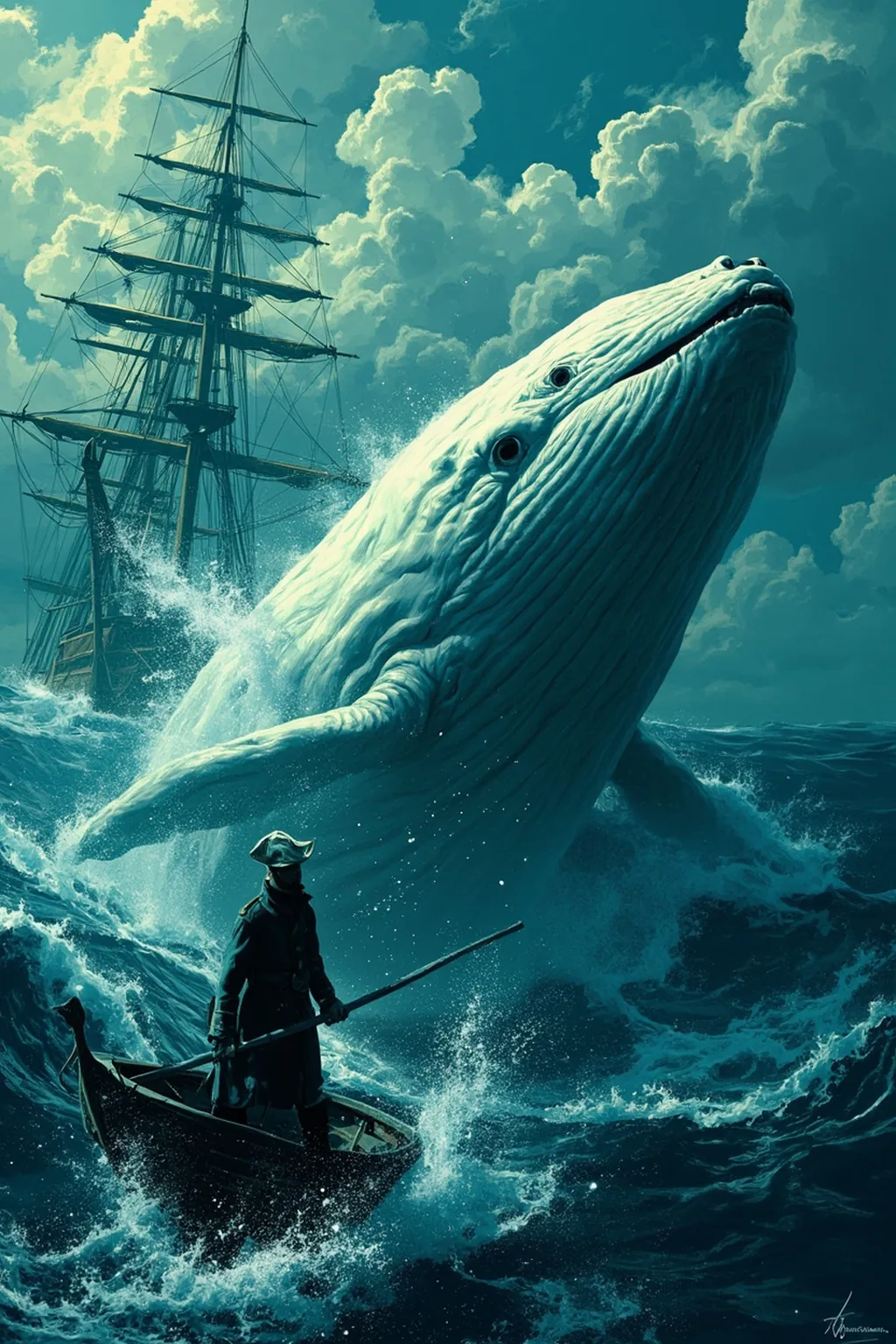
Whiteness Amplifying Terror in Fearsome Creatures
The narrator argues that when whiteness is stripped of its positive associations and paired with objects that are inherently terrifying, it intensifies that terror to an extreme, almost unbearable degree. He uses the white polar bear and white shark as examples: their smooth, pale whiteness gives them a ghastly, mild, unnatural quality that makes them more frightening than fiercer, darker beasts like the heraldic tiger, as it creates a jarring, unsettling contrast between an appearance of innocence and their lethal, ferocious nature.
The Mystical Spell of the White Albatross
The narrator recounts his personal experience seeing an albatross during a prolonged storm in Antarctic waters, describing its unspotted whiteness and vast, archangel-like wings as a regal, supernatural sight that filled him with profound awe and a sense of encountering the divine, far more powerful than any prior cultural associations with the bird. He asserts that the bird’s whiteness is the core of the mystical spell it casts, even more so than the literary fame of Coleridge’s poem about the albatross, noting that he had never heard of the poem or known the bird was an albatross at the time of his encounter, yet was still deeply moved by its pale, spectral presence.
Legend of the White Steed of the Prairies
The narrator references the legendary White Steed of the Prairies, a majestic milk-white wild horse that led vast herds across the pre-settlement North American west, revered by trappers and hunters as a divine, archangelic figure tied to the glory of primeval, unfallen nature. Its whiteness was the source of both its commanding, worship-inspiring presence and the nameless terror it evoked in those who beheld it, as it seemed to embody a power beyond mortal understanding.
The original text of this work is in the public domain. This page focuses on a guided summary article, reading notes, selected quotes, and visual learning materials for educational purposes.