Unreported Whaling Fatalities
The first supporting point for the White Whale narrative’s validity is that most whaling-related deaths and disasters go unrecorded in public, so people on land have no accurate sense of how frequent and common whaling perils are. The narrator recounts a Pacific voyage where he spoke to 30 different ships, every one of which had suffered at least one whale-related death, with some losing entire boat crews. He notes that whale oil is effectively paid for with human blood, as even a single drop of oil requires at least one drop of a man’s blood spilled in its production.
Sperm Whale Ship Attack Cases
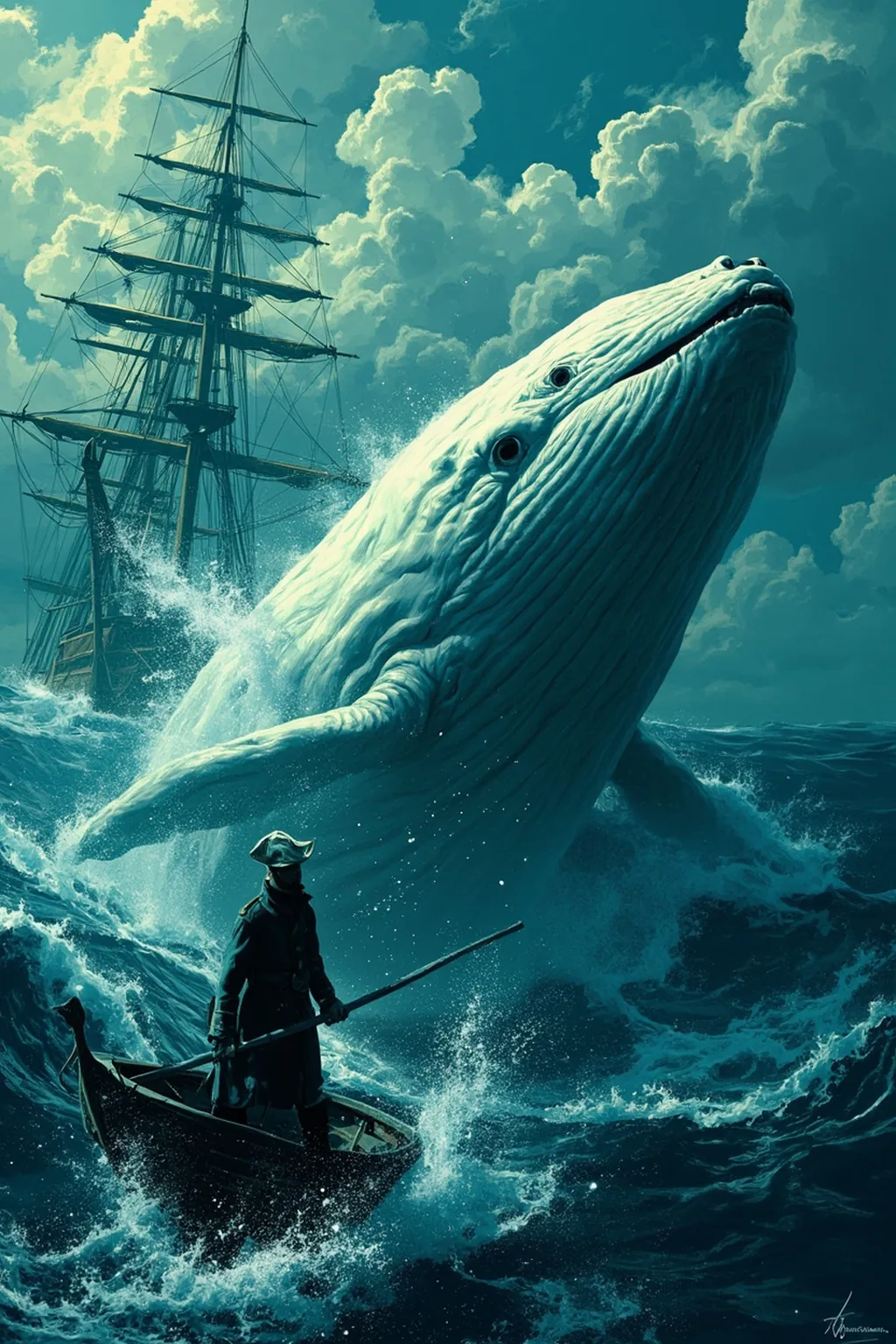
The second key supporting point documents verified cases of sperm whales deliberately attacking and sinking or damaging large ships. First, the 1820 sinking of the Nantucket ship Essex by a large sperm whale in the Pacific, which the narrator corroborates via the Essex’s chief mate Owen Chase’s published narrative, conversations with Chase’s son, and personal proximity to the incident site. Second, the 1807 sinking of the Nantucket ship Union off the Azores in a similar attack, though the narrator never found full official records of this event. Third, an incident where a U.S. Navy commodore’s sloop-of-war was rammed and damaged by a sperm whale near Oahu in the Sandwich Islands, forcing the ship to port for repairs. Fourth, an account from Langsdorff’s Voyages of a Russian expedition ship nearly sunk by a giant sperm whale in the Okhotsk Sea, which the narrator corroborated via his uncle Captain D’Wolf, who commanded the ship in question. He also notes a corroborating account from Lionel Wafer’s voyages of a ship shock at sea likely caused by an unseen whale, rather than the earthquake originally assumed.
The original text of this work is in the public domain. This page focuses on a guided summary article, reading notes, selected quotes, and visual learning materials for educational purposes.