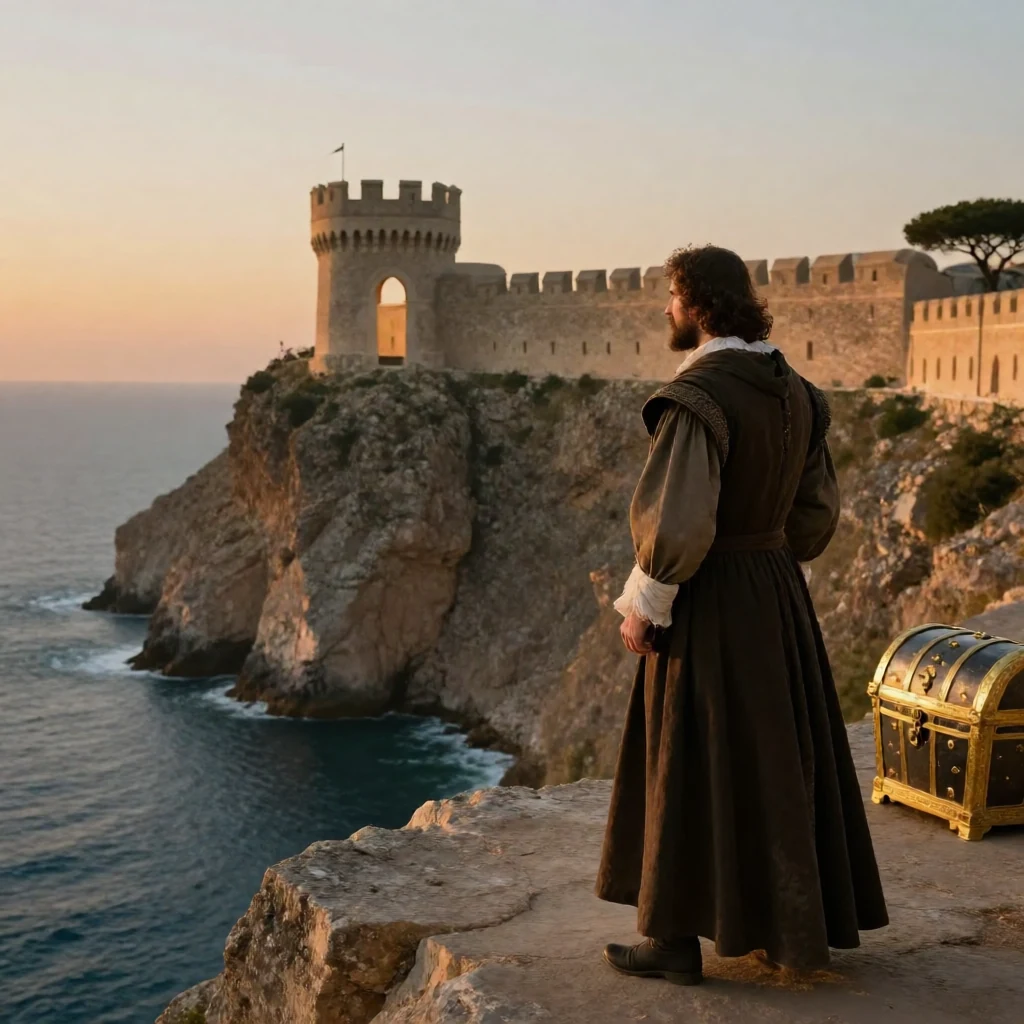
The Governor’s Refusal
The Governor’s Refusal The jailer, moved by pity for the unhappy young man, carries Dantès’ request to the governor, who suspects a plot or escape attempt and refuses. Having exhausted all human resources, Dantès turns to God.
Turning to God
Turning to God Forgotten prayers return to Dantès with new meaning, and he prays fervently aloud, laying his life before the Almighty and entreating forgiveness. Yet despite his earnest devotion, he remains a prisoner.
Descent into Gloom
Descent into Gloom Heaviness settles on Dantès as the limits of his unlettered mind become apparent; he cannot imagine vanished civilizations or rebuild ancient cities. Nineteen years of light reflected upon in eternal darkness, his spirit is caged like an eagle, and he fixates on the idea of his destroyed happiness.
Rage and Blasphemy
Rage and Blasphemy Religious fervor gives way to rage. Dantès hurls blasphemies, throws himself against the walls, and burns with fury at the letter of his persecution that blazes on the wall like Belshazzar’s warning. He consigns his unknown persecutors to tortures but finds none sufficient.
Thoughts of Suicide
Thoughts of Suicide Brooding on the idea that peace is death, Dantès turns to the thought of suicide, comparing it to a dead sea whose calm surface hides destruction. He finds strange consolation in contemplating the abyss of oblivion.
The Choice of Starvation
The Choice of Starvation Dantès, reconciled to death, chooses his manner of dying and rejects hanging as an infamous pirate’s fate. He resolves instead to starve himself, and from that day begins carrying out his plan.
The original text of this work is in the public domain. This page focuses on a guided summary article, reading notes, selected quotes, and visual learning materials for educational purposes.