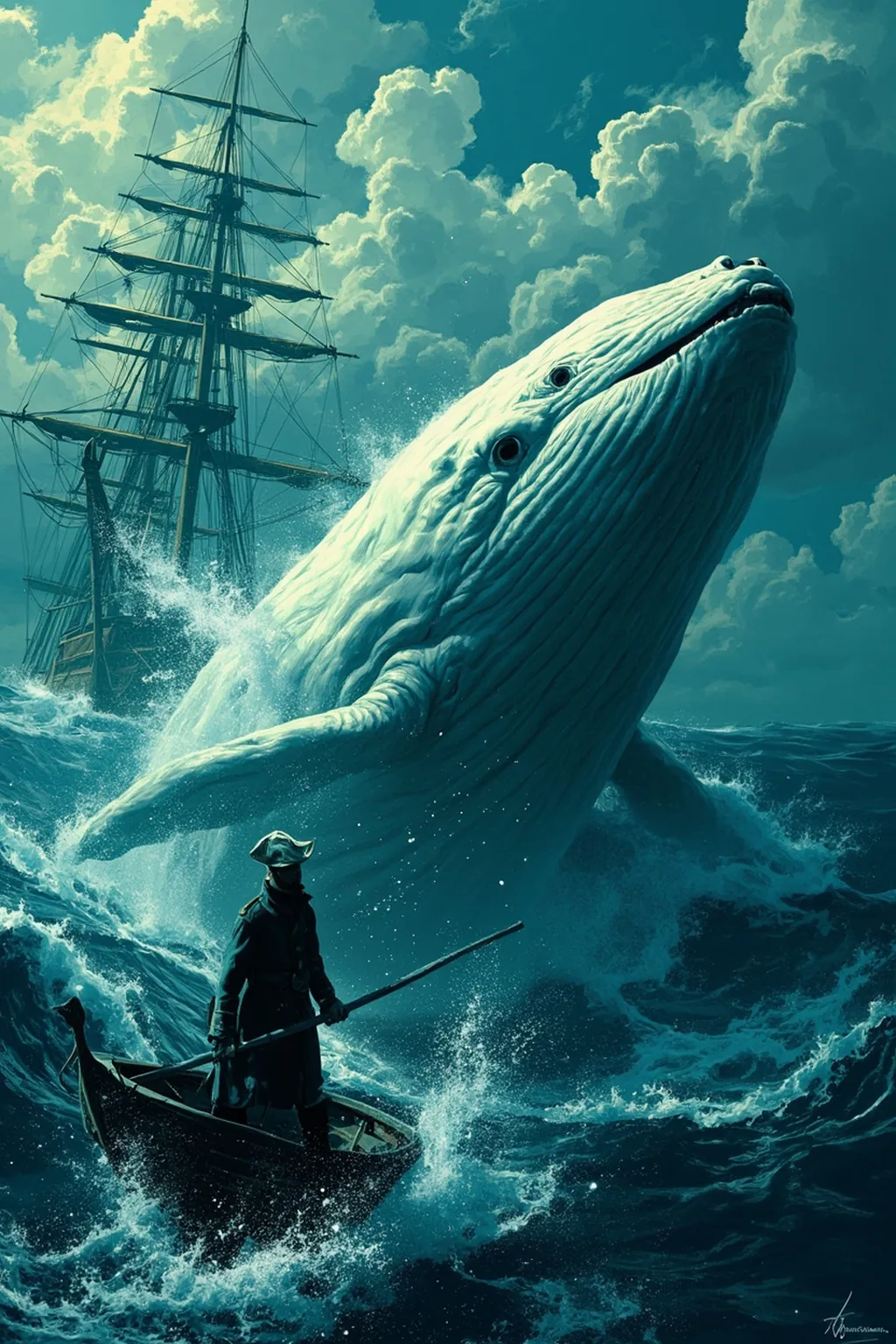
American Whaling Customs
In the American whaling industry, the mast-heads are kept manned from sunrise to sunset throughout the voyage. The seamen take regular turns, similar to rotating at the helm, relieving each other every two hours. This practice begins at departure and continues until the ship returns to port, making the mast-head a constant feature of life at sea for years.
Ancient Mast-Head Traditions
The narrator traces the ancient lineage of mast-head standing, asserting that the earliest standers were the Egyptians. He notes that though the builders of Babel attempted to construct “the loftiest mast-head in all Asia, or Africa,” their stone tower was destroyed, so the Egyptians take priority. He argues that the pyramids were founded for astronomical purposes, with their stair-like formation allowing ancient astronomers to climb to the apex and “sing out for new stars,” much like modern look-outs spotting sails or whales. The narrator also cites Saint Stylites, the Christian hermit who spent years atop a stone pillar in the desert, as the supreme example of an unwavering mast-head stander who “literally died at his post.”
Modern Monumental Standers
The narrator contrasts these ancient figures with modern “lifeless” standers—monuments of stone, iron, and bronze. He describes Napoleon atop the Column of Vendôme in Paris, standing with folded arms 150 feet in the air, indifferent to earthly rulers. Great Washington stands “high aloft on his towering main-mast in Baltimore,” marking “that point of human grandeur beyond which few mortals will go.” Admiral Nelson stands on a gun-metal capstan in Trafalgar Square, visible even through London smoke. Yet these monuments, however grand, cannot answer a single hail or guide the “distracted decks” below, lacking the responsiveness of living look-outs.
The original text of this work is in the public domain. This page focuses on a guided summary article, reading notes, selected quotes, and visual learning materials for educational purposes.