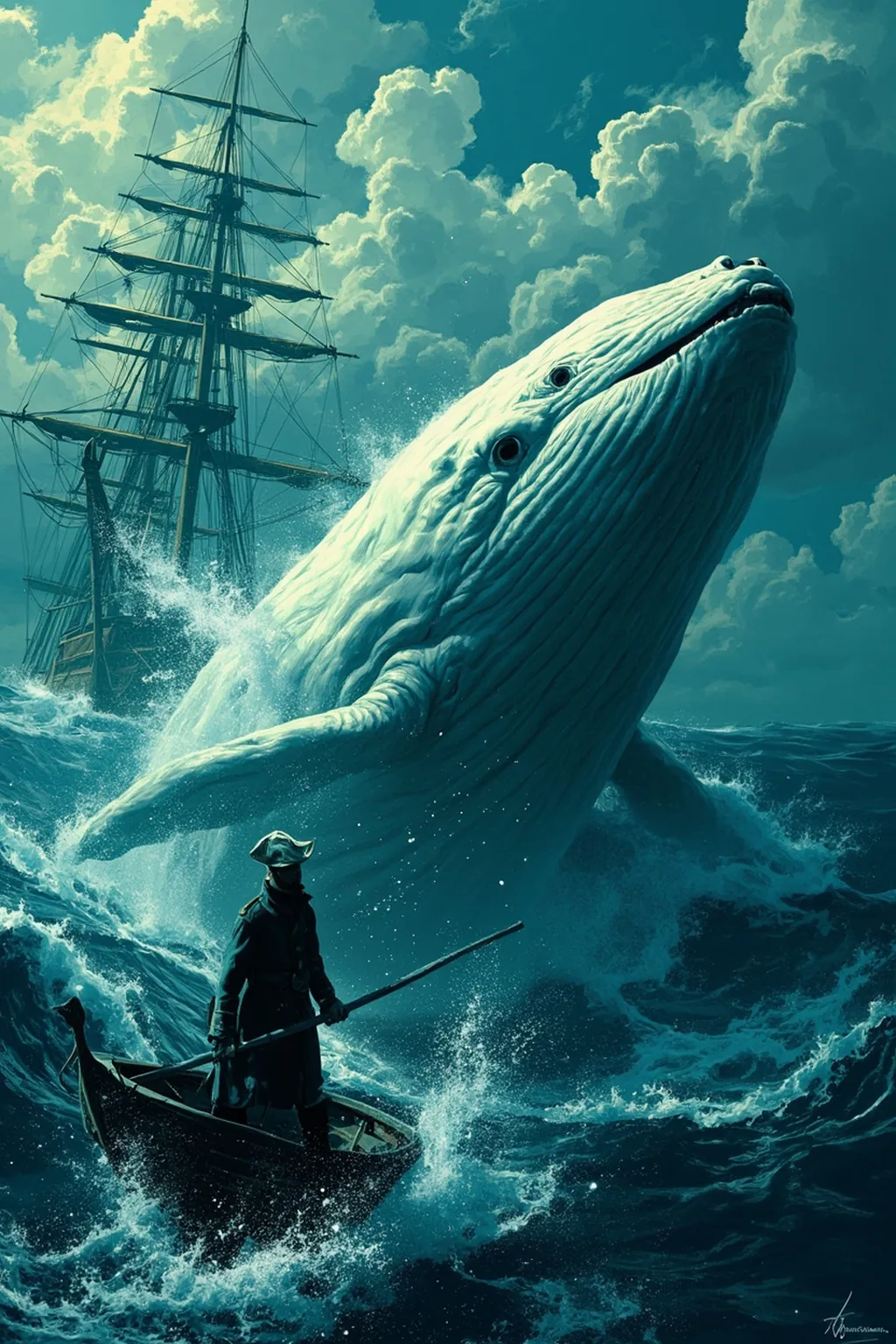
Whale Pod Sighted, Chase Begins
After receiving the supplies he needs, Derick heads back toward his ship, but whale spouts are almost immediately spotted from the mastheads of both vessels; so eager is Derick for the chase that he does not stop to return to the Jungfrau, instead turning his boat directly toward the pod of whales.
The Slow, Injured Bull Whale
A huge, aged bull whale lags far behind the fast-moving pod of eight whales: he moves slowly due to apparent illness or injury, has yellowish growths crusted over his skin, a damaged muzzle, labored, choking spouts, and is missing his starboard fin, leaving a faltering, devious wake as he struggles to keep pace with the pod.
Race for the Wounded Whale
All competing whaling boats from both the Pequod and Jungfrau target the slow, large injured bull whale, as he is the most valuable quarry and closest to them, while the rest of the pod moves too quickly to pursue; Derick’s boat initially leads the race, and he taunts the Pequod’s crews by shaking his now-empty lamp-feeder and tossing his oil can to slow his rivals as they close the gap.
Pequod Overtakes Derick, Harpoons Whale
The Pequod’s three boats, spurred on by Derick’s taunts, gain ground after Derick’s midship oarsman catches a crab that nearly capsizes the German boat; Queequeg, Tashtego, and Daggoo simultaneously harpoon the whale, and their boats slam into Derick’s craft, spilling the German captain and his harpooneer into the sea as they pass.
Wounded Whale Sounds, Boats Hold Fast
The whale dives rapidly after being struck, the harpoon lines running out so fast they gouge deep grooves in the Pequod’s loggerheads; the boats are pulled down almost to the waterline, held in place by the tension of the lines as the whale descends into the deep, with the crews bracing to avoid being pulled under or running out of line.
Exhausted Whale Rises, Is Killed
The exhausted whale eventually rises back to the surface, his non-valvular blood vessels causing him to bleed steadily from his wounds; the Pequod’s crews lance him repeatedly as he surfaces, and the already aged, injured, blind whale is killed to be processed for oil.
CAPÍTULO 81. The Pequod Meets The Virgin.
The chapter opens with an active whale hunt, where Flask attempts to prick a wounded whale despite Starbuck’s urgent protests, provoking the injured creature’s violent retaliation.
The Death Stroke
Goaded by unbearable pain from the wound, the whale spouts thick blood and blindly rams Flask’s boat, capsizing it and covering the crew in gore. Already drained of blood, the whale helplessly rolls, flaps its stumped fin, slowly revolves, and dies, its final spout fading like a slowly drained fountain.
Securing the Body
The whale’s body begins to sink with its blubber fully intact, so Starbuck orders lines secured to the carcass at multiple points to use the boats as temporary buoys. When the Pequod arrives, the body is transferred to her side and fastened tightly with stiff fluke-chains to prevent it from sinking completely.
Ancient Weapons Found Within
While cutting into the whale, the crew finds a corroded harpoon embedded in its flesh, plus a stone lance-head with perfectly healed flesh around it, indicating it was inflicted long before, possibly by pre-Columbian Indigenous whalers operating in the region.
The Sinking Carcase
The whale’s carcass grows increasingly heavy, dragging the Pequod dangerously sideways and tilting her deck nearly vertical. All attempts to pry the fluke-chains free from the ship’s timberheads fail as the carcass sinks lower, putting the vessel at imminent risk of capsizing.
Cutting the Chains
With no alternative to save the ship, Stubb orders the fluke-chains cut. Queequeg uses a heavy hatchet to slash the chains from a porthole, and the immense strain on the fastenings causes them to snap instantly. The Pequod rights herself as the whale carcass sinks fully.
Why Whales Sometimes Sink
The occasional sinking of recently killed, healthy young sperm whales remains unexplained to whalers, unlike the more common sinking of right whales which carry heavy, dense bone. Sunken whale carcasses often resurface days later as decomposing gases build up, turning them into buoyant “animal balloons”; New Zealand shore whalers attach buoys to sunken right whales to mark their location for later retrieval.
The original text of this work is in the public domain. This page focuses on a guided summary article, reading notes, selected quotes, and visual learning materials for educational purposes.