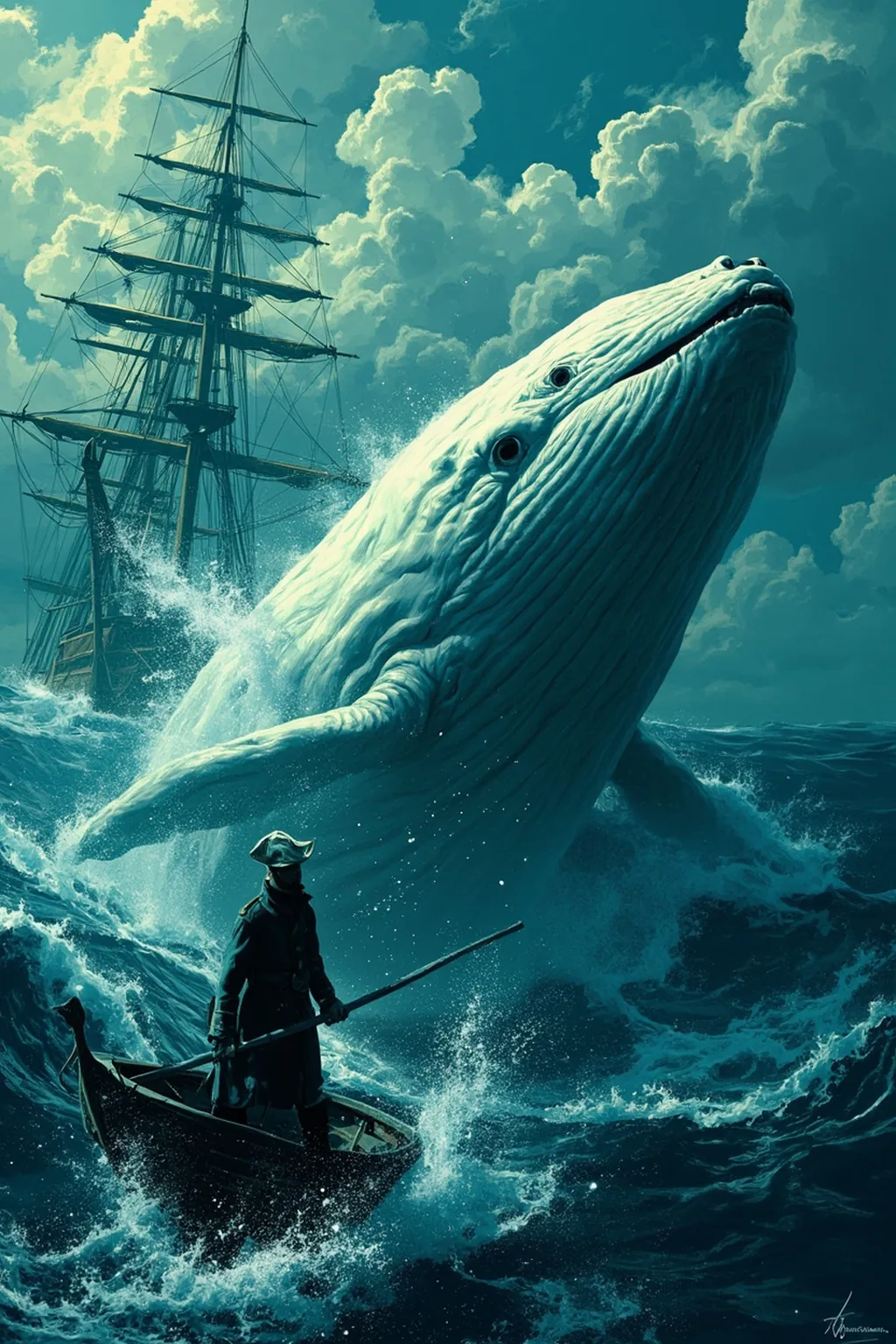
Queequeg Ends His Ramadan and Departs for the Pequod
Ishmael then endeavored to persuade Queequeg, beginning with the rise and progress of the primitive religions, laboring to show him that all Lents, Ramadans, and prolonged ham-squattings were stark nonsense, bad for the health, and useless for the soul. He argued that fasting makes the body cave in, hence the spirit caves in, and all thoughts born of a fast must necessarily be half-starved. When Queequeg mentioned he had been troubled with dyspepsia only upon one memorable occasion after a great feast given by his father the king following a great battle, Ishmael shuddered and said that would do. Ultimately, Ishmael did not think his remarks made much impression on Queequeg, who seemed dull of hearing on that important subject and thought he knew a good deal more about the true religion than Ishmael. Queequeg rose, took a prodigiously hearty breakfast of chowders, and they sallied out to board the Pequod.
第十八章 His Mark.
This chapter, the eighteenth in the narrative, centers on Ishmael and Queequeg’s final preparations to board the whaling vessel Pequod. The chapter’s title, “His Mark,” refers both to Queequeg’s distinctive tattoo—which serves as his signature—and to the broader theme of marking one’s identity and belonging. The narrative dramatizes the encounter with the Pequod’s owners, Captains Peleg and Bildad, who interrogate Queequeg about his qualifications and religious status before permitting him to join the crew. Through humor, irony, and the clash of worldviews between the pragmatic Peleg and the devoutly religious Bildad, the chapter explores themes of prejudice, conversion, skill, and the tension between Christian piety and the savage courage required for whaling.
The original text of this work is in the public domain. This page focuses on a guided summary article, reading notes, selected quotes, and visual learning materials for educational purposes.