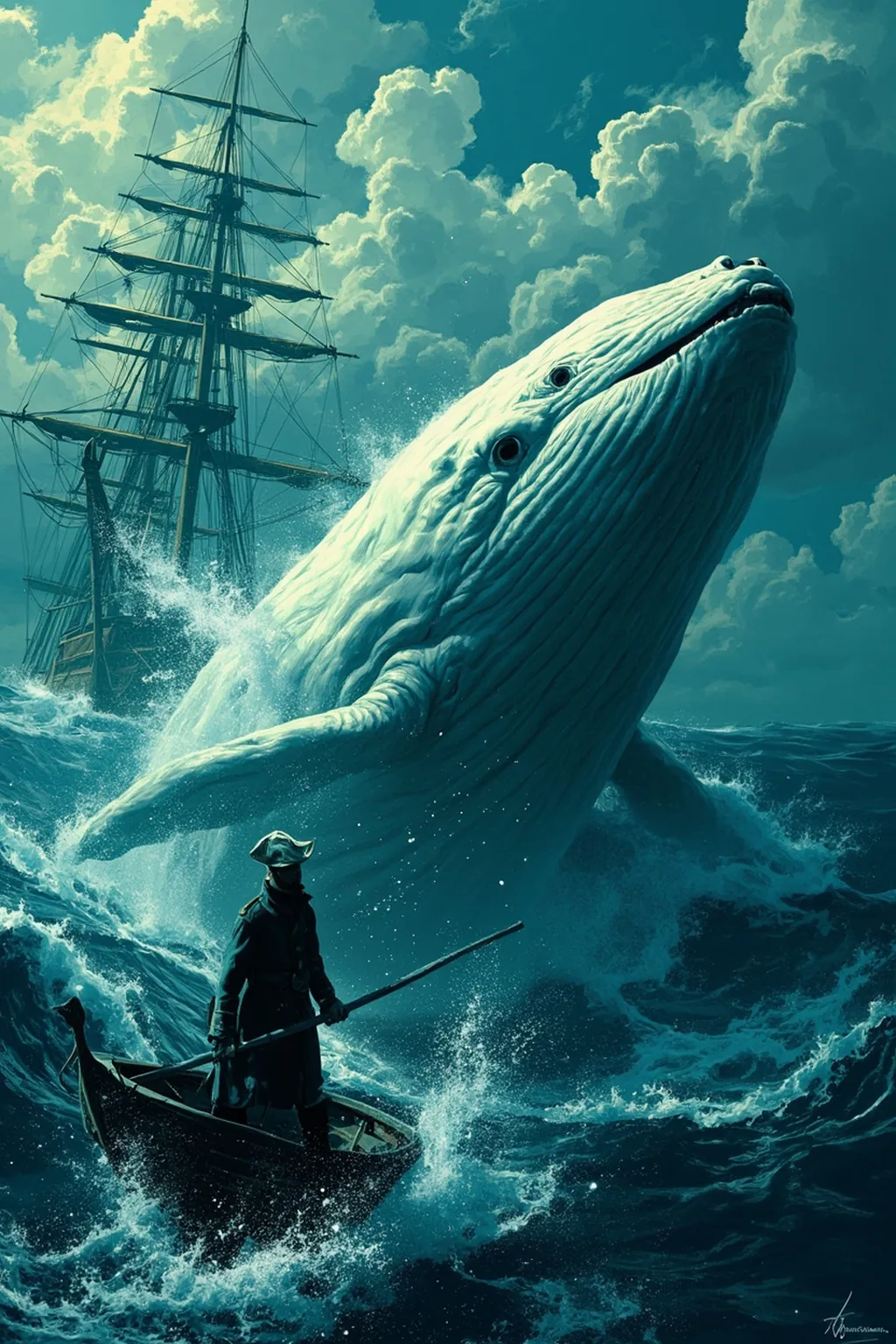
第二十三章 The Lee Shore.
The chapter centers on Bulkington, a newly-landed mariner who, immediately after completing a four-year dangerous voyage, signs on to the Pequod and faces another tempestuous journey through the cold winter sea, unable to endure the safety and comfort of shore life. Melville uses an extended metaphor of a ship driven along a leeward land, wherein the port—representing safety, warmth, friends, and hearthstone—becomes the ship’s direst danger, compelling her to flee all hospitality and rush toward the lashed sea’s “landlessness” in pursuit of her own independence. The chapter argues that like the ship, the soul must resist the “treacherous, slavish shore” and that only in complete landlessness and defiance of all earthly comforts can one achieve the highest truth, comparing this struggle to a grim demigod’s apotheosis rising straight up from the spray of ocean-perishing.
Earlier Mention of Bulkington and His Return to the Pequod’s Helm
The chapter revisits the figure of Bulkington, a tall, newly-landed mariner who was first introduced earlier in the novel during Ishmael’s encounter with him at an inn in New Bedford. On a shivering winter’s night, just as the Pequod departed into hostile waters, Ishmael observed Bulkington standing at the ship’s helm. This sighting is remarkable because Bulkington had only just completed a four-year dangerous voyage, yet immediately thrust himself back into another tempestuous journey. Ishmael notes the extraordinary nature of this choice—the land itself seemed scorching to Bulkington’s feet, driving him inexorably back to sea despite any reasonable desire for rest.
The original text of this work is in the public domain. This page focuses on a guided summary article, reading notes, selected quotes, and visual learning materials for educational purposes.