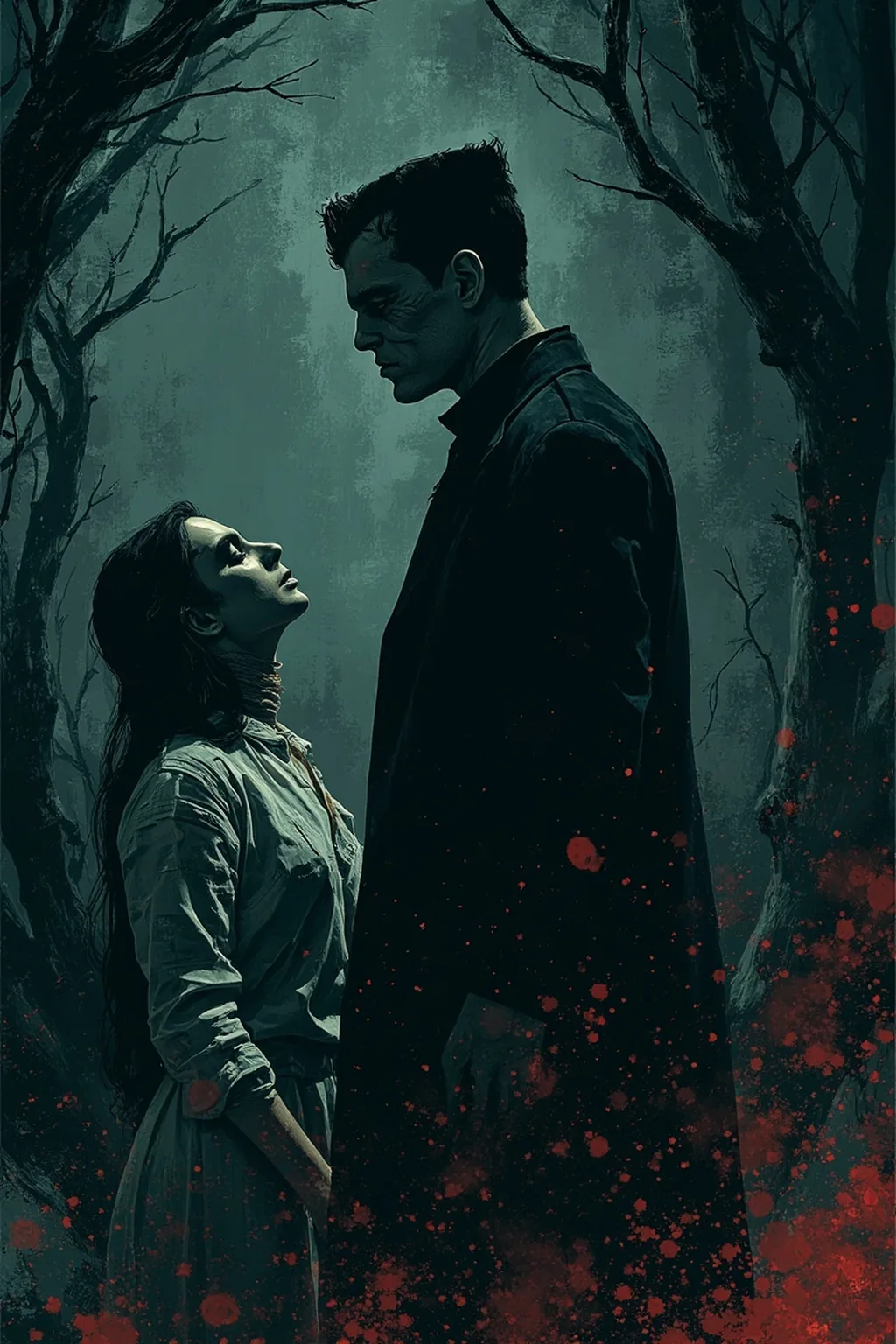
The Books That Forged His Mind
The monster recounted the cottagers’ history with rapt attention, his heart softening as he learned to admire human virtue, while the concept of crime felt distant and unreal. In early August, while foraging for food in the woods, he stumbled on a leather portmanteau stuffed with clothes and books written in the cottage’s language: Paradise Lost, Plutarch’s Lives, and The Sorrows of Werter. From that moment on, the volumes were his constant companions.
The Sorrows of Werter flooded him with vivid new images—first soaring ecstasy, then crushing dejection. He revered the novel’s hero as near-divine, and found himself drawn to the character’s musings on death. Yet as he read, the sharp contrast between himself and these fictional beings cut him to the quick: he was unformed in mind, dependent on no one, tied to no one. “The path of my departure was free,” he thought, and no soul would mourn his annihilation. Who was he? What was he, even?
Plutarch’s Lives affected him differently: if Werter left him despondent, Plutarch lifted his thoughts to lofty heights. He grew to admire gentle lawgivers—Numa, Solon, Lycurgus—far more than warlike conquerors like Romulus and Theseus. But Paradise Lost stirred something deeper still. Like Adam, he seemed bound to no other being by any tie of kinship or affection—yet Adam was God’s perfect creation, while he was wretched, helpless, and utterly alone. More often than not, he saw himself in Satan: the fallen angel’s bitter envy flared whenever he gazed on the cottagers’ quiet joy.
Soon after, he found papers tucked in the clothes he’d taken from Victor’s laboratory: Victor’s journal, chronicling the four months before his creation, documenting every step of the process that had produced his loathsome form. “Hateful day when I received life!” he cried out. “Accursed creator! Why did you form a monster so hideous that even you turned from me in disgust?”
Yet as he watched the cottagers’ virtues on full display, he dared to hope they might look past his deformity. He put off speaking to them as his understanding of the world grew. In the meantime, Safie’s arrival had brought prosperity to the household: Felix and Agatha had servants now, their days were calm and serene, while his own inner world grew more and more turbulent. When winter came, he resolved to make his move when old De Lacey, who was blind, was alone—his voice carried no hint of terror, and if he could win the old man’s goodwill, perhaps the younger members of the family would learn to tolerate him.
One crisp autumnal day, Safie, Agatha, and Felix all left the cottage. The blind old man sat playing mournful tunes on his guitar, then fell still in quiet thought. The monster’s heart hammered in his chest. The servants were gone. He pried away the planks hiding his hovel and stepped out into the open.
He rapped on the door. “Come in,” De Lacey called. He stepped inside, claiming to be a traveler seeking a place to rest. A heavy silence fell, then De Lacey guessed he was French. “No,” the monster replied, “I was educated by a French family. My friends live just nearby, but they are prejudiced against me. I have lived among them in daily kindness for months. They believe I mean to harm them.”
Blind to his appearance, De Lacey heard only the sincerity in his voice. The monster’s heart broke; he grasped the old man’s hand tightly. “Now is the time!” he begged. “Save and protect me! You and your family are the friends I have longed for. Do not desert me in my darkest hour!”
The door creaked open. Felix, Safie, and Agatha stepped inside. Horror washed over them. Agatha fainted dead away; Safie shrieked and fled the room. Felix tore the monster away from his father and struck him with full force. The monster could have torn Felix limb from limb in an instant, but his heart sank and he held back. He slipped out and fled back to his hovel.
“Cursed, cursed creator! Why did I ever draw breath?” Rage consumed him. At night he wandered the woods, howling like a feral beast. But eventually exhaustion broke his spirit. He declared war on the entire human race.
By morning he had reconsidered, resolving to return and win the old man over to his side. But the cottagers never appeared. Felix finally emerged with a companion in tow. “We can never again inhabit your cottage,” he said. “The life of my father is in the greatest danger. Take possession of your tenement and let me fly from this place.” They left forever, never to return.
Utter despair crashed over him. Revenge and hatred filled his chest. He piled combustibles around the cottage, waited for the moon to sink below the horizon, and set it ablaze. Then he fled toward Geneva, traveling by day, braving snow and frozen rivers along the way.
Once, near the Swiss border, a young girl tumbled into a fast-flowing stream; he dragged her to safety, only to be shot by a local farmer who tore the girl from his grasp.
He eventually reached the outskirts of Geneva. There a beautiful young child ran past him, and for a fleeting moment he thought the boy was free of prejudice. He seized the child, but the boy shrieked and called him monster, ogre. “Frankenstein! You belong to my enemy, then—you shall be my first victim.” He wrapped his hand around the boy’s throat; in moments, the child lay dead. A portrait of a lovely woman hung on the boy’s breast; rage surged through him anew, and he fled to a nearby barn where a young woman slept. He tucked the portrait into her dress before slipping away.
Wandering toward the mountains, consumed by a burning desire only Victor could satisfy, he laid out his demand: humanity would never associate with him, but a creature as deformed and horrible as himself would not turn him away. “You must create this being for me.”
The original text of this work is in the public domain. This page offers a compressed quick-read summary for educational purposes.