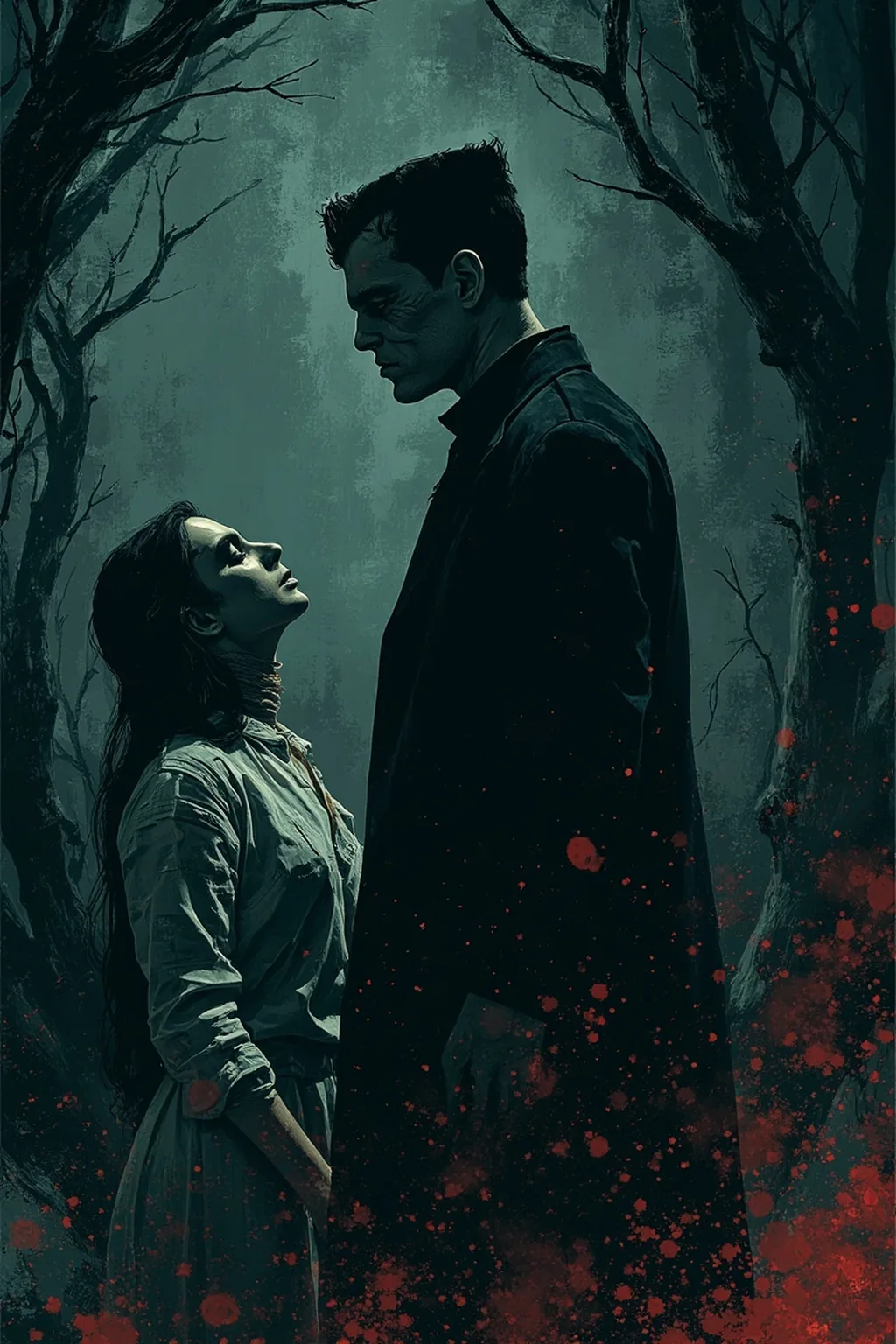
Frankenstein
The creature fixed his gaze upon me, awaiting my answer. But I was bewildered, unable to arrange my thoughts after his long tale. He continued,
“You must create a female for me with whom I can live in the interchange of those sympathies necessary for my being. This you alone can do, and I demand it of you as a right you must not refuse.”
The latter part of his tale had kindled anew the anger that had died away while he narrated his peaceful life among the cottagers. “I do refuse it,” I replied, “and no torture shall ever extort a consent from me. You may render me the most miserable of men, but you shall never make me base in my own eyes. Shall I create another like yourself, whose joint wickedness might desolate the world? Begone! I have answered you; you may torture me, but I will never consent.”
“You are in the wrong,” replied the fiend. “I am malicious because I am miserable. You, my creator, would tear me to pieces and triumph. Shall I respect man when he condemns me? Yet mine shall not be the submission of abject slavery. I will revenge my injuries; if I cannot inspire love, I will cause fear, and chiefly towards you, my arch-enemy, because my creator. Have a care; I will work at your destruction, nor finish until I desolate your heart, so that you shall curse the hour of your birth.”
A fiendish rage animated him, his face contorted beyond human sight, but presently he calmed himself. “I intended to reason. I demand a creature of another sex, as hideous as myself; the gratification is small, but it is all I can receive. We shall be monsters, cut off from all the world; but on that account we shall be more attached to one another. Our lives will not be happy, but they will be harmless and free from the misery I now feel.”
I was moved. I shuddered when I thought of the possible consequences, but I felt there was some justice in his argument. He saw my change of feeling and pressed his advantage, swearing he would go to the vast wilds of South America, that his food was not that of man, and that his companion would be content with the same fare. The picture was peaceful and human.
But I replied that he who longed for the love of man could not persevere in exile; he would return, his evil passions would be renewed, and he would have a companion to aid him in destruction. “This may not be; cease to argue the point, for I cannot consent.”
“How inconstant are your feelings! I swear to you, by the earth which I inhabit, and by you that made me, that with the companion you bestow, I will quit the neighbourhood of man and dwell in the most savage of places. My evil passions will have fled, for I shall meet with sympathy.”
His words had a strange effect upon me. I compassionated him, but when I looked upon him, when I saw the filthy mass that moved and talked, my heart sickened. Yet I thought, as I could not sympathise with him, I had no right to withhold the small portion of happiness in my power to bestow.
“You swear to be harmless,” I said, “but have you not already shown a degree of malice that should make me distrust you?”
“I must not be trifled with. If I have no ties and no affections, hatred and vice must be my portion; the love of another will destroy the cause of my crimes, and I shall become linked to the chain of existence from which I am now excluded.”
After a long pause of reflection I concluded that the justice due both to him and my fellow creatures demanded that I should comply. “I consent to your demand, on your solemn oath to quit Europe for ever, and every other place in the neighbourhood of man, as soon as I shall deliver into your hands a female who will accompany you in your exile.”
“I swear,” he cried, “by the sun, and by the blue sky of heaven, and by the fire of love that burns my heart, that if you grant my prayer, while they exist you shall never behold me again.”
He suddenly quitted me and descended the mountain with greater speed than the flight of an eagle, quickly lost among the undulations of the sea of ice.
His tale had occupied the whole day. Night was far advanced when I came to the halfway resting-place and seated myself beside the fountain. I wept bitterly, and clasping my hands, I exclaimed, “Oh! stars and clouds and winds, ye are all about to mock me; if ye really pity me, crush sensation and memory; but if not, depart, and leave me in darkness.”
Morning dawned before I arrived at Chamounix. I took no rest but returned immediately to Geneva. My haggard appearance awoke intense alarm, but I answered no question. I felt as if I were placed under a ban. Yet even thus I loved them to adoration, and to save them, I resolved to dedicate myself to my most abhorred task.
Day after day passed away, and I could not collect the courage to recommence my work. My health was now much restored, and my father saw this change with pleasure. But the memory of my unhappy promise returned by fits and overcast the approaching sunshine with devouring blackness.
It was after my return from one of these rambles that my father, calling me aside, addressed me. “I confess, my son, that I have always looked forward to your marriage with our dear Elizabeth as the tie of our domestic comfort. You were attached to each other from your earliest infancy.”
“My dear father, reassure yourself. I love my cousin tenderly and sincerely.”
“If you feel thus, we shall assuredly be happy. Tell me whether you object to an immediate solemnisation of the marriage.”
I remained silent. To me the idea of an immediate union with Elizabeth was one of horror; I was bound by a solemn promise which I had not yet fulfilled. I must perform my engagement and let the monster depart before I allowed myself to enjoy the delight of a union from which I expected peace.
I expressed a wish to visit England, concealing the true reasons of my request. After so long a period of absorbing melancholy, my father was glad to find me capable of taking pleasure in such a journey. Without previously communicating with me, he had arranged with Elizabeth that Clerval should join me at Strasburgh.
To England, therefore, I was bound. One feeling haunted me: during my absence I should leave my friends unconscious of their enemy. But he had promised to follow me wherever I might go, and this imagination was dreadful in itself, yet soothing inasmuch as it supposed the safety of my friends.
The original text of this work is in the public domain. This page offers a compressed quick-read summary for educational purposes.