Casaubon’s Arrival and First Private Conversation with Dorothea
Mr. Casaubon arrives at Tipton Grange for dinner and speaks privately with Dorothea, during which he expresses delight at her childlike and unrestrained devotion, while she assures him of her desire to share in his great scholarly ends. They decide that the marriage will take place within six weeks, Mr. Casaubon’s mansion being ready to receive them.
CHAPTER VI.
This chapter opens with a verse describing a sharp, discerning lady’s cutting wit, before moving to a chance gateway encounter between Mr. Casaubon’s carriage and a well-regarded local woman’s pony phaeton. It follows the woman’s playful, sharp-tongued banter with lodge-keeper Mrs. Fitchett, outlines her warm, widely beloved reputation across the local parishes, depicts her teasing political taunt of Mr. Brooke over his suspected Liberal leanings, shows Celia confirming Dorothea’s engagement to Mr. Casaubon, and ends with Mrs. Cadwallader delivering the devastating engagement news to Sir James Chettam.
Opening Verse on a Lady’s Tongue
A short poetic verse opens the chapter, framing a sharp-tongued lady’s wit as functional and discerning: it compares her speech to meadow blades that cut when stroked, noting her ability to divide with a “spiritual edge” and derive intangible gains from her incisive remarks.
Gateway Carriage Encounter
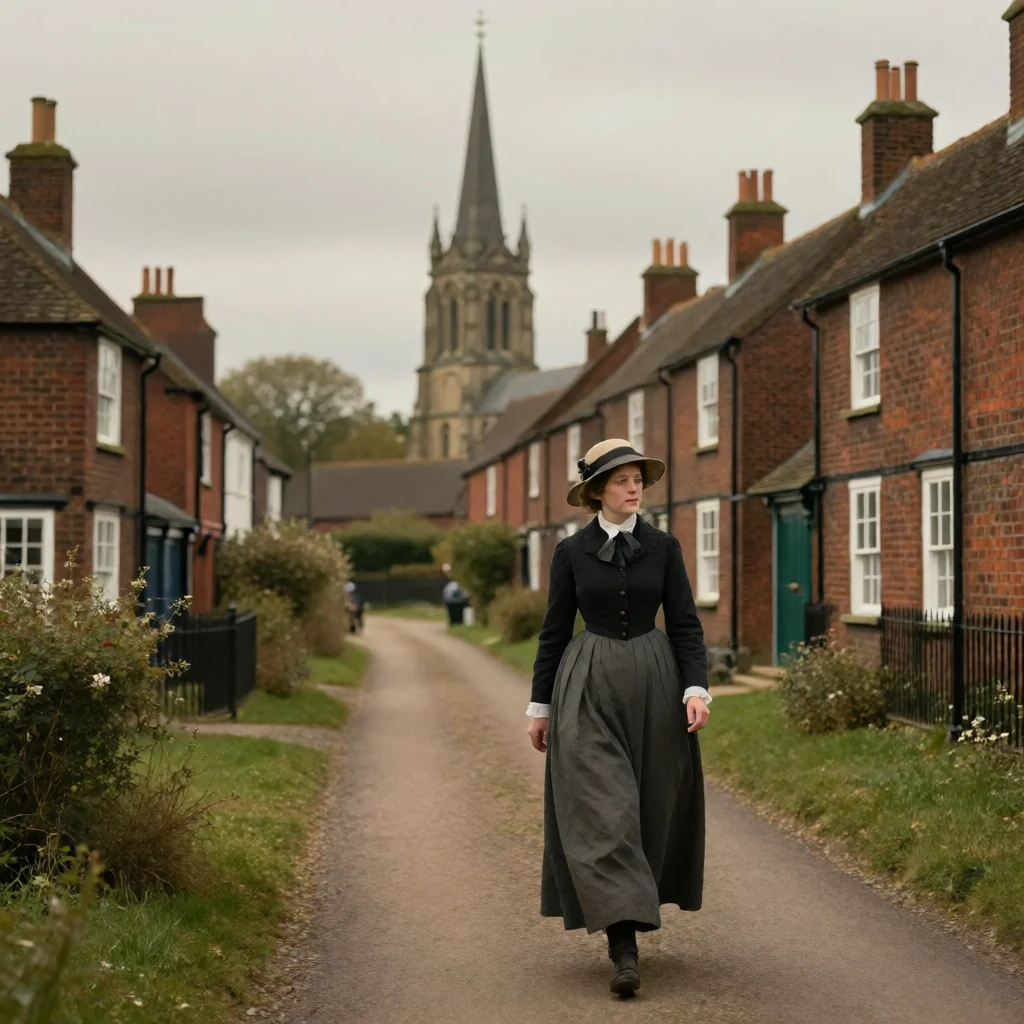
As Mr. Casaubon’s carriage exits a gateway, it is stopped by a pony phaeton driven by a sharp-eyed lady, who nods and greets Mr. Casaubon even as he looks absent-minded down the road. The lodge-keeper treats the lady—despite her shabby bonnet and old Indian shawl—as an important personage, dropping a low curtsy as she enters the grounds.
Mrs. Cadwallader and Mrs. Fitchett’s Banter
The lady, identified as Mrs. Cadwallader, engages in playful, sharp banter with lodge-keeper Mrs. Fitchett about Fitchett’s fowls, which have taken to eating their own eggs. Mrs. Cadwallader teases the “cannibal” fowls, offers to trade church tumbler pigeons for them, and jokes that Fitchett is already half-compensated for the fowls via the Rector’s Sunday sermons. Fitchett laughs and shakes her head at Mrs. Cadwallader’s blunt, penny-pinching nature as the phaeton drives away.
Mrs. Cadwallader’s Local Parish Reputation
The narrative details Mrs. Cadwallader’s widespread, affectionate reputation across the parishes of Freshitt and Tipton: a woman of supposedly obscure noble birth who lives in genteel poverty, haggles prices sharply, and tells cutting but companionable jokes that endear her to both farmers and laborers. Her unpretentious, witty neighborliness softens the bitterness of the local tithe system for parishioners, who would find a stiff, dignified clergyman’s wife far less engaging and socially unifying.
Mrs. Cadwallader’s Political Taunt of Mr. Brooke
Mrs. Cadwallader visits Mr. Brooke in his library to tease him about his suspected Liberal political leanings. She accuses him and Mr. Casaubon of plotting “bad polities,” claims they plan to run for Middlemarch on the Whig side and bribe voters with pamphlets, and warns him he will make a fool of himself on the hustings. She mocks his unaligned, independent political stance as unreliable, and notes that his plans to marry Dorothea to Sir James Chettam will be undermined if he makes himself a public Whig figure. Mr. Brooke deflects her teasing, but is clearly uncomfortable with her sharp assessment of his actions.
Celia Confirms Dorothea’s Engagement to Casaubon
Mr. Brooke reveals to Mrs. Cadwallader that Dorothea has chosen to become engaged to Mr. Casaubon instead of Sir James Chettam, much to his own disappointment. Before he can elaborate, Celia enters the room, and Brooke uses the excuse of needing to speak to his groom about the horses to leave. Mrs. Cadwallader immediately questions Celia about the engagement; Celia confirms Dorothea is engaged to Mr. Casaubon, with a wedding planned in six weeks, noting Dorothea believes Mr. Casaubon has a great soul. Mrs. Cadwallader expresses shock, warns Celia not to accept a suitor with a “great soul” in future, and remarks that Celia would have made a far better match for Sir James than Dorothea.
The original text of this work is in the public domain. This page offers a compressed quick-read summary for educational purposes.