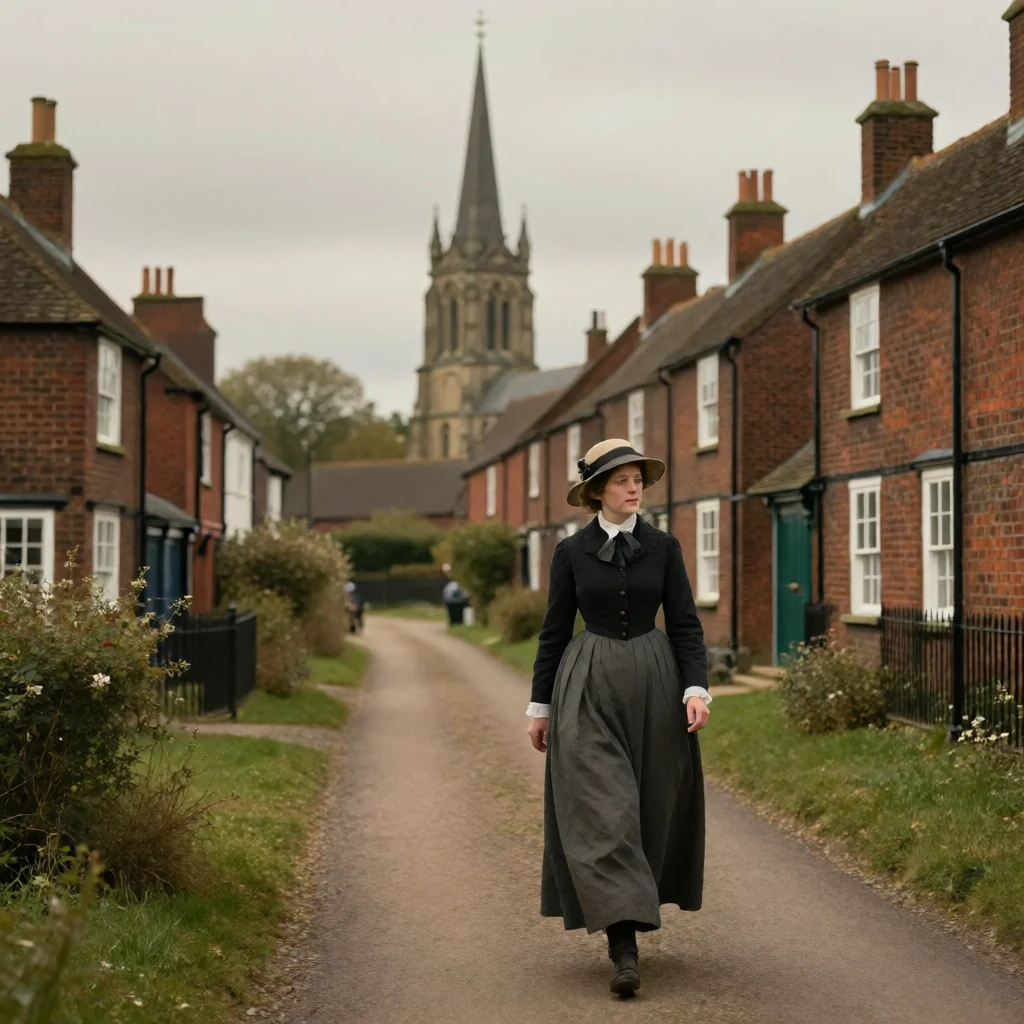
Return to Tipton and Discovery of the Pamphlets
Upon arriving back at Tipton Grange, Dorothea is met by her uncle Mr. Brooke, who mentions he stopped at Lowick Parsonage that day and brought back two early Church pamphlets annotated with Mr. Casaubon’s marginal notes, which are waiting for her in the library. The news immediately lifts Dorothea’s spirits, and she rushes to the library to read the pamphlets, finding solace in the scholarly work and momentarily escaping the distress of the carriage conversation and the stifling social dynamics of her life in Tipton and Freshitt.
Mr. Brooke Reveals Mr. Casaubon’s Marriage Proposal
In the library, Mr. Brooke formally discloses to Dorothea that Mr. Casaubon has requested his permission to propose marriage to her, noting that the introverted scholar holds Dorothea in very high regard and may eventually rise to the rank of bishop. Dorothea immediately accepts the prospect of the proposal, stating she admires and honors Casaubon more than any man she has ever met, and firmly dismisses any possibility of marrying Sir James Chettam. Mr. Brooke expresses mild surprise at her choice, noting his reservations about the match (Casaubon’s advanced age, uncertain health, and reclusive nature) but ultimately reaffirms he will support Dorothea’s decision, hands her a letter from Casaubon, and privately reflects on the inscrutability of young women’s romantic preferences.
Chapter 6: Mr. Casaubon’s Proposal and Dorothea’s Engagement
Mr. Casaubon delivers a formal written proposal to Dorothea Brooke, expressing his belief that she possesses the rare combination of mental and emotional qualities suited to share his scholarly life. Dorothea responds with profound emotional acceptance, viewing the match as a sacred initiation into a higher, more purposeful existence. She composes and sends her acceptance letter, then shares the news first with her guardian, Mr. Brooke, who expresses mild surprise but ultimately consents to the match, and subsequently with her sister, Celia, who is initially distressed by the engagement. Mr. Casaubon arrives at Tipton Grange, and he and Dorothea share their first private conversation as engaged couple, agreeing to marry within six weeks.
Opening Epigraph on Scholarly Health Ailments
The chapter opens with an epigraph taken from Robert Burton’s Anatomy of Melancholy, which catalogues the physical ailments commonly afflicting hard students and scholars—including gout, rheumatism, stone, colic, vertigo, and consumptions—all attributed to immoderate sitting and excessive study.
Mr. Casaubon’s Formal Written Proposal to Dorothea Brooke
Mr. Casaubon presents his formal written proposal to Dorothea, stating that from their first meeting he recognized her “eminent and perhaps exclusive fitness” to address the need for companionship he has felt in his solitary scholarly existence, and requesting confirmation that her sentiments align with his “happy presentiment” of a future together.
Dorothea’s Emotional Response to the Proposal
Upon reading the proposal, Dorothea is overwhelmed by solemn emotion, kneeling and sobbing until the time comes to dress for dinner. She interprets the letter as the beginning of a fuller life in which she can devote herself to the service of a mind she reveres, viewing herself as a neophyte entering upon a higher grade of initiation.
Dorothea Composes and Finalizes Her Acceptance Letter
After dinner, Dorothea ascends to her room to compose her acceptance letter, rewriting it three times due to her unusually uncertain handwriting; she takes pride in her ability to write clearly so as to spare Mr. Casaubon’s eyes unnecessary strain.
Dorothea Shares the Engagement with Her Guardian Mr. Brooke
Dorothea gives her acceptance letter to her guardian, Mr. Brooke, to be sent the following morning. Mr. Brooke questions whether she has given sufficient thought to the decision, referring to the disappointed Sir James Chettam, but ultimately accepts the match, noting Casaubon’s good position and standing.
Dorothea Informs Celia of Her Engagement to Mr. Casaubon
The next day at luncheon, Dorothea reveals her engagement to her sister Celia, who is initially shocked and distressed, feeling a sense of shame at the prospect of the match; nevertheless, Celia’s sisterly affection overcomes her misgivings, and she offers gentle support, though both sisters acknowledge that they admire entirely different things in life.
The original text of this work is in the public domain. This page offers a compressed quick-read summary for educational purposes.