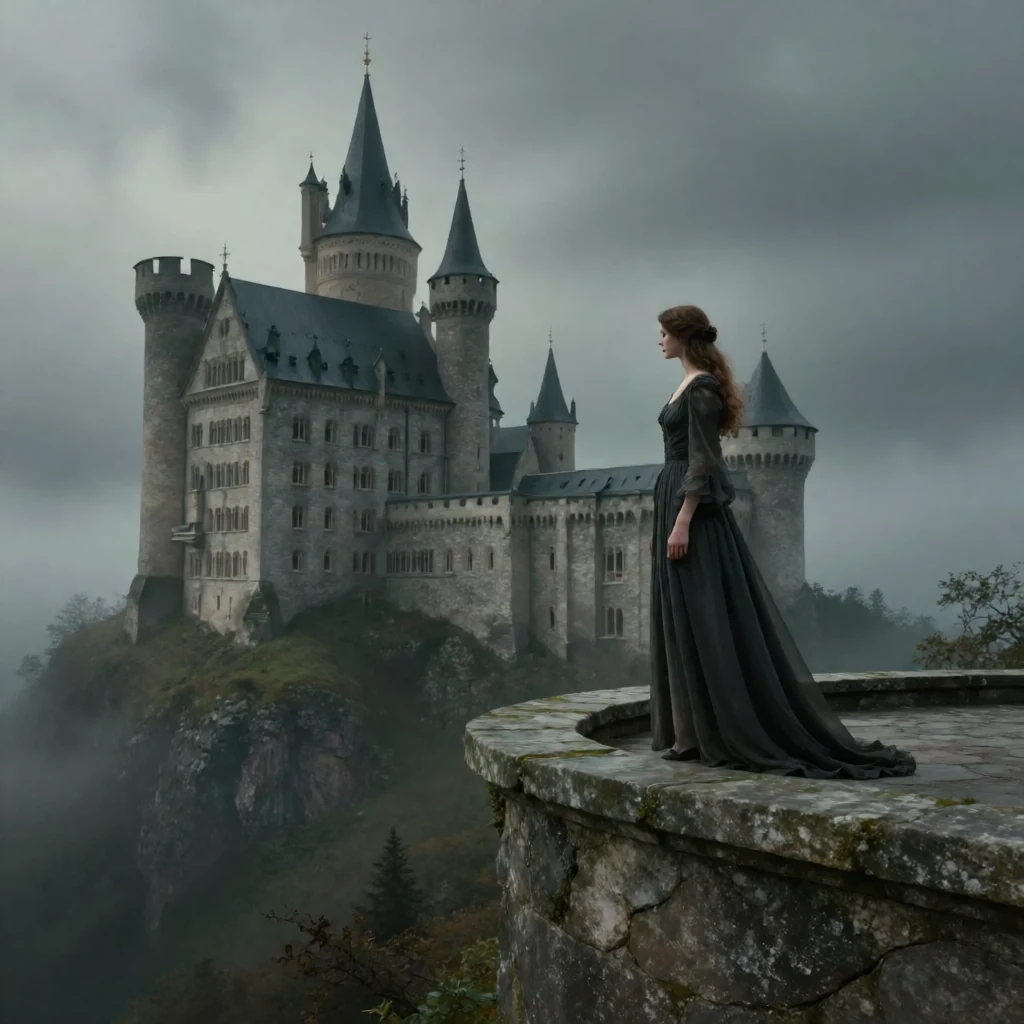
The Journey Resumed
Once Valancourt has recovered enough to travel (though he is still too unwell to ride a horse), St. Aubert invites him to join the party in the carriage for the next leg of their journey. St. Aubert has discovered Valancourt is from a respectable Gascon family he is familiar with, so Valancourt accepts the offer gladly, and the group sets out again through the romantic mountain wilds of Rousillon.
CHAPTER IV
This chapter follows Emily St. Aubert, her father St. Aubert, and Valancourt as they journey through mountainous terrain toward the convent of St. Claire, documenting their encounters with awe-inspiring alpine landscapes, the growing tender affection between Valancourt and Emily, and moments of quiet reflection and spiritual devotion.
Leisurely Travel Through the Mountains
The party travels at a slow, unrushed pace, pausing whenever they encounter particularly grand scenery, often dismounting to walk to elevated viewpoints inaccessible to their mules. They stroll across hillocks covered in lavender, wild thyme, juniper, and tamarisk, and through wooded areas where they glimpse vast, sublime mountain vistas unlike anything Emily has previously seen.
Valancourt’s Growing Tenderness
While St. Aubert occasionally stops to botanize, Valancourt and Emily walk together, with St. Aubert pointing out natural features and reciting Latin and Italian poetry that Emily admires. When he believes he is unobserved, Valancourt often stares pensively at Emily, his voice taking on a soft, tender tone that reveals his deepening affection. These quiet, charged silences become more frequent, prompting the previously reserved Emily to speak at length about the surrounding landscape to avoid confronting the unspoken emotion between them.
The Ascent Into Alpine Grandeur
Departing from Beaujeu, the road steadily climbs, carrying the travelers into higher altitude regions marked by immense glaciers, snow-capped mountain summits, and deep, sheer precipices. They pause often to take in the overwhelming, awe-inspiring scenery, seated on wild cliffs where only ilex and larch trees can grow, looking out over dark fir forests and inaccessible glens where the sound of torrents is barely audible.
Contemplating the Glaciers and Peaks
The travelers reflect on the stupendous alpine landscape, including jagged granite peaks capped with unstable snow, distant mountain tops tinged ethereal blue or white, glacial valleys, and gloomy fir forests. The thin, clear high-altitude air fills them with quiet complacency and sublime emotion they struggle to put into words. St. Aubert is often moved to tears and walks away from his companions to process his feelings, while Valancourt points out notable landscape features to Emily, who is surprised by how distinct and deceptively close distant objects appear in the thin air.
The Descent Toward Rousillon
After traveling many leagues through the high alpine regions, the party begins their descent toward Rousillon, where verdant woods, pastures, humble cottages shaded by cedars, playful local children, and flowery hillside nooks replace the stark grandeur of the higher peaks. While the travelers are glad to rest their eyes on softer scenery after the exhausting vastness of the mountains, they also look back at the alpine views with quiet regret.
A Distant Pyrenees Pass at Sunset
As they descend, the travelers spot a grand Pyrenees pass leading into Spain in the distance to their right, its battlements and towers glowing in the setting sun, with yellow-wooded slopes below and snow-capped mountain peaks still tinged with rosy light from the sunset.
The Approach of Evening
St. Aubert searches for the small town of Montigny, where he planned to stop for the night, but no settlement appears as the sun sets. A long train of men, horses, and loaded mules winds down an opposite mountain, and the travelers realize they have miscalculated their travel time and will not reach Montigny by sunset as planned.
The Smugglers and the Soldiers
St. Aubert initially feels apprehension when he spots the large distant group, but his fears ease when he sees military uniforms on men at the front and rear of the procession. He concludes the main party is smugglers carrying prohibited goods across the Pyrenees who have been intercepted and defeated by the soldiers, eliminating his concerns about potential danger from the group.
The original text of this work is in the public domain. This page offers a compressed quick-read summary for educational purposes.