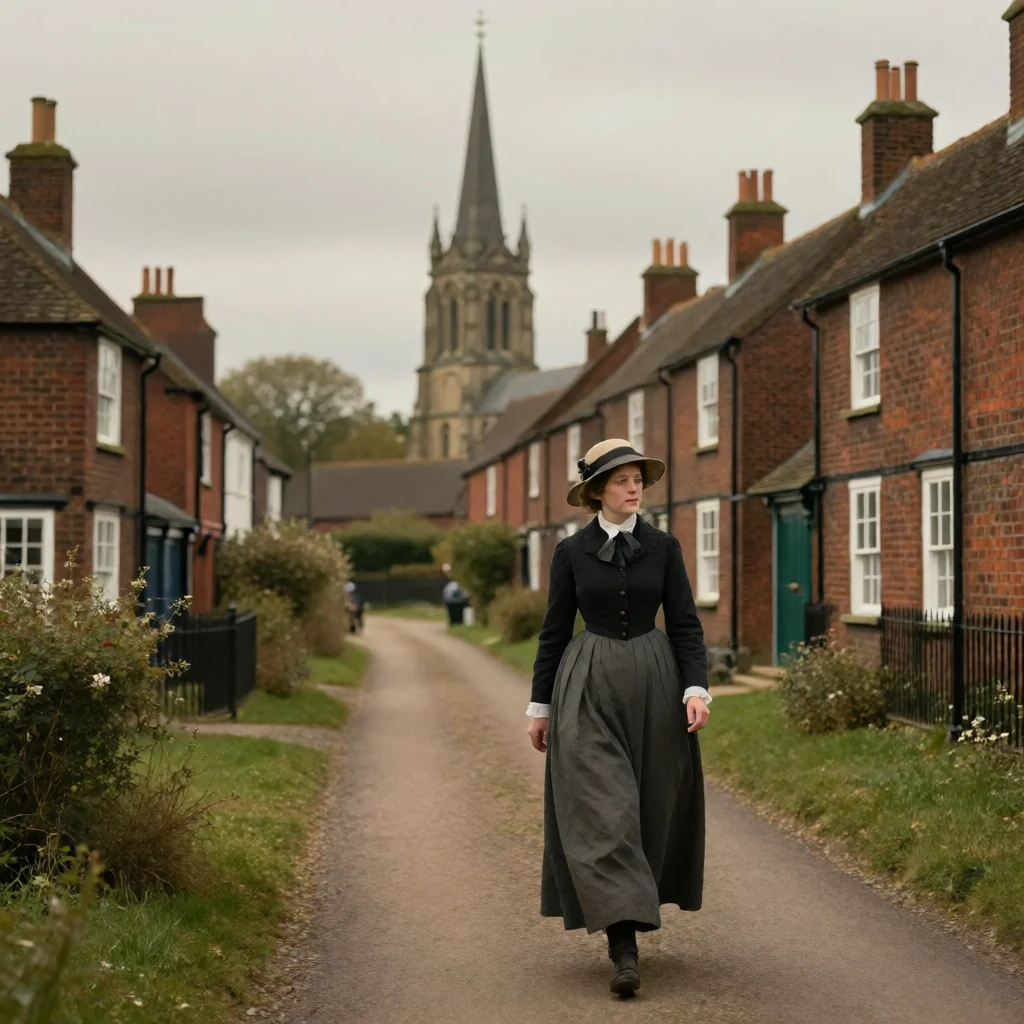
Dorothea Reassesses Her View of Casaubon
Dorothea receives Will’s words with strange quiet rather than the indignation she had shown in Rome. She is no longer fighting the facts but adjusting to their clearest perception, so that when she contemplates her husband’s failure and his possible consciousness of it, she feels herself being drawn along a path where duty becomes tenderness. Her husband’s dislike of Will now recommends Will to her mercy, softening her response.
Will Shares His Family Background
Will tells Dorothea of his grandmother, who was disinherited for marrying a Polish refugee who gave lessons for his bread, and of his grandfather, a multilingual, musical patriot who died early. He recalls little of his father beyond a slow walk, long thin hands, and a day of hunger by his sickbed; his mother he remembers as a dark-eyed, ringleted woman who had run away from her own family to go on the stage. Both parents, he notes lightly, were of rebellious blood, and Dorothea listens with the wide-eyed seriousness of a child seeing a drama for the first time.
Discussion of Will’s Newspaper Employment Offer
Will reveals that Mr. Brooke has purchased one of the Middlemarch newspapers and wishes him to conduct it, along with helping in other ways, and that he would rather stay in the neighborhood than go elsewhere, since he belongs to nobody anywhere else. Dorothea, asking whether this would not sacrifice higher prospects, is told that he has always been blamed for not settling to anything and that the offer is one he could accept, provided she does not disapprove. She answers at once, simply and readily as she had spoken at Rome, that she should like him to stay very much.
Dorothea Advises Will to Consult Casaubon
Immediately after expressing her wish that Will remain, Dorothea recollects that her husband feels differently and colors under the embarrassment of having spoken in opposition to his likely view. She therefore withdraws her personal feeling from the question and advises Will to be guided by Mr. Casaubon, suggesting he mention the proposal to him. The two part with a simple “Good-by,” each burdened with thoughts they do not express—Will longing to ask her not to raise the matter with Casaubon, Dorothea reluctant to seem to dictate her husband’s will.
Casaubon Sends Will a Formal Rejection Letter
Later that afternoon Casaubon returns in an unpropicious humor, declining Dorothea’s offer to read the papers and seeking solace instead in praise of his own Egyptian tractate by Dr. Spanning. On learning from Dorothea of Brooke’s proposal to Will, he listens in tight-lipped silence, and the next morning, without her knowledge, despatches a formal letter beginning “Dear Mr. Ladislaw” (a marked change from the familiar “Will”). He declares the proposed arrangement highly offensive to him, asserts a reasonable veto grounded in their relations as antecedents, condemns the impropriety of a near relative of his becoming conspicuous in a station beneath his own, and concludes by excluding Will from further reception at his house.
Dorothea Reflects on Familial Injustice
Unaware of the letter, Dorothea spends her private hours in the blue-green boudoir brooding on Will’s revelations, with the room itself seeming to gather a cloud of inward memories and the pale stag and miniatures forming a quiet audience. The figure of Aunt Julia—Will’s grandmother, long a mystery to her—now concentrates her feelings, and she is troubled anew by the wrongness of disinheriting a daughter merely for choosing a poor man. While she accepts that the customary entailment of land to eldest sons may rest on weighty historical and political reasons, here is a case of family ties left uninfringed, and all the energy of her nature ranges itself on the side of responsibility and the fulfillment of claims founded on marriage and parentage, against inheritance as a mere matter of liking.
CHAPITRE XXXVII.
Dorothea, after coming to recognize that Mr. Casaubon has a moral debt to the Ladislaws for past wrongs, resolves that the provision of his will leaving her the bulk of his estate ought to be altered so that Will Ladislaw might be secured a rightful income, and she attempts to broach this delicate subject with her husband during a sleepless night, only to be sharply rebuked for overstepping her scope and interfering in his affairs. Casaubon’s resentment deepens when Will Ladislaw returns a firm letter rejecting Casaubon’s attempt to dictate his movements and declaring his intention to maintain himself independently, leading the proud, secretly jealous scholar to weigh frustrated measures of intervention against Mr. Brooke or Sir James Chettam, even as he remains trapped in bitter, suspicious silence about his marriage and his own inward self-doubt.
The original text of this work is in the public domain. This page focuses on a guided summary article, reading notes, selected quotes, and visual learning materials for educational purposes.