Petrarch’s Memorial
As St. Aubert dozes in the carriage, Emily searches among the books for the one Valancourt had been reading, hoping to retrace a page his eyes had passed over. She cannot find it, but in its place discovers a volume of Petrarch’s poems bearing Valancourt’s name, in which pencil lines mark the passages he had read aloud and others more delicately tender than he had dared to voice. The conviction that he deliberately left the book and that love prompted the exchange comes over her, and she weeps over this memorial of his affection.
News of Ruin
At Perpignan St. Aubert finds the expected letters from M. Quesnel, the contents of which grieve him so visibly that Emily is alarmed. Pressed by her concern, he reveals that M. Motteville of Paris, in whom the chief of his personal property had been invested, has been ruined by a variety of concurring circumstances, and that he is ruined with him. The letters only confirm what M. Quesnel had previously announced, and though whether they must quit La Vallée remains uncertain, St. Aubert laments most for Emily’s sake.
Philosophy of Poverty
When Emily asks if they must leave La Vallée, St. Aubert replies that it will depend on the compromise Motteville can make with his creditors, and that his already modest income will be reduced to very little. Undeterred, Emily urges that they will keep only one servant, that they never had a taste for artificial luxuries, and that poverty cannot deprive them of affection, of one another’s esteem, or of the “sublime luxuries of nature” which are open to rich and poor alike. St. Aubert, unable to speak, catches her to his bosom, and they weep together—but not tears of sorrow.
The Leucate Journey
The travelers reach the romantic town of Leucate early in the day, but St. Aubert’s weariness compels them to pass the night there, where in the evening they overlook the lake, the Mediterranean, Rousillon, the Pyrenees, and the luxuriant province of Languedoc blushing with the ripened vintage. Resuming their journey along the shore, they find the inland scenes full of vintage gaiety that forms a mournful contrast to St. Aubert’s languid condition, for he considers that the mountains, plains, sky, and the song of the peasant will soon be closed to his eyes forever. Failing to find lodging at a small village because the vintage has filled every house, they press on into the deepening twilight, St. Aubert’s illness growing more urgent by the mile.
The Château in the Woods
Increasing illness makes St. Aubert anxious to finish the journey, so he orders the muleteer to ask a passing peasant about a house for the night. The man knows of none, but mentions a château among the woods on the right, though he says he cannot show the way. A second peasant, asked to direct them to the “château in the woods,” points to a building with a turret among the trees and, with surprise at their destination, reluctantly allows that a steward and housekeeper are there. St. Aubert determines to proceed and risk a refusal, but the first peasant, having pointed vaguely to an avenue on the right, wishes them good night and walks on, leaving the travelers to find their way into the gathering dark.
CHAPITRE VI.
This fragment of Chapter VI follows Emily and her ailing father St. Aubert as their carriage travels down a desolate avenue lined with ancient oak and chestnut trees, their encounter with a mysterious figure in the wood, St. Aubert’s sudden fainting spell, Emily’s solo venture into the woods to seek help, her discovery of a peasant village, the group’s arrival at the cottage of local host La Voisin, their intimate conversation about family, loss, and the afterlife, the occurrence of mysterious nighttime woodland music, and the revelation of the nearby abandoned château belonging to the late Marquis de Villeroi.
Gloomy Avenue and Emily’s Unease
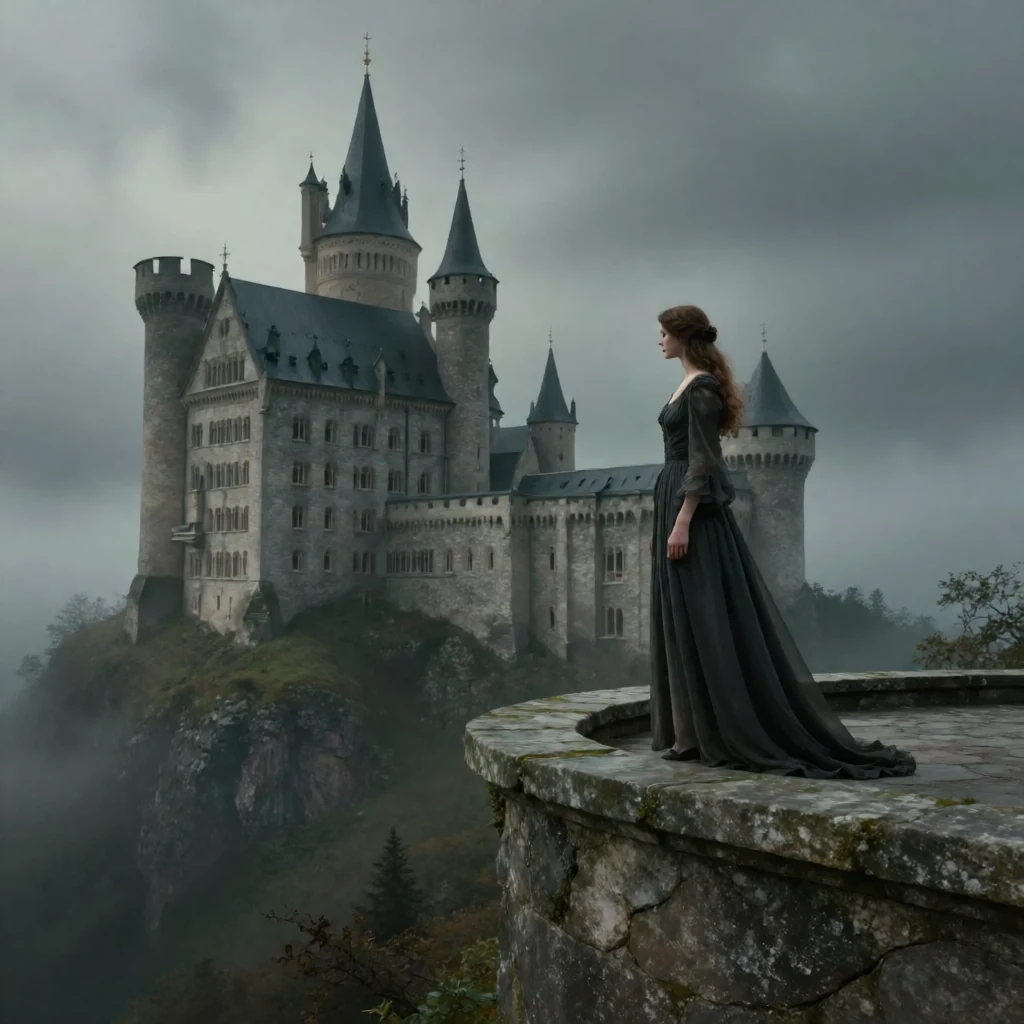
The carriage enters a long, gloomy avenue where intermingled ancient oak and chestnut branches form a lofty overhead arch, creating a desolate, lonely atmosphere that unsettles Emily. She recalls the peasant’s earlier ominous mention of the local château, assigning a more sinister meaning to his words, though she attempts to suppress her fears as the product of a melancholy imagination heightened by her father’s illness and their precarious circumstances.
The original text of this work is in the public domain. This page focuses on a guided summary article, reading notes, selected quotes, and visual learning materials for educational purposes.