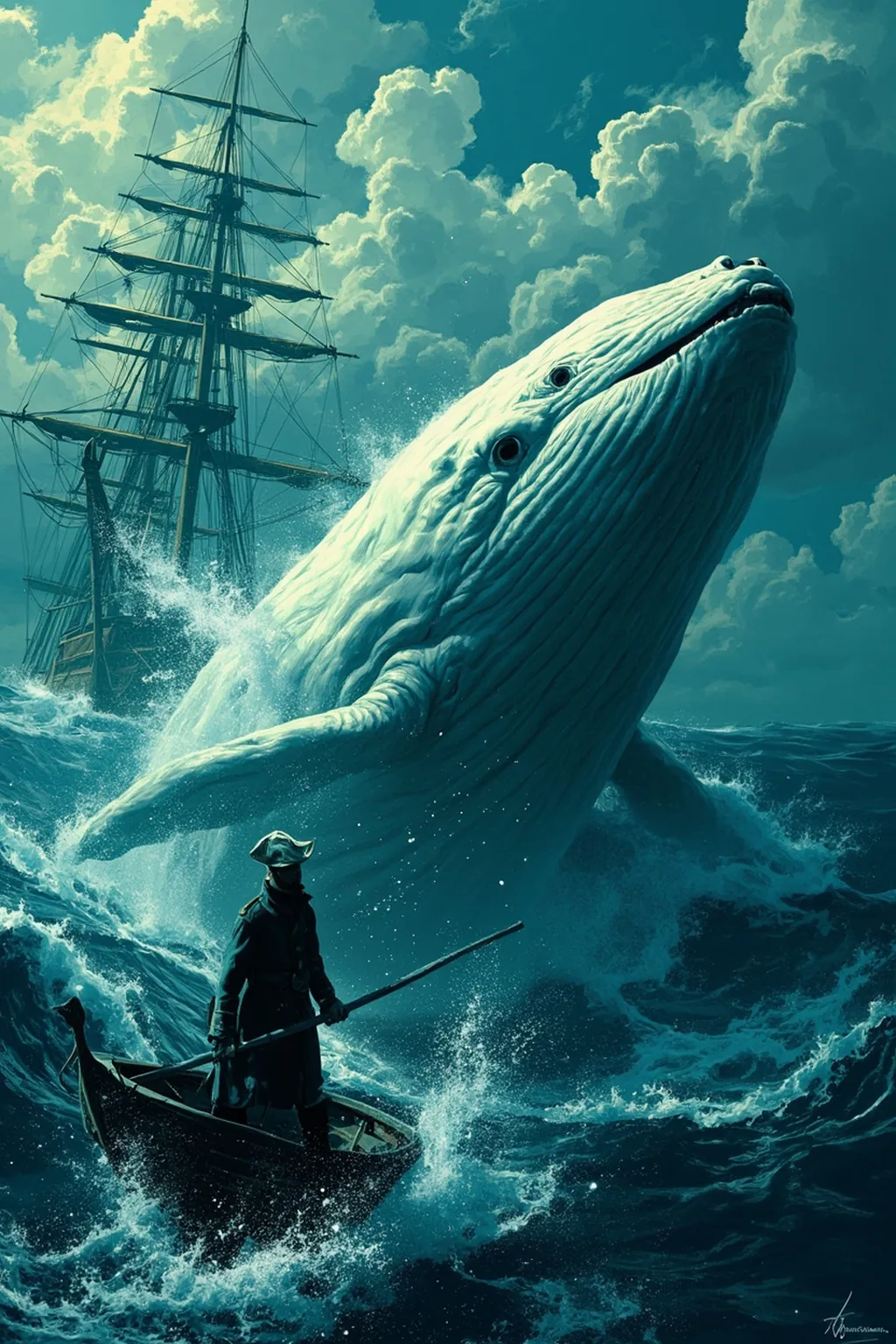
Whaling’s Exploratory and Civilizational Global Impact
The narrator asserts that the whale-ship pioneered exploration of the remotest regions, charting seas and archipelagoes where no navigators like Cook or Vancouver had sailed. Whalemen interpreted between Europeans and savages, enabling subsequent naval and missionary presence worldwide. The text credits whaling with breaking Spanish colonial trade restrictions, facilitating South American independence, discovering Australia (where whale-ships saved early settlers from starvation), and establishing commerce throughout Polynesia. The narrator suggests Japan may only open to the world through whaling expeditions.
Rebuttals to Claims of Whaling’s Lack of Nobility
The narrator addresses multiple charges of ignobility: claiming whaling has no famous chroniclers, he cites Job’s Leviathan account and Alfred the Great’s recording of Norwegian whale-hunter Other; regarding lack of respectable bloodlines, he notes that Benjamin Franklin’s grandmother was Mary Morrel of Nantucket, ancestress to harpooneers. When confronted with claims of disrespectability, he points to English law declaring whales “royal fish.” Against assertions that whales never figured grandly, he references Roman triumphs displaying whale bones. Finally, he invokes the constellation Cetus in the South and celebrates a man who took 350 whales as more honorable than generals who captured walled towns, declaring his own education acquired aboard a whale-ship.
第二十五章 Postscript.
This chapter serves as a closing reflection on the author’s dedication to factual representation while defending the dignity of whaling. The chapter presents a fanciful argument connecting the whaling industry to royal ceremony through the oils used in coronation rituals. The tone blends earnest advocacy with humorous speculation, ultimately celebrating the role of British whalemen in supplying a seemingly mysterious substance essential to the crowning of monarchs.
The original text of this work is in the public domain. This page focuses on a guided summary article, reading notes, selected quotes, and visual learning materials for educational purposes.