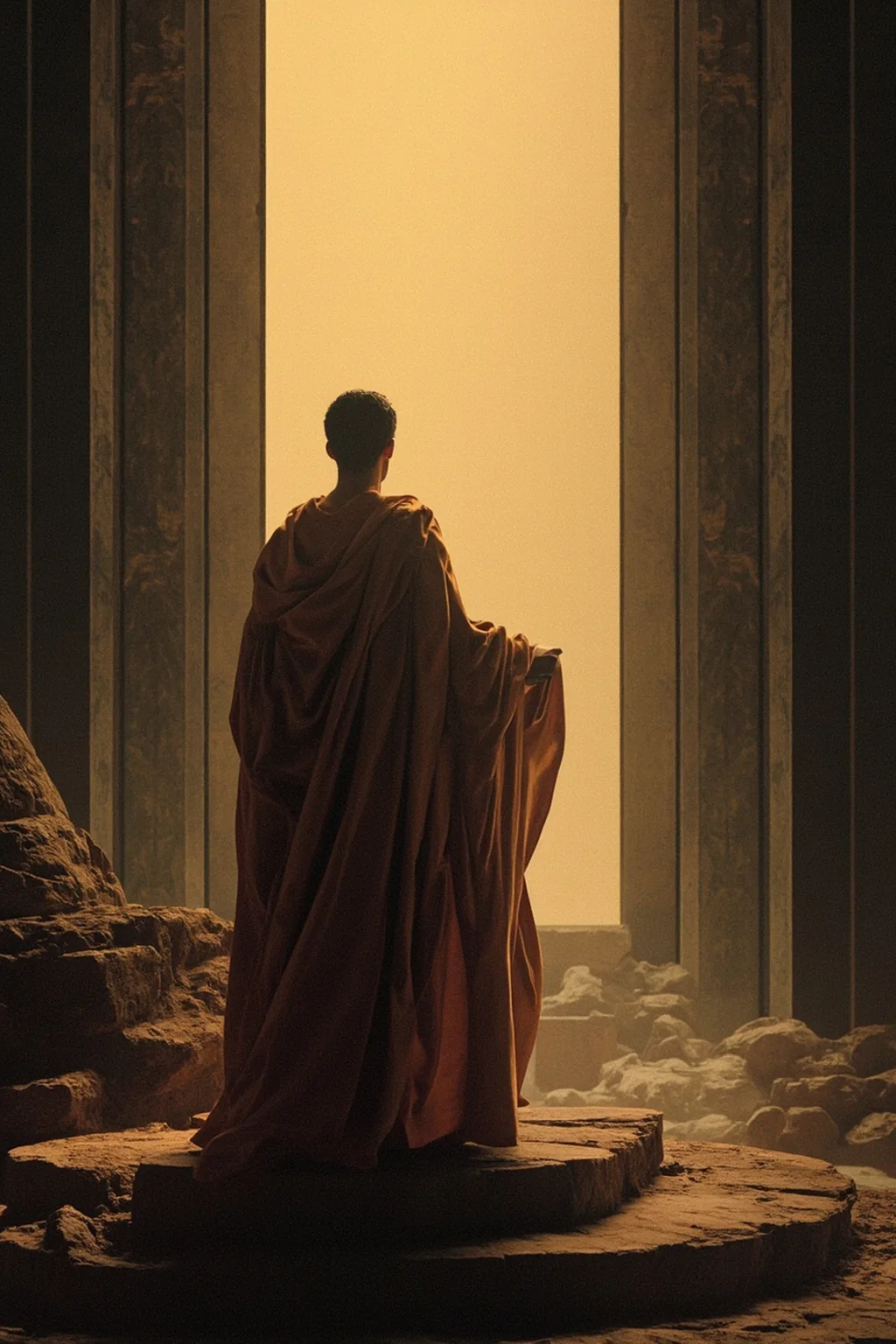
《沉思录》是哲学史上独一无二的文献:一位罗马皇帝的私人笔记,写于战争前线,记录了他为将意志与宇宙的理性秩序相调合所做的挣扎。以下段落捕捉了他斯多葛修养的核心,从塑造其品格的感恩之心,到定义其一生的紧迫形而上学决心。
感恩之债与理想统治者
From my brother Severus, to be kind and loving to all them of my house and family; by whom also I came to the knowledge of Thrasea and Helvidius, and Cato, and Dio, and Brutus. He it was also that did put me in the first conceit and desire of an equal commonwealth, administered by justice and equality; and of a kingdom wherein should be regarded nothing more than the good and welfare of the subjects.
In my father, I observed his meekness; his constancy without wavering in those things, which after a due examination and deliberation, he had determined. How free from all vanity he carried himself in matter of honour and dignity, (as they are esteemed:) his laboriousness and assiduity, his readiness to hear any man, that had aught to say tending to any common good: how generally and impartially he would give every man his due; his skill and knowledge, when rigour or extremity, or when remissness or moderation was in season; how he did abstain from all unchaste love of youths; his moderate condescending to other men’s occasions as an ordinary man, neither absolutely requiring of his friends, that they should wait upon him at his ordinary meals, nor that they should of necessity accompany him in his journeys; and that whensoever any business upon some necessary occasions was to be put off and omitted before it could be ended, he was ever found when he went about it again, the same man that he was before.
展开解读
对安东尼努斯·庇乌斯的这席赞颂,是治理中斯多葛美德的实践典范。它突出了理想统治者的温顺、无虚荣与情感一致性,说明了如何拥有绝对权力而不被骄傲、愤怒或谄媚所腐蚀。
当下的紧迫性
Remember how long thou hast already put off these things, and how often a certain day and hour as it were, having been set unto thee by the gods, thou hast neglected it. It is high time for thee to understand the true nature both of the world, whereof thou art a part; and of that Lord and Governor of the world, from whom, as a channel from the spring, thou thyself didst flow: and that there is but a certain limit of time appointed unto thee, which if thou shalt not make use of to calm and allay the many distempers of thy soul, it will pass away and thou with it, and never after return.
展开解读
这段开场白确立了第二卷的紧迫基调,标志着从感恩向积极自我修养的过渡。马可强调生命的短暂与在自我改进机会永远丧失之前理解自身在宇宙秩序中位置的必要性。
Let it be thy earnest and incessant care as a Roman and a man to perform whatsoever it is that thou art about, with true and unfeigned gravity, natural affection, freedom and justice: and as for all other cares, and imaginations, how thou mayest ease thy mind of them. Which thou shalt do; if thou shalt go about every action as thy last action, free from all vanity, all passionate and wilful aberration from reason, and from all hypocrisy, and self-love, and dislike of those things, which by the fates or appointment of God have happened unto thee.
展开解读
此处马可定义了斯多葛行动修养,敦促自己以每个行动都像最后一样来对待。这一表述剥离了虚荣与对未来的恐惧,完全专注于以正义、庄重与接受命运来完成当下行动。
If thou shouldst live three thousand, or as many as ten thousands of years, yet remember this, that man can part with no life properly, save with that little part of life, which he now lives: and that which he lives, is no other, than that which at every instant he parts with. That then which is longest of duration, and that which is shortest, come both to one effect.
展开解读
此引文提供了对时间的深刻形而上学分析,断言过去与未来皆不可拥有,因此对个体无关紧要。通过将生命简化为即刻的当下,马可论证生命的长度不如对当前时刻所付注意的质量重要。
自然与变化的美学
This also thou must observe, that whatsoever it is that naturally doth happen to things natural, hath somewhat in itself that is pleasing and delightful: as a great loaf when it is baked, some parts of it cleave as it were, and part asunder, and make the crust of it rugged and uneven, and yet those parts of it, though in some sort it be against the art and intention of baking itself, that they are thus cleft and parted, which should have been and were first made all even and uniform, they become it well nevertheless, and have a certain peculiar property, to stir the appetite.
展开解读
此处马可重新框定对自然过程的感知,以烘烤面包的隐喻说明表面不完美是美丽、功能性秩序的一部分。他暗示,对深刻的心灵而言,甚至腐朽与不规则也因其内在于自然而具有独特美学价值。
Whatsoever doth happen in the world, is, in the course of nature, as usual and ordinary as a rose in the spring, and fruit in summer. Of the same nature is sickness and death; slander, and lying in wait, and whatsoever else ordinarily doth unto fools use to be occasion either of joy or sorrow.
展开解读
通过将疾病、死亡与诽谤比作玫瑰绽放或夏日结果的自然序列,马可将生活苦难正常化。他论证这些事件并非恶,而是自然序列的必要部分。
理性灵魂的韧性
That inward mistress part of man if it be in its own true natural temper, is towards all worldly chances and events ever so disposed and affected, that it will easily turn and apply itself to that which may be, and is within its own power to compass… Even as the fire when it prevails upon those things that are in his way; by which things indeed a little fire would have been quenched, but a great fire doth soon turn to its own nature, and so consume whatsoever comes in his way: yea by those very things it is made greater and greater.
展开解读
马可开篇即定义理性灵魂的基本韧性。统治理性并非被障碍击碎,而是适应它们,借由大火吞噬所投燃料以增其势的著名类比来说明。
At what time soever thou wilt, it is in thy power to retire into thyself, and to be at rest, and free from all businesses. A man cannot any whither retire better than to his own soul; he especially who is beforehand provided of such things within, which whensoever he doth withdraw himself to look in, may presently afford unto him perfect ease and tranquillity.
展开解读
此处马可论证真正的退守并非物理位置,而是灵魂的内在状态。通过退守入自身理性并维持有序思想,无论外部如何混乱,皆可即刻获得平静。
Thou must be like a promontory of the sea, against which though the waves beat continually, yet it both itself stands, and about it are those swelling waves stilled and quieted.
展开解读
这一有力意象作为斯多葛稳定的典范。正如岬角 withstand 惊涛而不为所动,理性心灵应不为外部事件喧嚣所动。
世界主义与社会责任
If to understand and to be reasonable be common unto all men, then is that reason, for which we are termed reasonable, common unto all. If reason is general, then is that reason also, which prescribeth what is to be done and what not, common unto all. If that, then law. If law, then are we fellow-citizens. If so, then the world is as it were a city.
展开解读
马可构建了世界主义的逻辑论证,断言因理性与对正义的理解为全人类所共有,故所有人皆为单一普遍之城邦——受共同法律治理——的公民。
The form of the Athenians’ prayer did run thus: ‘O rain, rain, good Jupiter, upon all the grounds and fields that belong to the Athenians.’ Either we should not pray at all, or thus absolutely and freely; and not every one for himself in particular alone.
展开解读
马可援引雅典祈祷文以说明理性灵魂的 expansive 性质,它必须与共同善而非私利对齐。它提醒个体是更大整体的一部分,欲望应指向社群福祉。
As we say commonly, The physician hath prescribed unto this man, riding; unto another, cold baths; unto a third, to go barefoot: so it is alike to say, The nature of the universe hath prescribed unto this man sickness, or blindness, or some loss, or damage or some such thing.
展开解读
此部分提供了接受命运的关键类比:宇宙如医师对待整体。正如病人接受 harsh 疗法以获健康,理性心灵必须接受个人苦难作为整个宇宙健康与连贯性的必要处方。
恶的本质与不可征服的心灵
What is wickedness? It is that which many time and often thou hast already seen and known in the world. And so oft as anything doth happen that might otherwise trouble thee, let this memento presently come to thy mind, that it is that which thou hast already often Seen and known. Generally, above and below, thou shalt find but the same things. The very same things whereof ancient stories, middle age stories, and fresh stories are full whereof towns are full, and houses full. There is nothing that is new. All things that are, are both usual and of little continuance.
展开解读
马可开篇即将读者置于历史与人类行为的循环性中。通过认识到邪恶与混乱并非新奇现象,而是贯穿时间的反复模式,他论证我们不应为当前事件惊讶或烦扰。
That which is a hindrance of the senses, is an evil to the sensitive nature… And so likewise, whatsoever is a hindrance unto the mind and understanding, must needs be the proper evil of the reasonable nature. Now apply all those things unto thyself… For in those things that properly belong unto the mind, she cannot be hindered by any man. It is not fire, nor iron; nor the power of a tyrant nor the power of a slandering tongue; nor anything else that can penetrate into her.
展开解读
这是关于理性心灵不可侵犯性的 definitive 陈述。虽身体可被物理力量约束,但心灵与理解不能被任何外部力量阻碍——暴力、暴政或诽谤皆无法穿透理智的堡垒。
Remember that thy mind is of that nature as that it becometh altogether unconquerable, when once recollected in herself, she seeks no other content than this, that she cannot be forced: yea though it so fall out, that it be even against reason itself, that it cloth bandy. And therefore let thy chief fort and place of defence be, a mind free from passions.
展开解读
马可断言,心灵仅需退守自身并 realization 其不可被意志强迫——即便宇宙本身亦然——便不可征服。他将无激情的心灵 identified 为终极坚不可摧的堡垒。
不义之不虔
He that is unjust, is also impious. For the nature of the universe, having made all reasonable creatures one for another, to the end that they should do one another good; more or less according to the several persons and occasions but in nowise hurt one another: it is manifest that he that doth transgress against this her will, is guilty of impiety towards the most ancient and venerable of all the deities.
展开解读
马可确立了根本的斯多葛论证:不义不仅是社会失败,更是宗教 transgress。通过违逆 binding 理性存在以互助的自然秩序,不义者冒犯了宇宙的“共同父母“。
He that pursues after pleasures, as that which is truly good and flies from pains, as that which is truly evil: is impious. For such a one must of necessity oftentimes accuse that common nature, as distributing many things both unto the evil, and unto the good, not according to the deserts of either.
展开解读
马可论证追求快乐与逃避痛苦是反抗天意的行为。通过偏好这些 indifferent 状态,人 implicit 指责宇宙不公,因其不平等分配福祉与灾祸。
完美灵魂的愿景
O my soul, the time I trust will be, when thou shalt be good, simple, single, more open and visible, than that body by which it is enclosed. Thou wilt one day be sensible of their happiness, whose end is love, and their affections dead to all worldly things. Thou shalt one day be full, and in want of no external thing: not seeking pleasure from anything, either living or insensible, that this world can afford; neither… wanting time for the continuation of thy pleasure, nor place and opportunity, nor the favour either of the weather or of men.
展开解读
奥勒留开篇向自身灵魂致辞,设定斯多葛自足的终极标准。他描述完美知足的状态,个体无需外部世界——无论是快乐、时间或人类认可——即可完整。
The natural properties, and privileges of a reasonable soul are: That she seeth herself; that she can order, and compose herself: that she makes herself as she will herself: that she reaps her own fruits whatsoever, whereas plants, trees, unreasonable creatures, what fruit soever (be it either fruit properly, or analogically only) they bear, they bear them unto others, and not to themselves.
展开解读
奥勒留开篇区分理性灵魂与较低生命形式。此引文确立了灵魂的自主与自足,强调 unlike 植物或动物——它们为他人或外部目的存在——理性灵魂为自身完美而行动,并拥有自我反思与自我导向的独特能力。
最终解决:接受 mortality
Whatsoever thou doest hereafter aspire unto, thou mayest even now enjoy and possess, if thou doest not envy thyself thine own happiness. And that will be, if thou shalt forget all that is past, and for the future, refer thyself wholly to the Divine Providence, and shalt bend and apply all thy present thoughts and intentions to holiness and righteousness.
展开解读
这段开场白确立了最终卷的核心主题:通过视角转变,幸福立即可得。马可论证,通过放下过去与未来,并让自身完全与当下及神圣天意对齐,人可即时拥有幸福,而非在未来渴望它。
Either fate, (and that either an absolute necessity, and unavoidable decree; or a placable and flexible Providence) or all is a mere casual confusion, void of all order and government. If an absolute and unavoidable necessity, why doest thou resist? If a placable and exorable Providence, make thyself worthy of the divine help and assistance. If all be a mere confusion without any moderator or governor, then hast thou reason to congratulate thyself; that in such a general flood of confusion thou thyself hast obtained a reasonable faculty, whereby thou mayest govern thine own life and actions.
展开解读
这是关于宇宙本性的 decisive 逻辑表述。马可提出关于命运的三种假说:绝对必然、仁慈天意或混乱。他论证在任何情况下,理性之人皆无烦扰理由——或抵抗徒劳,或当寻求神助,或当庆幸在混乱中拥有理性以自治。
Herein doth consist happiness of life, for a man to know thoroughly the true nature of everything; what is the matter, and what is the form of it: with all his heart and soul, ever to do that which is just, and to speak the truth. What then remaineth but to enjoy thy life in a course
展开解读
这段文字至关重要,因为它定义了马可·奥勒留的政治理想。通过他的兄弟塞维鲁斯,他将个人统治与过去的斯多葛反对派人物(加图、布鲁图斯)联系起来,确立了一个仅由正义与人民福祉治理的共和国愿景,而非统治者的荣耀。