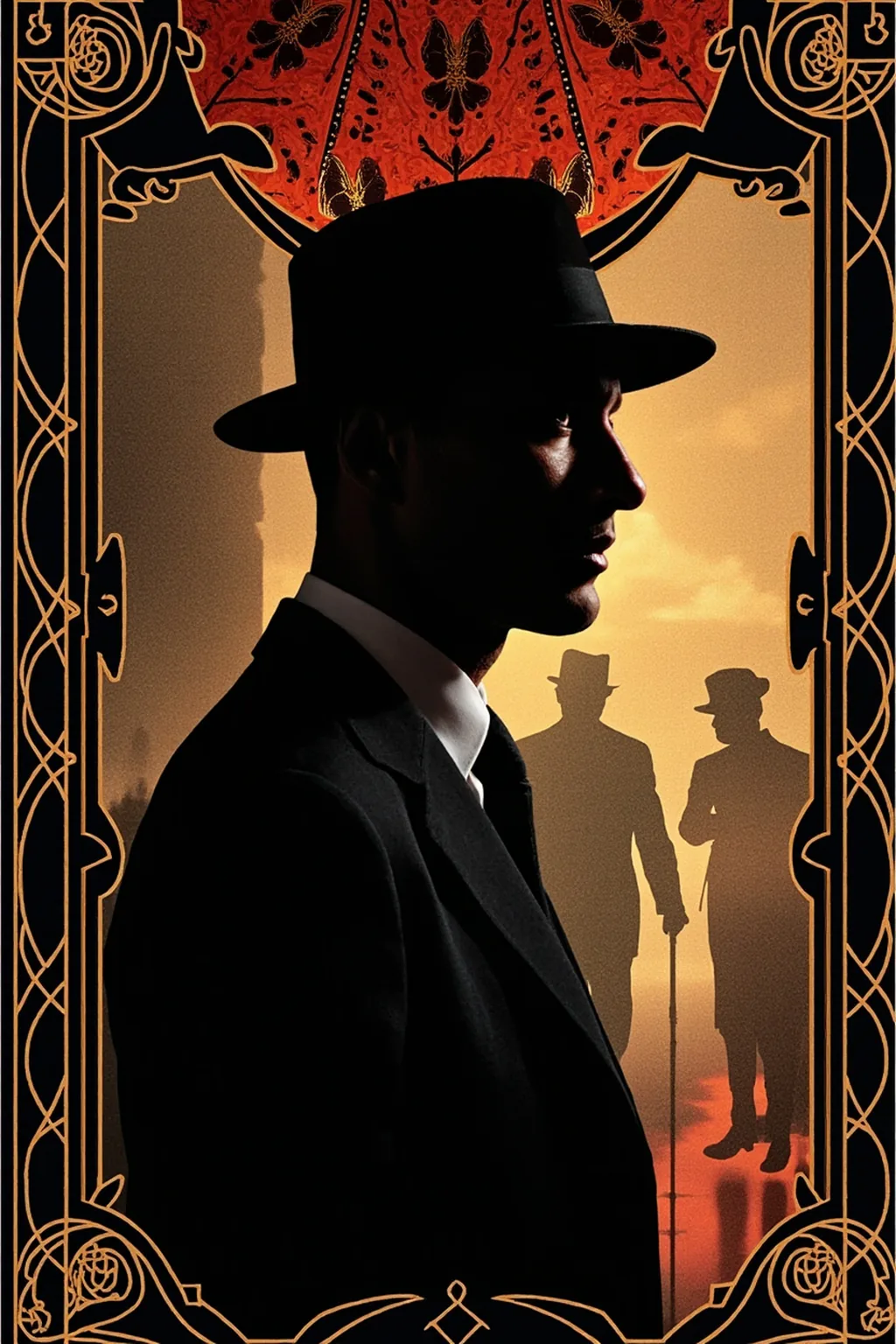
Nick Carraway, a Midwesterner bondsman, rents a cottage in West Egg next to the mysterious millionaire Jay Gatsby. Drawn into the world of his cousin Daisy and her brutish husband Tom, Nick becomes the confidant for Gatsby's singular, five-year obsession: to win back Daisy and recreate a perfect past, a dream that ultimately collides with reality and ends in violence.
Later, on Fifth Avenue, Nick sees Tom Buchanan walking with his aggressive, hands-out stance. Tom stops, frowns into a jewelry store window, then sees Nick and walks back, holding out his hand. “Do you object to shaking hands with me?” Nick says yes. “You’re crazy,” Tom says. Nick asks what he told Wilson that afternoon. Tom stares, then grabs Nick’s arm. “I told him the truth,” he says. Wilson tried to force his way upstairs; his hand was on a revolver. “What if I did tell him? That fellow had it coming to him.” Tom’s voice breaks. “Look here, when I went to give up that flat and saw that damn box of dog biscuits sitting there on the sideboard, I sat down and cried like a baby. By God it was awful—” Nick cannot forgive him, but he sees that to Tom, it is all justified. They are careless people, Tom and Daisy—they smash up things and creatures and then retreat back into their money or their vast carelessness, and let other people clean up the mess they had made. Nick shakes his hand; it seems silly not to. Tom goes into the jewelry store to buy a pearl necklace, rid of Nick’s provincial squeamishness forever.
Gatsby’s house stands empty when Nick prepares to leave, the grass grown long. On his last night, with trunk packed and car sold, he walks over. On the white steps, an obscene word is scrawled in brick; he erases it, drawing his shoe raspingly along the stone. He wanders down to the beach and sprawls on the sand. As the moon rises, the inessential houses melt away until he is aware of the old island that once flowered for Dutch sailors’ eyes—a fresh, green breast of the new world. Its vanished trees had once pandered in whispers to the last and greatest of all human dreams; for a transitory enchanted moment man must have held his breath in the presence of this continent, compelled into an aesthetic contemplation he neither understood nor desired, face to face for the last time in history with something commensurate to his capacity for wonder.
The original text of this work is in the public domain. This page focuses on a guided summary article, reading notes, selected quotes, and visual learning materials for educational purposes.