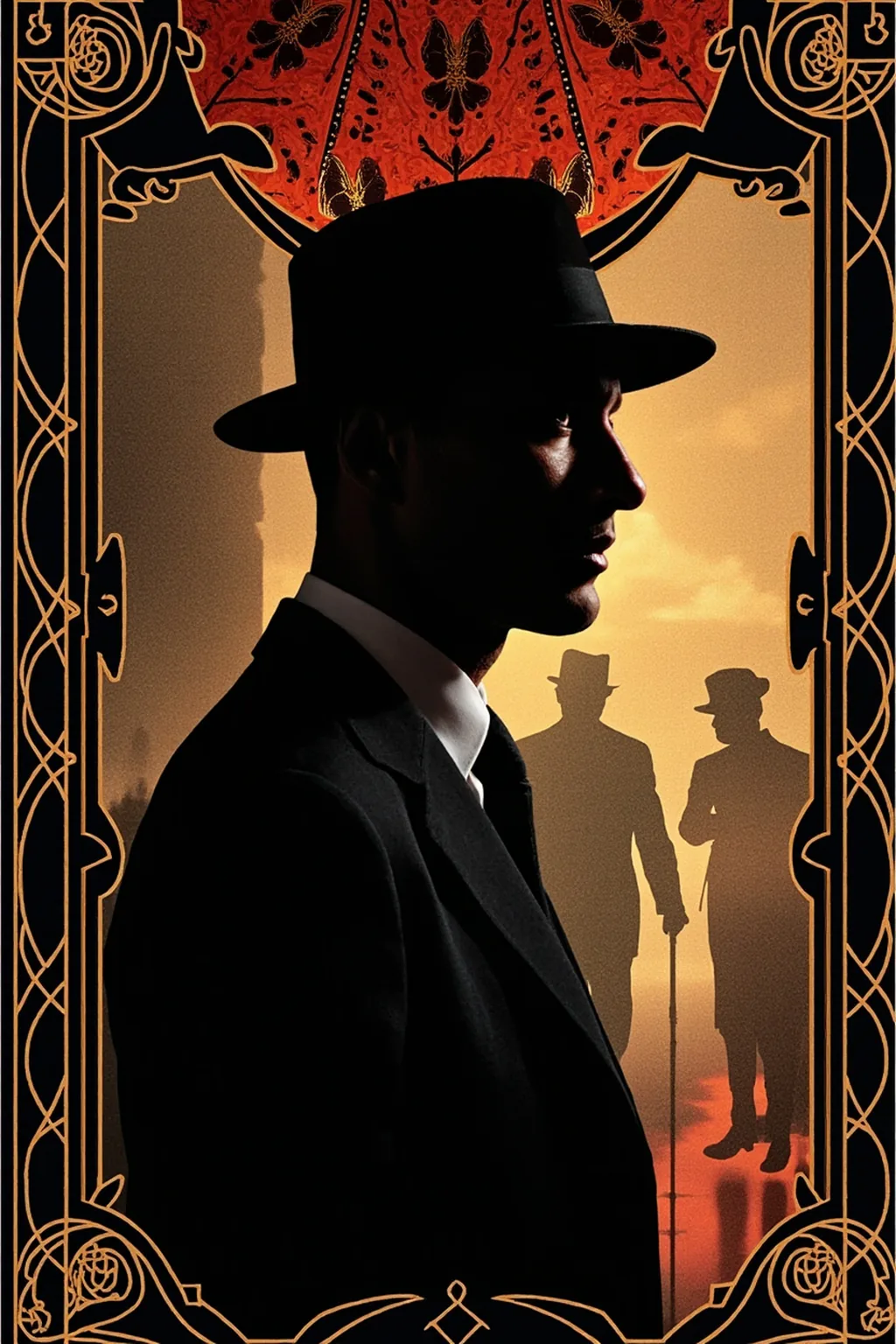
The Great Gatsby cover
The American Dream

The Great Gatsby

A tragic story of obsession, wealth, and the American Dream, centered on Jay Gatsby's quest to reclaim a lost love and the moral decay hidden beneath the glittering surface of the Jazz Age.

Fitzgerald, F. Scott (Francis Scott) 2021 52 min

Nick Carraway, a Midwesterner bondsman, rents a cottage in West Egg next to the mysterious millionaire Jay Gatsby. Drawn into the world of his cousin Daisy and her brutish husband Tom, Nick becomes the confidant for Gatsby's singular, five-year obsession: to win back Daisy and recreate a perfect past, a dream that ultimately collides with reality and ends in violence.

In my younger years, my father cautioned me against judgment, reminding me that not everyone has had my advantages. This advice shaped my habit of reserving judgment, a trait that drew confidences from others but also made me a target for tedious company. I came to see this tolerance as a matter of infinite hope, yet I acknowledged its limits. After returning from the Great War, I sought a world of moral clarity, weary of privileged glimpses into the human heart. Only my neighbor, Jay Gatsby, escaped my usual reaction—he embodied everything I scorned yet possessed an extraordinary gift for hope, a romantic readiness I’d never find again.

My family, prominent in the Midwest for generations, traced its lineage to the Dukes of Buccleuch, though our actual founder was a grandfather who avoided the Civil War. After graduating from Yale in 1915 and serving in the war, I felt restless. The Midwest seemed the ragged edge of the universe, so I decided to go East and learn the bond business. My aunts and uncles debated this like choosing a prep school, and my father agreed to finance me for a year. I arrived in the spring of 1922, intending to stay permanently.

The practical move was to find city rooms, but having just left a landscape of wide lawns, I leased a small bungalow in West Egg with a young colleague who was suddenly transferred to Washington. Alone, I acquired a dog that ran away, an old Dodge, and a Finnish cook. Loneliness faded when a lost motorist asked directions, granting me a sense of belonging as a local guide. With summer’s arrival, life felt like a fresh start. I filled my house with books on finance, intending to become a well-rounded man again, though I suspected true success lies in viewing life from a single window.

My rental placed me in one of Long Island Sound’s strangest communities: two enormous, egg-shaped landmasses separated by a courtesy bay. West Egg, the less fashionable, was where I lived, squeezed between two colossal mansions. To my right stood Gatsby’s imitation of a Norman townhouse, complete with tower, ivy, marble pool, and forty acres of lawn—a mansion I had not yet entered. My own house was a small eyesore, but it offered water views and the consoling proximity of millionaires for eighty dollars a month. Across the bay, East Egg’s white palaces glittered, and it was there, on a warm evening, that I drove to dine with my cousin Daisy and her husband, Tom Buchanan.

The original text of this work is in the public domain. This page focuses on a guided summary article, reading notes, selected quotes, and visual learning materials for educational purposes.

Project Gutenberg