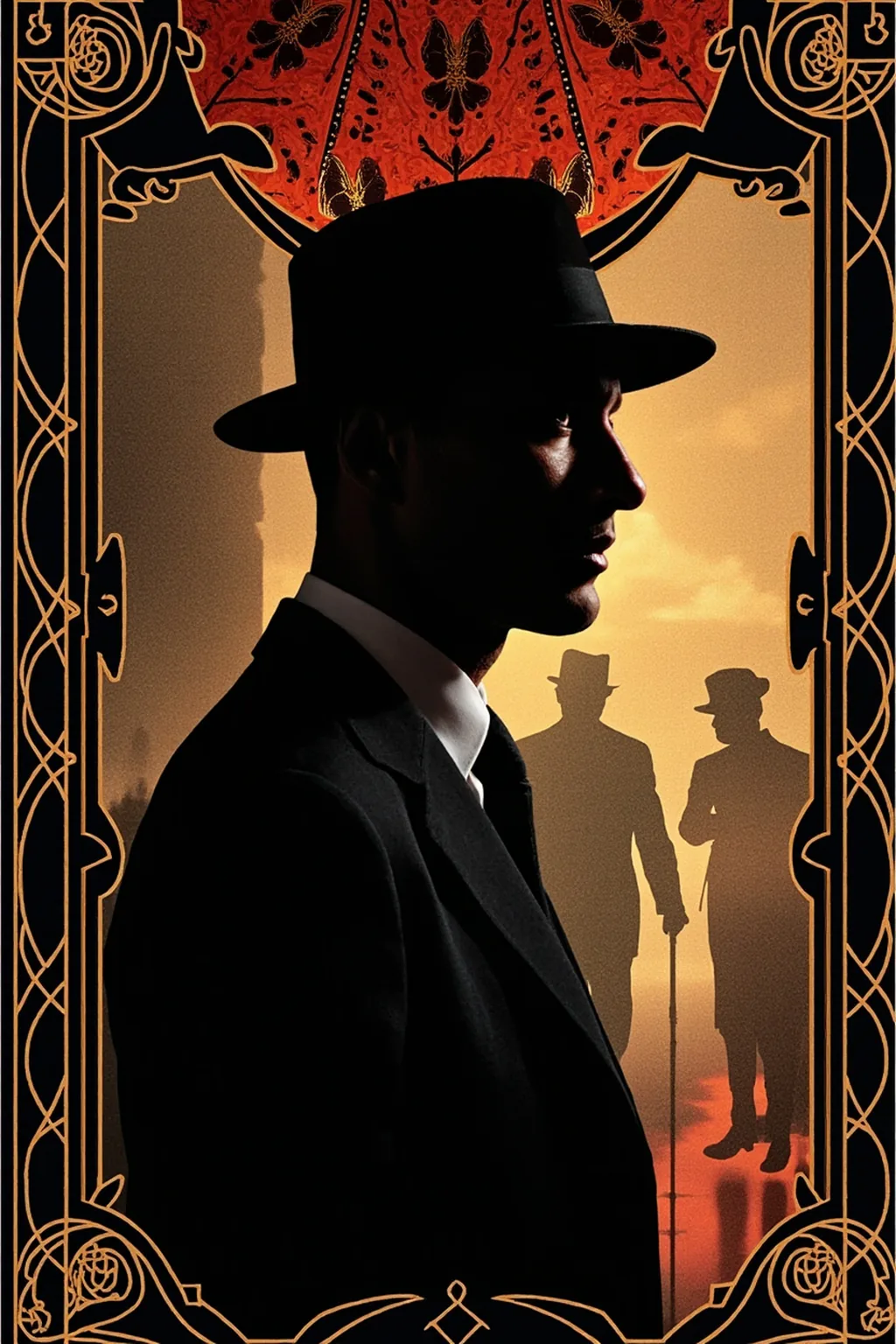
Nick Carraway, a Midwesterner bondsman, rents a cottage in West Egg next to the mysterious millionaire Jay Gatsby. Drawn into the world of his cousin Daisy and her brutish husband Tom, Nick becomes the confidant for Gatsby's singular, five-year obsession: to win back Daisy and recreate a perfect past, a dream that ultimately collides with reality and ends in violence.
The aftermath of Gatsby’s murder dissolves into a grotesque public spectacle. Police and press swarm his house, turning tragedy into a circus of speculation. Reporters label Wilson a “madman,” and at the inquest, Catherine’s testimony locks the case into a simple, false narrative: she swears her sister never knew Gatsby, that she was completely happy, involved in no mischief. She convinces herself, crying into her handkerchief as if the suggestion is unbearable. Wilson is reduced to a man “deranged by grief,” the truth neatly buried.
Amid the circus, Nick feels a sudden, intense responsibility. He is the only one concerned with Gatsby the man, not the event. His first instinct is to call Daisy, but she and Tom have already fled with baggage, leaving no address or forwarding information. He turns to Meyer Wolfshiem, but the gangster’s office gives evasive answers; a letter arrives the next day, professing shock but citing urgent business and refusing to attend. That afternoon, a frantic long-distance call about a bonds fraud turns out to be a stranger; when Nick says Gatsby is dead, the line goes dead. Nick’s defiance hardens into a solitary bond with the dead.
On the third day, a telegram arrives from Minnesota: Henry C. Gatz is coming. Gatsby’s father appears as a solemn, bewildered old man, his eyes leaking with excitement. When Nick leads him into the drawing-room to see his son, Mr. Gatz emerges moments later, his mouth ajar, face flushed, tears leaking at irregular intervals. He has reached an age where death no longer holds ghastly surprise, and now, seeing the height and splendor of the hall for the first time, his grief begins to mix with an awed, trembling pride in what his son had built. Nick helps him upstairs to rest, and Mr. Gatz, still overwhelmed, falls instantly asleep.
Later, Mr. Gatz’s pride swells further. He shows Nick a cracked, dirty photograph of the house, pointing out every detail, convinced it proves Jimmy’s success. Then, from his pocket, he produces a ragged old copy of Hopalong Cassidy. On the last flyleaf is a schedule dated September 12, 1906: rise at six, dumbbell exercises, study electricity, work, baseball, practice elocution. Beneath, General Resolves: no wasting time, no smoking, bath every other day, read one improving book per week, save three dollars, be better to parents. “Jimmy was bound to get ahead,” the old man says, reading each item with trembling pride, convinced the schedule foretold a great destiny.
That night, a hesitant voice calls: Klipspringer, the boarder. Nick hopes for a funeral attendee, but the man only asks for his left-behind tennis shoes, citing a prior picnic. Nick hangs up in disgust, feeling fresh shame for Gatsby’s utter isolation.
The original text of this work is in the public domain. This page focuses on a guided summary article, reading notes, selected quotes, and visual learning materials for educational purposes.