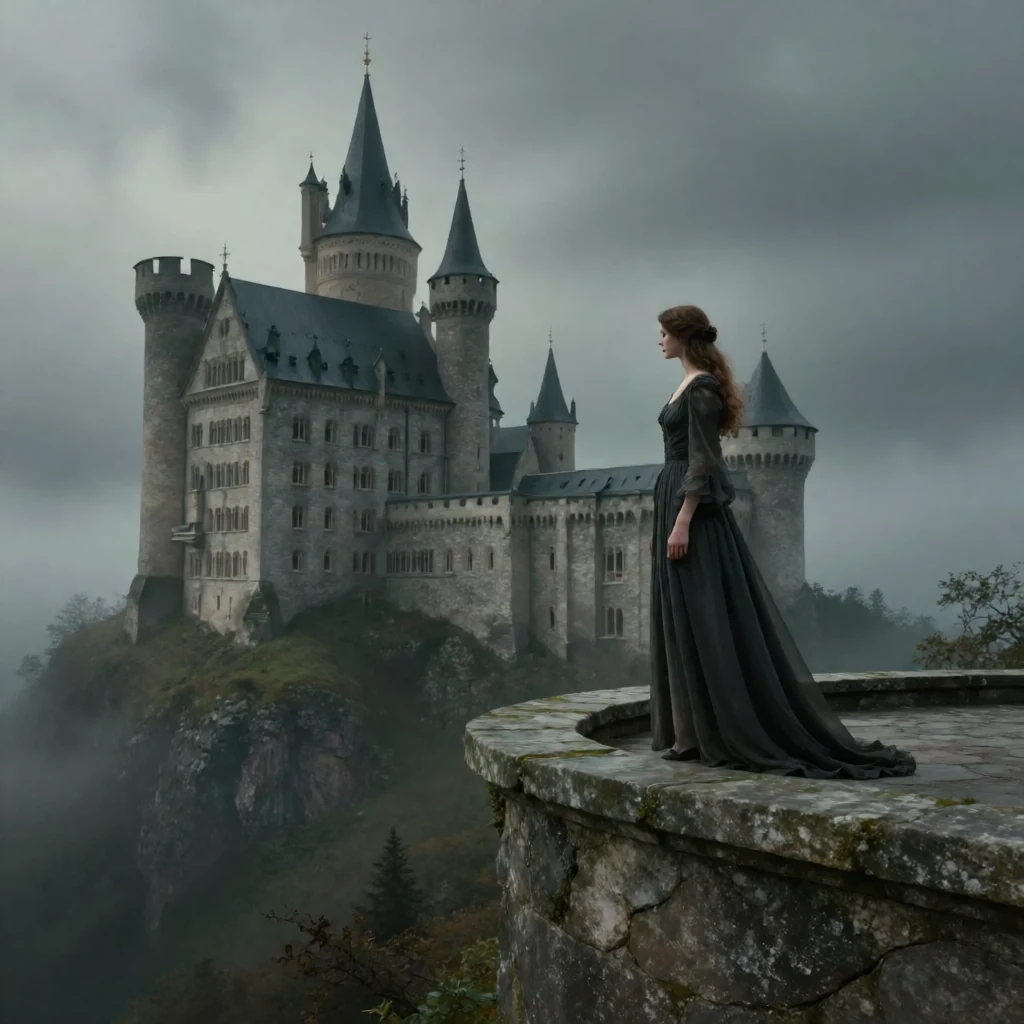
Emily’s Late-Night Reflections
After St. Aubert retires to rest, Emily goes to her small chamber but cannot sleep immediately. She leans pensively at her open casement, gazing at the starry night sky and reflecting on the state of departed spirits, aware that her ailing father may soon join them. She remains at the window until midnight, when she recalls La Voisin’s story of the mysterious music and her father’s extreme emotional reaction to mentions of the Marquis La Villeroi and Marchioness, wondering about the unknown connection between her father and the noble pair. When no music returns, she remembers she must rise early the next day and finally goes to rest.
CHAPTER VII
This chapter, titled CHAPTER VII, follows the final hours of St. Aubert as his health fails, framing themes of mortality, faith, and familial duty. It opens with a meditative verse on hope beyond death, tracks Emily’s quiet morning reflections, her father’s sudden collapse after a cottage breakfast, his final private instructions for her future, and the religious final rites before he entrusts her to the care of their host La Voisin.
Opening Verse on Mortality and Hope
The chapter opens with an excerpt from Beattie’s verse meditating on mortality and hope: the poem contrasts souls that remain mired in grief over earthly suffering with “lofty souls” that look beyond the grave, trusting in the cyclical renewal of spring and divine promise as comfort against loss.
Emily’s Morning Reflections and ‘The First Hour of Morning’
Emily wakes early at her own request, unrested by uneasy dreams, but is soothed by the bright morning woodland scene, fresh air, and soft natural sounds: the distant convent matin bell, murmur of sea waves, birdsong, and lowing cattle moving through the trees. Struck by the peaceful, healthful imagery, she composes the poem The First Hour of Morning, celebrating the beauty of dawn, the revival of nature, and the vital joy of health, closing with a quiet wish for her father’s recovery.
Cottage Breakfast and St. Aubert’s Collapse
Emily meets St. Aubert, who is also poorly rested, and they descend to the cottage parlour for breakfast with their host La Voisin and his daughter. The meal features cream, fruit, new cheese, butter, and coffee; St. Aubert praises the cottage’s quiet, fresh air as a potential cure for ill health. While speaking with La Voisin, however, St. Aubert’s countenance shifts and he faints in his chair. After a brief recovery, he is too unwell to continue travelling and is helped up to his bedroom.
St. Aubert’s Deathbed Instructions to Emily
St. Aubert summons Emily to his bedside and reveals he is dying, securing a solemn vow from her to obey his final instructions without question. He describes a hidden sliding board in the floor of the closet adjoining his chamber at La Vallée, identifiable by a distinctive wood knot and a line across the plank: pressing the line releases the board, which slides to reveal a hollow storage space. He commands Emily to burn the packet of papers stored there unread, and to never sell the family château, even stipulating in any future marriage contract that the property remain hers. He explains the space also holds 200 louis d’or, nearly all his ready money, leaving her with limited financial resources. He comforts her with reminders of divine providence, urging her to rejoice that he is spared the suffering of old age and death with a sound mind, rather than grieving his passing.
Final Rites and Entrusting Emily to La Voisin
A confessor from the local convent is summoned to administer last rites to St. Aubert. After the service for the dying and extreme unction, St. Aubert entrusts Emily to the care of La Voisin, who pledges to support her through her grief and even accompany her to Gascony if she wishes. St. Aubert then spends his remaining strength offering Emily clear, gentle advice for her future conduct, before his vitality continues to fade.
The original text of this work is in the public domain. This page focuses on a guided summary article, reading notes, selected quotes, and visual learning materials for educational purposes.