Manchon’s Arrival
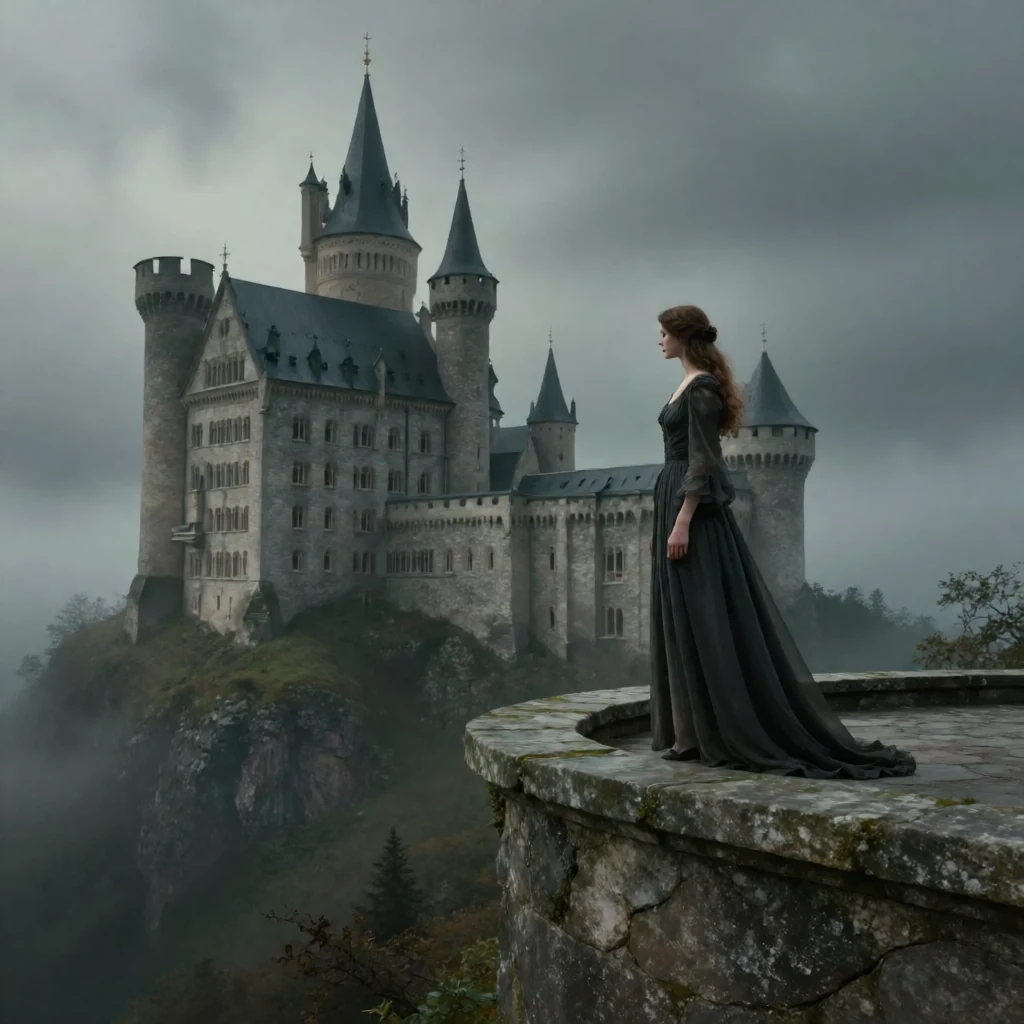
Realizing her low spirits will not allow her to follow through with her plan to visit the château’s deserted rooms that night, Emily leaves the library and walks out into the garden, heading down to the terrace that overlooks the river.
The Terrace
At dusk on the terrace, Emily watches the saffron glow of the sunset spread under the dark branches of almond trees, hears a bat flit silently past and the occasional mourning call of a nightingale. The quiet, somber hour brings back a memory of her father St. Aubert reciting poetry on this exact spot, and she repeats the lines in her mind, feeling a quiet, melancholy pleasure.
The Sonnet
Emily recites a sonnet she associates with this terrace, which paints the eerie, gentle beauty of twilight: circling bats, shivering breeze, mystic wind murmurs that deceive lone wanderers, soft grey evening light over the water and distant boat, and a final comparison of the evening dew to the tears of pity that dim grief’s visions of despair.
The Plane-Tree
Emily wanders to her father’s favorite plane-tree, where she, her father, and her late mother often sat to talk about beliefs in an afterlife. Overwhelmed by memories of her father’s comfort in the idea that they would be reunited with loved ones after death, she leaves the tree and leans pensively against the terrace wall.
The Peasant Dance
Looking out over the terrace wall, Emily sees a group of peasants dancing gaily on the banks of the Garonne River below, a stark contrast to her own desolation. The sight reminds her of the happy times when her father would watch the peasants dance with a beaming, benevolent expression, and she turns away, unable to bear the painful reminders, with nowhere she can look that will not trigger fresh grief.
Theresa’s Welcome
As Emily walks slowly back toward the château, she is met by Theresa, the housekeeper, who has been searching for her for half an hour and worries she has been harmed by the night air. Theresa chatters about how much Emily’s father grieved when her mother died, and how he insisted Emily’s mother is now happy in heaven, as Emily walks silently into the château alongside her.
The Father’s Hat
Theresa leads Emily to the common sitting parlour, where she has laid a table with a single knife and fork for supper. Emily is surprised to realize she is not in her own apartment, but stays when she sees her father’s hat hanging on the opposite wall. She waves off Theresa’s attempt to take the hat down, and refuses to eat the pheasant supper Theresa has prepared, saying she will retire to her room to try to sleep. Emily is briefly warmed by Theresa’s mention that their neighbor Monsieur Barreaux sent the pheasant and expressed deep sympathy for her loss.
Retirement
Overwhelmed by her grief, Emily declines Theresa’s repeated entreaties to eat, and retires to her own room for the night.
CHAPTER IX
Emily St. Aubert, recently bereaved of her father, receives a letter from her aunt Madame Cheron summoning her to Thoulouse, though she desperately wishes to remain at La Vallée surrounded by memories of her parents. During her weeks of quiet mourning, she finds solace in reading her father’s books and playing his favorite music, gradually transforming her acute grief into gentle melancholy. Her tranquility is broken when, visiting the fishing-house where she once accompanied her parents, she unexpectedly encounters Valancourt, a young man from her past whose arrival at this emotionally charged moment deeply moves her. Valancourt learns of St. Aubert’s death and expresses his sorrow, and the two walk back to the château in companionable silence before parting for the evening, Emily remaining troubled by her neglected promise to destroy her father’s mysterious manuscript papers.
Mason’s Opening Poetry
The chapter opens with a brief verse by Mason comparing the simple charms of nature—a gust of wind, a small stream flowing down a mossy hill, and the gentle arrival of twilight—to artistic expressions like music, beauty, and painting. The poem sets an evocative, melancholic tone appropriate for the chapter’s events.
The original text of this work is in the public domain. This page focuses on a guided summary article, reading notes, selected quotes, and visual learning materials for educational purposes.