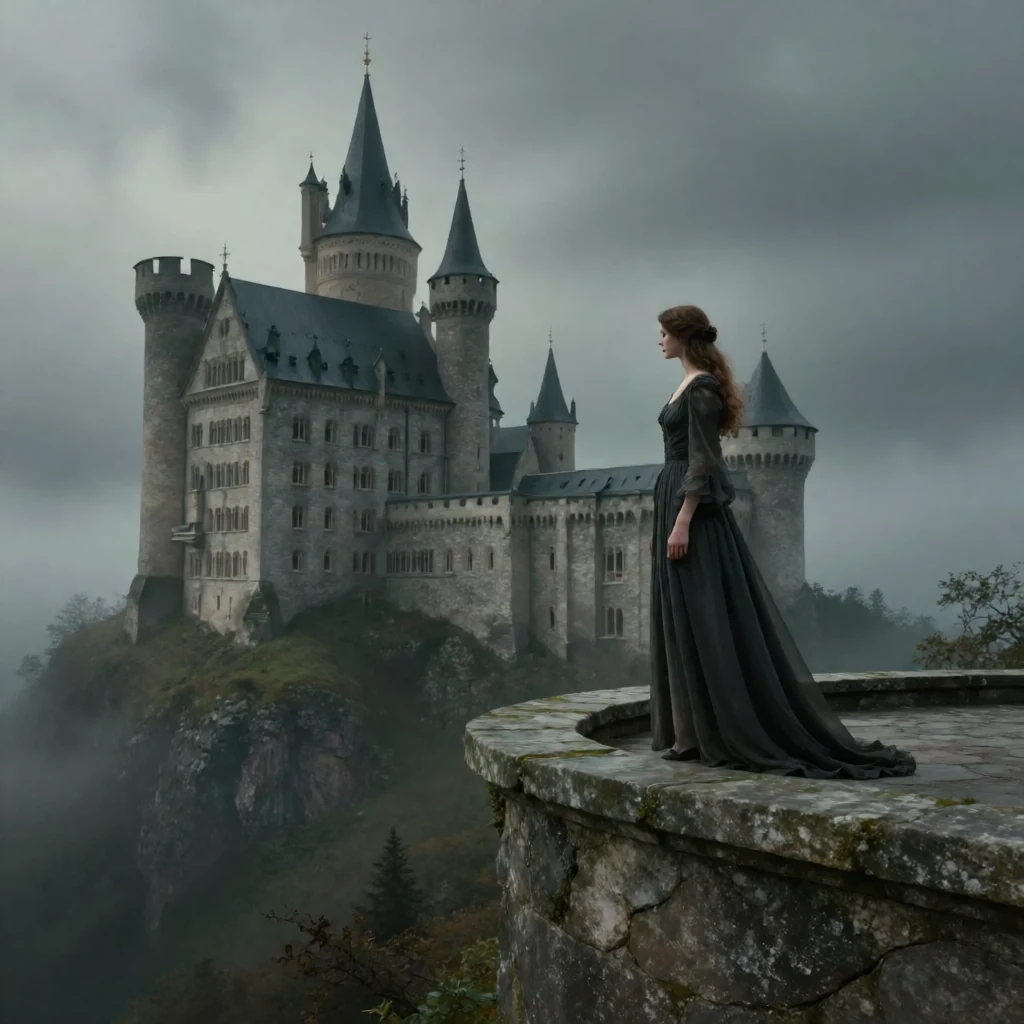
Montoni’s Mansion
The barge proceeds up the Grand Canal, passing the grand palaces of Sansovino and Palladio, before stopping at Montoni’s mansion. A servant greets them, and they enter through a hall and up a marble staircase to a sumptuous saloon decorated with fresco paintings, silver tripods, colourful Indian floor mats, and pale green silk furnishings with gold trim, with a balcony overlooking the Grand Canal. Emily is shocked by the mansion’s splendour, as she had heard reports that Montoni was ruined, and thinks Valancourt would be relieved to learn the rumours are false. Madame Montoni adopts a princesslike air, while Montoni is restless and discontented, and does not even greet his wife upon arrival. He soon leaves with Cavigni to join the evening’s entertainments; Madame Montoni becomes thoughtful, and when Emily fails to cheer her, withdraws to a balcony lattice to admire the new, enchanting scene outside.
Evening Entertainment
From her balcony, Emily watches dancers on the terrace below, led by a guitarist and tambourine player, followed by figures in fantastical costumes singing passages from Ariosto’s epic of the Moors’ war against Charlemagne and Orlando’s woes, then shifting to the melancholic verse of Petrarch. The combination of Italian music, expression and the Venetian moonlight deepens the sad, enchanting mood, and Emily is moved to tears as she thinks of Valancourt and her home in France. She listens in rapture until the musicians move on and the final notes fade, leaving her in a soft, pensive calm.
Emily’s Reflections
Left in the quiet after the music ends, Emily lingers in the soft, melancholy mood the performance created, which reminds her of tender memories of lost friends and mellowed sorrows, and of the faint, lingering traces of a beautiful piece of music long after it has ended.
CHAPTER II
This chapter fragment centers on Emily’s experiences during her stay in Venice, covering her witnessing of a grand Venetian water procession, her immersive reveries about the life of a sea nymph, her return to mortal domestic routines, her exploration of the desolate surrounding palace apartments, her arrival at her own Adriatic-facing chamber, and her composition of the poem The Sea-Nymph inspired by her fanciful daydreams.
The Venetian Water Procession
Emily is roused by distant solemn horn music, observes gondolas arranging along the terrace margins, and steps onto her balcony to watch an elaborate water procession approach along the canal. As the procession nears, horns and other instruments blend sweetly, and fabled Venetian deities appear to rise from the ocean: Neptune, with Venice personified as his queen, surrounded by tritons and sea-nymphs. The fantastic splendor of the spectacle, paired with the grandeur of the surrounding palaces, feels like a poet’s vision brought to life, leaving vivid fanciful images in Emily’s mind that linger long after the procession passes.
Emily’s Sea Nymph Reverie
Captivated by the procession, Emily indulges in an extended daydream about the existence and delights of a sea nymph. She imagines residing in coral bowers and crystal caverns with her sister nymphs, listening to surging waters above and triton shell music, skimming waves at sunset along wild rocks and sequestered shores to comfort sorrowful wanderers with her song and offer them delicious fruit from Neptune’s palace. She becomes so absorbed in the fantasy that she briefly wishes to shed her mortal form and plunge into the waves to join the sea nymphs.
Return from Reverie to Supper
Emily is recalled from her reverie by the call to a mortal supper, and smiles at the fanciful ideas she had been entertaining, noting that Madame Montoni would be seriously displeased if she were aware of them. After supper, Emily’s aunt stays up late, Montoni does not return, and Emily eventually retires to her chambers to rest.
Desolate Palace Apartments
On her way to her chamber, Emily passes through long suites of noble palace apartments that appear half-furnished, forlorn, and seemingly unoccupied for many years. The walls of some rooms hold faded remnants of tapestry, while frescoed walls have had their colors and designs almost entirely worn away by damp.
The original text of this work is in the public domain. This page focuses on a guided summary article, reading notes, selected quotes, and visual learning materials for educational purposes.