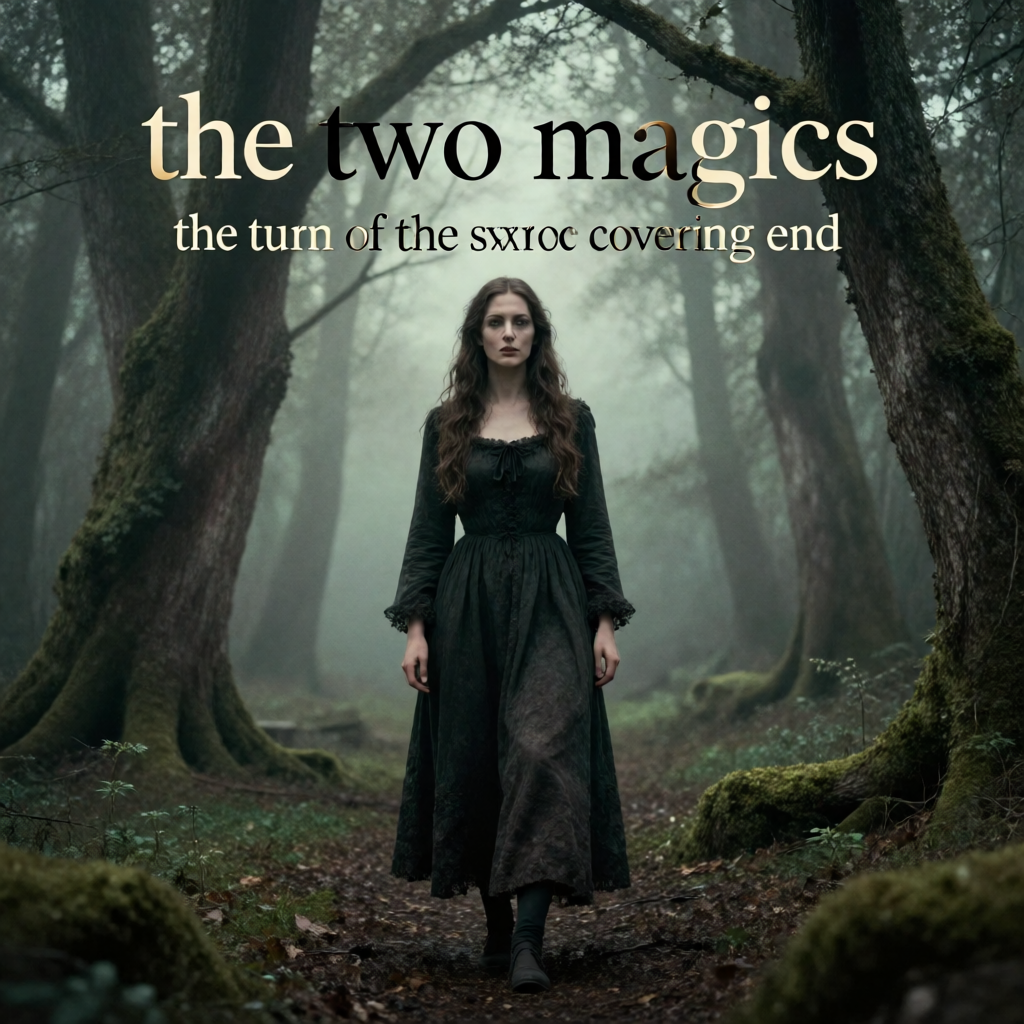
Reading Notes: The Two Magics: The Turn of the Screw, Covering End
Henry James
Part I: The Turn of the Screw
Chapter I
- Journey to Bly: Narrator travels by coach to the country estate; initial doubt and uncertainty transform into delighted anticipation upon seeing the welcoming landscape, grand facade, and bright flowers.
- Meeting Flora: Enchanted by the young pupil’s extraordinary beauty and radiant innocence; feels the position was meant for her.
- Settling In: Moves into spacious, well-appointed chambers; learns second pupil, Miles, arrives Friday.
- Exploring Bly: Flora shows narrator secret passages, empty chambers, and an ancient square tower; narrator experiences fairy-tale wonder mixed with unsettling awareness of the house’s mass and scale.
Chapter II
- Miles’s Dismissal: A sealed letter from the school headmaster reveals Miles has been fully expelled, not merely sent home for holidays.
- Mrs. Grose’s Reaction: Visibly distressed; insists Miles is too young and gentle to be cruel or harmful to others.
- Character Debate: Narrator presses the housekeeper to distinguish between typical boyish mischief and genuinely harmful behavior that warrants dismissal.
- Previous Governess: Mrs. Grose reveals the former governess died elsewhere after a sudden departure; refuses further details, stating only “she’s gone.”
Chapter III
- Miles’s Arrival: Governess instantly captivated by boy’s beauty and aura of innocence; the sealed accusation letter seems a grotesque falsehood.
- Pact with Mrs. Grose: They vow to protect the children, refusing to acknowledge the expulsion charge to the uncle or the children themselves.
- Idyllic Summer: Weeks of protective infatuation follow; narrator indulges in fantasies of shielding the children from harsh reality.
- Evening Walks: Solitary dusk walks through the grounds bring peace until a sense of unnameable unease begins to creep in.
- First Apparition: An unknown man stands on the crenelated tower, staring directly at her; all ambient sound fades; figure slowly turns and vanishes.
Chapter IV
- Aftermath: Governess conceals the sighting from Mrs. Grose, inventing an excuse about wet feet.
- Rationalization: Concludes an unscrupulous traveler trespassed and will not return; this explanation temporarily eases her mind.
- Immersion in Work: Throws herself into duties; children’s charm and innocence provide welcome distraction.
- Second Sighting: Sees the same figure at the dining room window during a rainy evening; his gaze passes her to other points in the room—he seeks someone else.
- Reversal: Rushes out, finds terrace empty; returns to window and sees Mrs. Grose enter, who screams at the sight of her face pressed to the glass.
Chapter V
- Mrs. Grose’s Distress: Immediately notices something is wrong with the governess’s white, shaken face.
- The Apparition Revealed: Governess describes the strange man at the window and admits to a prior secret sighting on the tower.
- Detailed Description: No hat, bright red close-curling hair, pale long face, sharp strange eyes, tall and active bearing, clothes appearing borrowed.
- Identification: Mrs. Grose recognizes the figure as Peter Quint, the master’s former valet, who never wore a hat and stole waistcoats.
- Revelation of Death: Mrs. Grose confirms Quint is dead, found stone-dead on an icy village road after leaving the public house.
Chapter VI
- Vigil in Schoolroom: Shared night of tears, prayers, and pledges; Mrs. Grose accepts the account without questioning sanity.
- The Ghost’s Purpose: Governess realizes with “portentous clearness” that Quint searches for Miles, not her; she resolves to become an expiatory shield, placing herself between the children and the apparition.
- Quint’s History: Mrs. Grose reveals Quint’s predatory influence over the household, his clever cruelty, and his death officially ruled an accident despite a life of “strange passages and perils.”
- Sense of Mission: Governess finds joy in defensive heroism, determined to stand before the children so “the more I saw, the less they would.”
- Afternoon by the Lake: Flora plays at the water’s edge while the governess sews, unaware of an observer across the water.
- Second Apparition: Miss Jessel (the former governess) stands on the opposite shore; Flora falls silent and turns her back, proving she sees and conceals the ghost.
Chapter VII
- Flora’s Secret: Governess urgently informs Mrs. Grose that Flora saw Miss Jessel two hours earlier and said nothing.
- Miss Jessel’s Appearance: Describes woman in black, pale and dreadful, with extraordinary beauty but an air of infamy; expression of furious determination to seize Flora.
- Household History: Mrs. Grose confirms the improper, depraved relationship between Quint and Miss Jessel; admits both were “infamous.”
- Despair: Governess collapses in tears, convinced she is failing to protect the children from supernatural harm.
Chapter VIII
- Late-night Conference: Mrs. Grose instantly recognizes the detailed descriptions of Quint and Miss Jessel, confirming their reality.
- Miles’s Association: Pressing reveals Quint and Miles were perpetually together for months; Miles lied about the association when confronted.
- The Mystery of Corruption: Governess wrestles with how a boy expelled as a “fiend” can now appear an angelic innocent; suspects Quint and Miss Jessel corrupted him.
- Resolution: Despite mounting evidence, governess refrains from accusation; resolves to watch carefully without passing judgment: “I must just wait.”
Chapter IX
- Calm Before Storm: Days pass without incident; children’s extraordinary cleverness and affection soothe lingering fears.
- Harmonious Alliance: Children seem unnaturally united, occasionally coordinating subtle distractions.
- Third Encounter: Late at night, candle goes out on stairs; Quint stands on landing; governess feels no terror, only steady readiness.
- Quint’s Vanishing: After long standoff, Quint turns and disappears down the stairs.
Chapter X (labeled Chapter 11)
- Flora’s Disappearance: Returns to find Flora’s bed empty; child hiding behind window blind with curtains drawn.
- Evasive Answers: Flora denies seeing anyone; narrator suppresses the impulse to confront her directly about lying.
- Nighttime Vigil: Patrolling corridors, governess sees a woman on the stairs (Miss Jessel) who vanishes instantly.
- Tower Observation: Observes from an abandoned tower room; sees Miles standing on the lawn, transfixed by something in the tower above him.
Chapter XI (labeled Chapter 11)
- Terrace Conversation: Governess recounts finding Miles abroad at night to Mrs. Grose; describes leading him through the dark house past Quint’s haunts.
- Miles’s Confession: In the moonlight, Miles declares he arranged the disturbance as a joke to make her think him “bad”: “When I’m bad I am bad!” He kisses her; she is nearly undone by his impudence and charm.
Chapter XII
- Miles’s Threat: Reports his parting words: “Think, you know, what I might do!” Fears he knows his own capacity for harm.
- Fraudulent Innocence: Accuses children of maintaining a facade; their goodness is “a game” and “a fraud”; they belong to the ghosts.
- Ghosts’ Malicious Design: Believes spirits seek to shorten the distance between themselves and the children, tempting them to perish in the attempt.
- Refusal to Appeal to Uncle: Rejects Mrs. Grose’s suggestion to write to the employer; fears his derision and contempt; threatens to leave if betrayed.
Chapter XIII
- Unspoken Pact: Children aware of her discomfort; consciously avoid forbidden subjects (ghosts, the former governess).
- Autumn Passing: No apparitions since staircase encounter; Bly looks “like a theatre after the performance.”
- Burden of Silence: Suspects children host “visitors” even in her literal presence; rehearses confrontations but cannot utter the names.
- Uncle’s Visit: Children constantly ask when he will come; she hoards their letters, hoping his arrival will bring relief.
Chapter XIV
- Sunday Walk: Children walk to church; Miles turned out in uncle’s tailor clothes, looking independent.
- School Question: Miles asks when he will return; wants “to see more life” and “his own sort,” not to be grouped with “a baby girl.”
- Churchyard Confrontation: Alone with Miles by a tomb; he asks if uncle can be made to know. “I will!” he declares, then marches into church alone.
Chapter XV (labeled Chapter XVI Outline)
- Power Shift: Governess realizes Miles has extracted her fear and holds leverage over her.
- Impulse to Flee: Considers abandoning everything during the church service.
- Retreat: Returns to house; collapses at staircase bottom where she encountered Miss Jessel.
- Daylight Apparition: Finds Miss Jessel in the schoolroom in broad daylight, looking like a housemaid writing a letter; cries “You terrible, miserable woman!” before she vanishes.
Chapter XVI
- Children’s Silence: Upon return, children and Mrs. Grose maintain a strange silence about her absence.
- Miss Jessel’s Confession: Governess reveals Miss Jessel confessed to “suffering the torments of the lost.”
- Decision to Write: Declares she will write to the uncle that night revealing Miles’s expulsion.
- Letter Intercepted: Discovers her letter never left the house; Miles took and destroyed it.
Chapter XVII
- Stormy Night Visit: Driven by obsession, visits Miles’s room during a thunderstorm.
- The Conversation: Miles wants a new school, not his old one; insists uncle must “completely settle things.”
- Pleading: Governess throws herself upon him, begging him to let her save him; “I would rather die than give you a pain.”
- Sudden Darkness: A blast of frozen air shakes the room; candle goes out; Miles calmly claims, “It was I who blew it, dear!”
Chapter XVIII
- Unsigned Letter: Written and sealed in pocket; exemplary morning from children.
- Piano Performance: Miles plays with extraordinary charm, almost hypnotic; she forgets time and everything else.
- Flora’s Disappearance: Realizes Flora is missing; Miles claims ignorance.
- Deduction: Concludes Flora has gone with Miss Jessel; Miles provided the deliberate distraction.
- Departure: Heads out into the damp, grey afternoon to find Flora, leaving the unsent letter on the hall table.
Chapter XIX
- Journey to the Lake: Confident Flora has gone to the spot where they saw Miss Jessel before.
- Boat Missing: Discovers the boat hidden on the far shore; Flora crossed alone.
- Discovery: Finds Flora standing on the grass, smiling, having plucked a fern.
- Confrontation: Demands to know where Miss Jessel is.
Chapter XX
- Apparition at Lake: Miss Jessel stands on opposite bank; Mrs. Grose sees nothing, confirming her blindness.
- Flora’s Denial: Coldly insists she sees nobody; calls the governess cruel; “I don’t like you!”
- Mrs. Grose’s Flight: Sides with Flora; they depart together in “pained opposition,” leaving governess abandoned.
- Grief: Governess falls to ground sobbing; returns to find Flora’s belongings removed—proof of her complete failure.
- Quiet Evening: Miles joins her by the fire; they sit in silence; extraordinary sweet sadness amid mortal coldness.
Chapter XXI
- Flora’s Illness: Feverish and unrestful; her fears center entirely on the governess, not the ghosts; denies seeing anything with haughty resentment.
- Governess’s Deduction: Recognizes Flora’s attitude as guilt; children made “cleverer” by spectral friends to construct a grievance against her.
- Plan: Mrs. Grose will take Flora to the uncle in London; this removes the child from Bly and from the governess’s influence.
- Intercepted Letter: Mrs. Grose reveals Miles destroyed the letter to the uncle; he has been stealing correspondence.
Chapter XXII
- Alone with Miles: Governess faces the “monstrous ordeal” alone; must proceed by treating it as a test of ordinary virtue.
- Morning Absence: Miles takes a casual “stroll”; the pretense of tutorial instruction is tacitly abandoned.
- Dining Room: Serves dinner in the grand room beneath the window where she first saw Quint; Miles asks about Flora’s illness.
- The Declaration: After the maid departs, Miles turns from the window and says, “Well—so we’realone!”
Chapter XXIII
- Companionship: Miles asks if the others “count”; probes her feelings about their solitude.
- Window Scene: Miles stands with back to her; governess realizes the power dynamic has shifted—he now appears shut out or shut in.
- Freedom: Miles declares Bly “agrees” with him; he has explored “miles and miles” and never felt so free.
- Pressing for Truth: Demands he tell her what he has on his mind.
- Deferral: Miles becomes uneasy; asks to see Luke first; leaves without confessing.
- The Question: She asks if he took her letter from the hall table.
Chapter XXIV
- Quint’s Appearance: The ghost stands at the window during the interrogation; governess shields Miles from the sight.
- Letter Confession: Miles admits taking the letter to see what she said about him; burned it.
- School Confession: Miles reveals he merely “said things” to friends; did not steal; expelled unjustly for words.
- Realization of Innocence: Governess horrified to realize her months of torment were based on false assumptions; calls his punishment “stuff and nonsense.”
- Final Confrontation: Quint appears at window; Miles cries “Peter Quint—you devil!” and turns to look; the little heart stops; “I have you, but he has lost you for ever!”
Part II: Covering End
Chapter I (I)
- Setting: Covering End, old English country house; hot August Saturday.
- Chivers: Aged servant waits for visitors; listens to a woman’s voice exploring the gallery above.
- Mr. Prodmore: Arrives with scheme to marry daughter Cora to Captain Yule, the new heir.
- Cora’s Arrival: Late and flustered; reveals an American woman passionate about old houses is also visiting.
- Mortgage Revealed: Prodmore holds all mortgage papers; property effectively his despite Yule’s inheritance.
- Captain Yule: Expected from Paddington; has never seen the house before.
Chapter II (26)
- Marriage Scheme: Prodmore pressures Cora to accept Yule; reminds her of his investment in her education (“hundreds and hundreds of pounds”).
- Political Transaction: Claims to agree with Yule’s radical views; frames marriage as personal transaction.
- Cora’s Protest: Flees to morning-room upon hearing Yule’s carriage.
Chapter III
- Mrs. Gracedew’s Arrival: Radiant American widow; knows the house intimately from books and pictures.
- Chivers: She praises him as “perfect”; invites him to “Missoura Top” as her family servant.
- Broken Pot: Accidentally breaks a Chelsea vase; Chivers devastated by shame.
- Captain Yule: Meets the new master; offers to show him around the house he has never seen.
- House Tour: Mrs. Gracedew seizes control from Chivers, correcting his history and dating the house to the fourteenth century.
- Valuation Soars: During tour of Gossage visitors, property value escalates from £20,000 to £50,000 at her enthusiastic prompting.
- Prodmore’s Command: “Just pile it on! Bring him round.”
Chapter IV
- Philosophical Exchange: Mrs. Gracedew and Yule discuss the house, heritage, and political duty.
- Yule’s Background: Left army for East End social work; family feud prevented him from approaching the house in childhood.
- Financial Crisis: Reveals estate mortgaged to Prodmore for all it is worth; faces complete loss.
- Prodmore’s Ultimatum: Must marry Cora and abandon Radical principles to save the house.
- Mrs. Gracedew’s Defense: Passionate argument for beauty and preservation as sacred trusts; “You must have beauty in your life.”
- Yule’s Retreat: Unable to commit; Cora’s arrival sends him fleeing upstairs.
Chapter V
- Cora’s Confession: Confides in Mrs. Gracedew about forced engagement to Yule.
- Yule’s Decision: Returns to say he has accepted Prodmore’s terms; Mrs. Gracedew’s influence moved him to act immediately.
- Departure: Yule ascends to meet Prodmore; Mrs. Gracedew left in turmoil, pacing the hall.
- Broken Pot: Finds fragments of the Chelsea vase; delivers silent funeral oration over the loss.
Chapter VI
- Denial: Cora firmly denies intention to marry Yule.
- Secret Love: Confesses love for Hall Pegg, met at the station; they walked together secretly.
- The Name: Father objects to “Hall Pegg,” saying it sounds like a hat-rack.
- Alliance: Mrs. Gracedew agrees to advocate for Hall Pegg; women seal pact with a kiss.
Chapter VII
- Confrontation: Prodmore searches for Cora; reveals he has “given up” the property interest for Yule as son-in-law.
- Revelation: Mrs. Gracedew announces Cora’s secret engagement to Hall Pegg.
- Negotiation: Offers to buy Prodmore’s interest in the estate.
- Price Hike: Prodmore raises price to £70,000 upon learning of the elopement.
- Deal: Mrs. Gracedew accepts; Yule descends; Prodmore departs furiously to pursue his daughter.
Chapter VIII
- Debt Assumed: Mrs. Gracedew reveals she has taken over Yule’s debts, freeing him from the engagement to Cora.
- Terms: Refuses to disclose the price; offers him any terms he chooses.
- Proposal: Moved by her generosity, Yule asks for her hand; she checks him with “Hush!”
- Tourists: German visitors arrive; Mrs. Gracedew introduces Yule as her future husband.
- Resolution: Covering End is saved; Chivers receives the house back with wonder.
Key Themes
- Supernatural Ambiguity: The ghosts in The Turn of the Screw remain ambiguous—real manifestations or projections of the governess’s tortured psychology.
- Innocence and Corruption: Children serve as battlegrounds for supernatural influence, their purity or depravity perpetually in question.
- Isolation and Burden: The governess’s increasing solitude and terrible responsibility drive her toward psychological extremity.
- Romantic Sacrifice: Mrs. Gracedew’s intervention in Covering End saves both the ancestral house and Captain Yule from a fate worse than debt.
- Class and Transaction: Marriage and property function as financial instruments; social mobility is negotiated through calculated exchanges.
- Past Haunting Present: Both stories literalize and figurative the weight of history—ghosts in Bly, mortgages and heritage at Covering End.
These notes trace the psychological descent of the governess at Bly and the social comedy of property and marriage at Covering End, capturing Henry James’s dual exploration of supernatural dread and romantic resolution.