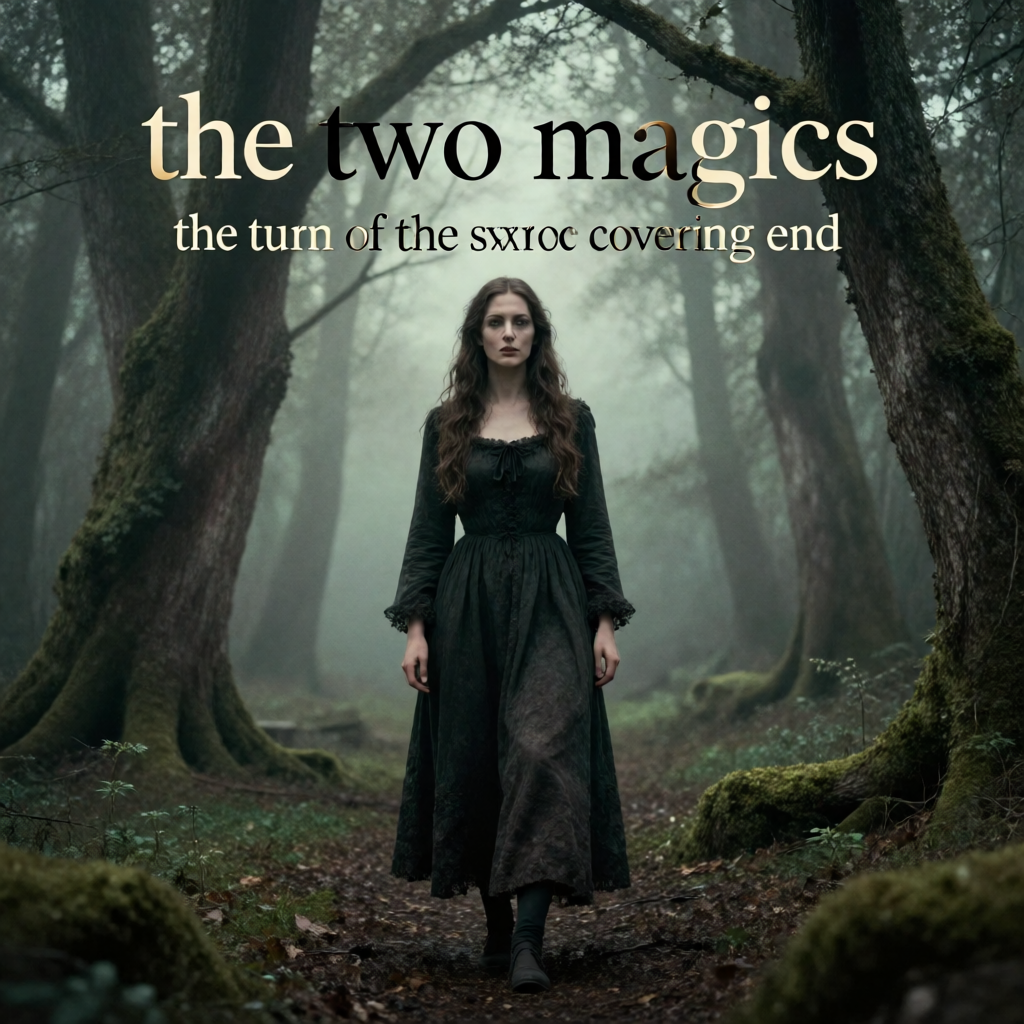
Study Guide: The Two Magics: The Turn of the Screw, Covering End
Book Overview
“The Two Magics” is a collection of two novellas by Henry James, originally published in 1898. The title refers to two forms of literary magic James employs: the supernatural horror of “The Turn of the Screw” and the social comedy of “Covering End.” Together, they showcase James’s mastery in exploring consciousness, perception, and the tension between innocence and corruption.
Part One: The Turn of the Screw
Major Characters
The Governess (Unnamed): The narrator and protagonist, a young woman hired to care for Miles and Flora at Bly. She is emotionally intense, imaginative, and increasingly isolated in her supernatural convictions.
Miles and Flora: The orphaned children placed under the governess’s care. Flora is described as extraordinarily beautiful with golden curls; Miles is intelligent, charming, and expelled from school under mysterious circumstances.
Mrs. Grose: The housekeeper at Bly, a practical woman who becomes the governess’s confidante. She provides crucial information about the estate’s past and the former servants.
Peter Quint: The master’s former valet who died under suspicious circumstances. He appears to the governess as a ghost, characterized by bright red hair, pale features, and an air of predatory intelligence.
Miss Jessel: The former governess who died after leaving Bly. She appears as a specter in black, appearing to Flora at the lake and in the schoolroom.
The Uncle (Master): The children’s guardian, a Harley Street figure who hired the governess under the condition she never trouble him. His mysterious absence fuels the governess’s determination to prove herself.
Summary of Chapters
Chapter I: The governess arrives at Bly after journeying from London, where she met her employer. She is immediately enchanted by Flora and impressed by the estate’s beauty. Mrs. Grose, the housekeeper, welcomes her and mentions Miles will arrive Friday.
Chapter II: A letter arrives revealing Miles has been dismissed from school—permanently, not just for the holidays. The governess confides in Mrs. Grose, who is shocked. Mrs. Grose mentions the previous governess who left and died elsewhere, leaving details vague.
Chapter III: The governess retrieves Miles from school and is overwhelmed by his beauty and innocent charm. She forms a pact with Mrs. Grose to protect the children and never report to their uncle. An idyllic summer follows, but during an evening walk, she sees a figure on the tower—a man watching her.
Chapter IV: The governess rationalizes the sighting as a trespassing traveler. She immerses herself in caring for the children. On a rainy Sunday, she sees the figure again at the dining room window, looking past her toward someone else. She pursues him but he vanishes. When she takes his place at the window, Mrs. Grose sees her and is terrified.
Chapter V: The governess reveals both sightings to Mrs. Grose, then describes the figure in detail: red hair, pale face, small fixed eyes, wide mouth. Mrs. Grose suddenly recognizes him as Peter Quint—the dead valet. Quint was the master’s man, wore no hat, and died last year on an icy road.
Chapter VI: The governess and Mrs. Grose share a night of tears and vows to protect the children. The governess realizes the ghost seeks Miles. Mrs. Grose reveals Quint’s dark history: his improper influence over everyone, his cruelty, and his death. The governess embraces her role as protective shield. Later, she sees Miss Jessel by the lake while Flora plays—Flora sees the ghost too but says nothing.
Chapter VII: The governess tells Mrs. Grose that Flora has been seeing Miss Jessel silently. She describes Miss Jessel’s appearance and fierce intention toward the child. Mrs. Grose confirms the infamy between Quint and Miss Jessel, explaining Miss Jessel suffered for her involvement.
Chapter VIII: A late-night conference confirms Mrs. Grose recognizes Quint and Miss Jessel from the governess’s descriptions. Mrs. Grose reveals Miles spent months in Quint’s company, and when questioned, Miles lied about it. The governess suspects corruption but resolves to watch without accusing.
Chapter IX: Days pass without incident. The governess is charmed by the children’s extraordinary intelligence and affection. One night, drawn by impulse, she walks to the stairs and encounters Quint for the third time. All her terror vanishes; she confronts him, and he retreats.
Chapter X: Flora’s bed is found empty; she hides behind the window blind. The governess grows suspicious of nighttime behavior. She patrols nightly and sees a woman’s figure on the stairs. One night she finds Flora at the window again, watching. From the tower, she sees Miles below, transfixed, looking upward at something in the tower.
Chapter XI: From the terrace, the governess and Mrs. Grose watch the children. The governess recounts finding Miles abroad at midnight. Miles explains he engineered the disturbance as a jest—he wanted her to think him bad. She nearly weeps at his impudence and accepts his explanation.
Chapter XII: The governess tells Mrs. Grose she believes the children communicate with the ghosts, who seek to corrupt them. She refuses to appeal to the uncle, declaring she will leave rather than admit failure or invite his contempt.
Chapter XIII: The children have developed sophisticated avoidance of forbidden topics. No apparitions appear, but the governess suspects the children have private visitors. They anticipate the uncle’s visit, asking when he will come.
Chapter XIV: On a Sunday walk to church, Miles asks about school, wanting to “see more life” and “his own sort.” In the churchyard, he asks if his uncle can be made to know the truth, then declares: “I will!” He will bring his uncle himself.
Chapter XV: The governess realizes Miles has extracted her knowledge of fear. She considers fleeing but cannot abandon the children. She returns to the house and finds Miss Jessel in the schoolroom—Miss Jessel admits she suffers the torments of the lost before vanishing.
Chapter XVI: The children maintained silence about the governess’s brief absence. She tells Mrs. Grose she has confronted Miss Jessel, who confessed her torments. The governess decides she must write to the uncle that very night, revealing everything.
Chapter XVII: The governess visits Miles’s room on a stormy evening. He reveals he wants his uncle to come and settle things. She pleads with him to confide, but he asks to be left alone. Suddenly the room is struck by cold and darkness; Miles claims he blew out the candle.
Chapter XVIII: After writing her letter, the governess observes the children’s exemplary behavior. Miles plays piano while Flora disappears. The governess realizes the trick—Miles provided distraction while Flora departed. She and Mrs. Grose set out to find Flora.
Chapter XIX: At the lake, they find Flora has taken the boat across the water. Walking around, they discover her calmly plucking ferns. The confrontation becomes a mutual test: Flora asks where Miss Jessel is; the governess asks the same.
Chapter XX: Miss Jessel appears on the opposite bank. Mrs. Grose sees nothing, confirming her blindness to the supernatural. Flora coldly denies seeing anything, accusing the governess of cruelty. Mrs. Grose takes Flora away. The governess, abandoned, returns to find Flora’s belongings removed. That evening, she sits silently with Miles.
Chapter XXI: Flora is ill with fever, fearing only the governess. Mrs. Grose reports shocking language from Flora. The governess learns her letter was never sent—Miles must have taken and destroyed it. The governess sends Mrs. Grose with Flora to London, planning to secure Miles’s confession.
Chapter XXII: Now alone with Miles, the governess abandons the pretense of lessons. They dine in the grand dining room. After the maid leaves, Miles observes: “Well—so we’re alone!”
Chapter XXIII: Their conversation turns to what matters between them. Miles asks if the others count. He stands at the window, and the governess realizes the dynamic has shifted—he now appears shut out. She asks him to tell her what he has on his mind, but he asks to postpone.
Chapter XXIV: Peter Quint appears at the window. The governess shields Miles from the sight. She questions him about the letter—he took it to read what she wrote about him. She asks about school: he confesses he only “said things” to people he liked, and they told. His punishment was disproportionate. As he confesses, Quint appears again. Miles cries out “Peter Quint—you devil!” and turns to look. His heart stops.
Key Themes in The Turn of the Screw
Innocence and Corruption: The central tension concerns whether the children are innocent victims of ghost interference or already corrupted. Their secrecy and apparent foreknowledge suggest contamination, yet their beauty and charm argue for purity.
Perception and Reality: The governess’s narration proves increasingly unreliable. Her intense imagination and emotional isolation raise questions about whether the ghosts are supernatural realities or psychological projections.
Power and Control: The governess struggles for authority over the household. The children resist her control through silence, evasion, and manipulation. The absent uncle represents ultimate power she cannot access.
Isolation: The governess becomes increasingly isolated—first from the household, then from Mrs. Grose, and finally from any validation of her perceptions. This isolation drives her increasingly desperate actions.
Sexual Anxiety: Critics debate whether the ghosts represent sexual threat. Quint’s predatory freedom with the children and Miss Jessel’s “infamy” with Quint suggest corrupting influences of a sexual nature, though James never specifies.
The Ambiguity Question
“The Turn of the Screw” has generated extensive critical debate about whether the ghosts are real or imagined:
Supernatural Interpretation: The ghosts exist objectively, and the children can see them. The governess protects the children from genuine supernatural evil.
Psychological Interpretation: The governess suffers a breakdown, projecting her own repressed fears and desires onto apparitions. The children are innocent; her “protection” becomes the true danger.
James’s Intentional Ambiguity: James crafted the tale to sustain both readings. The governess’s unreliability makes certain judgment impossible, forcing readers to examine their own interpretive frameworks.
Part Two: Covering End
Major Characters
Mrs. Gracedew: An American widow, wealthy and passionate about English country houses. She arrives at Covering End with intimate knowledge from books and pictures, transforming every scene with her enthusiasm and theatricality.
Captain Clement Yule: The rightful heir to Covering End, a young Radical politician burdened by debts. He has never seen his ancestral home due to a family feud. He is handsome, serious, and principled.
Mr. Prodmore: A calculating financier who holds the mortgages on Covering End. He schemes to marry his daughter Cora to Captain Yule in exchange for debt cancellation.
Cora Prodmore: Mr. Prodmore’s daughter, overdressed and eager. She is secretly in love with Hall Pegg, a man her father considers unsuitable due to his name.
Chivers: The ancient family servant who has served at Covering End all his life. He embodies continuity with the past.
Summary of Chapters
Chapter I: At Covering End, old Chivers waits while a woman explores the gallery above. Mr. Prodmore arrives to discuss Captain Yule, the new heir who has come to take possession of the mortgaged estate. Cora Prodmore arrives, flustered, having met an American woman on the train who also wants to see the house. Mr. Prodmore reveals his scheme: he holds every mortgage on the property and wants Captain Yule to marry Cora to clear the debt. He sees Cora as his “largest property” to be transferred.
Chapter II: Captain Yule arrives at his ancestral home for the first time. He admits he dreaded seeing Prodmore because he knows exactly what the man wants—Yule is “at his mercy.” Mr. Prodmore offers to burn the debt documents if Yule marries Cora and stands for Parliament as a Conservative. Yule tours the gloomy house, finding it “too queer—too cold—too cruel.” He considers letting the property “slide.” An extraordinary woman arrives—Mrs. Gracedew—whose entrance dazzles the household.
Chapter III: Mrs. Gracedew arrives as a striking, radiant figure, immediately charming Chivers with her praise. She proposes to take him to “Missoura Top” as her old family servant. Captain Yule appears, and Mrs. Gracedew offers to show him his house. A touring party arrives from Gossage, and Mrs. Gracedew boldly takes over the tour, correcting Chivers’s historical details. Her enthusiastic presentation of the house drives Mr. Prodmore to push the valuation higher—twenty thousand, then thirty, forty, fifty thousand pounds. Captain Yule detains her privately while Cora attempts to intercede. Mr. Prodmore commissions Mrs. Gracedew to convince Yule to sell.
Chapter IV: Mrs. Gracedew and Captain Yule engage in witty, charged dialogue. She learns he has worked in London’s East End fighting injustice, and a family feud kept him from his house. She discovers Covering is mortgaged for all it’s worth, and Prodmore wants Yule to give up his Radical principles for marriage and a political career. Mrs. Gracedew pleads passionately for preserving the past, calling the house “the temple.” Yule admits he cares for the house but must think. Cora appears on the landing, and Yule retreats upstairs.
Chapter V: Cora confides to Mrs. Gracedew that she is forced to marry Captain Yule but loves Hall Pegg. Captain Yule returns having accepted Prodmore’s terms—he’s agreed to the marriage and political conversion. Mrs. Gracedew seems struck by his quick capitulation. They discuss honor and duty as Yule departs to meet Prodmore. He pauses on the stairs, irresolute, then disappears. Mrs. Gracedew paces the hall, troubled by complications. Cora returns to find the broken Chelsea pot—Chivers dropped it earlier—and Mrs. Gracedew pronounces a funeral oration over the fragments.
Chapter VI: Cora denies intending to marry Captain Yule. She confesses her love for Hall Pegg, who waits in a grotto by the park gate. Her father objects to the name. Mrs. Gracedew promises to persuade Mr. Prodmore to accept the match. The women seal their pact, and Cora departs for her beloved.
Chapter VII: Mr. Prodmore arrives demanding his daughter. Mrs. Gracedew reveals Cora is devoted to Hall Pegg, not Captain Yule. Prodmore is furious but Mrs. Gracedew blocks his pursuit of Cora. She then offers to buy his interest in the estate. The negotiation escalates from fifty to seventy thousand pounds. Captain Yule descends as Mrs. Gracedew accepts the price. Prodmore departs furiously to pursue his runaway daughter.
Chapter VIII: Mrs. Gracedew reveals to Captain Yule that she has bought his debt from Prodmore, freeing him from the engagement. He offers his hand in gratitude. She calls the house “saved.” German tourists arrive; she entertains them, introducing Yule as her future husband. She follows him to the garden, and Chivers reflects on reclaiming the house he serves.
Key Themes in Covering End
Heritage and Progress: The novella explores tension between preserving historic houses and modern social needs. Mrs. Gracedew’s passion for the past contrasts with Yule’s commitment to representing the dispossessed.
Money and Marriage: Victorian marriage as transaction runs through both novellas. Mr. Prodmore explicitly treats his daughter as property to be exchanged for financial and political advantage.
Authenticity and Performance: Characters constantly perform roles—Mrs. Gracedew as housekeeper, Cora as reluctant bait, Yule as reluctant convert. The novella questions what lies beneath social performance.
American and English Values: Mrs. Gracedew represents American enthusiasm for English heritage. Her willingness to pay extravagantly contrasts with English financial pragmatism.
Love and Choice: Cora’s secret attachment to Hall Pegg, though his name is ridiculed, suggests genuine feeling triumphs over calculated arrangement.
Comparative Analysis
Narrative Technique
Both novellas employ first-person narration, but with different effects:
The Turn of the Screw: The governess’s intense, emotionally involved narration creates unreliable perspective. Her psychological state colors every description, making readers question the validity of her perceptions.
Covering End: Mrs. Gracedew’s narration maintains ironic distance. Her theatrical enthusiasm allows for comic observation while her genuine passion provides emotional center.
The Role of Absence
Both works feature crucial absences that drive plot:
The Turn of the Screw: The uncle’s absence creates power vacuum. The governess must act independently, spiraling into isolation without recourse to authority.
Covering End: Captain Yule’s absence from his house (until now) and Mr. Prodmore’s absence of a wife create the conditions for arrangement and deception.
Houses as Characters
Both Bly and Covering End function as symbolic spaces:
Bly: Gothic, mysterious, haunted. Its empty chambers and tower suggest hidden secrets. The house embodies the past’s threat to present innocence.
Covering End: Dignified despite decay, historic but neglected. The house represents heritage that requires active stewardship to survive.
Study Questions
-
In “The Turn of the Screw,” how does James use the governess’s unreliability to create horror? What evidence supports each interpretation of the ghosts?
-
Compare the governess’s relationship to the children with Mrs. Gracedew’s relationship to Captain Yule. How do保护和control figure in each?
-
Both novellas feature characters who must choose between personal desire and external obligation. How does each character resolve this tension?
-
What role does servant Chivers play in “Covering End”? How does his perspective differ from the principal characters?
-
The title “The Two Magics” suggests James’s literary technique. How does he use supernatural elements differently in each novella?
-
Consider the treatment of death in both novellas. What does each suggest about the past’s relationship to the present?
-
In “The Turn of the Screw,” why do you think Flora denies seeing Miss Jessel? What does her denial reveal about her character?
-
Mrs. Gracedew pays seventy thousand pounds for Covering End—a price Mr. Prodmore inflated when he realized her passion. Is her purchase romantic or foolish?
Key Quotations to Analyze
The Turn of the Screw:
“The governess sees what she expects to see, but the reader must decide whether what she expects to see actually exists.”
“It was I who blew it, dear!”
“Peter Quint—you devil!”
Covering End:
“This is the temple—don’t profane it! Keep up the old altar kindly—you can’t set up a new one as good.”
“I’m here for an act of salvation—I’m here to avert a sacrifice!”
“Fifty thousand, Captain Yule, is what I think I should propose.”
Final Study Note
Henry James’s “The Two Magics” demonstrates his remarkable ability to explore consciousness, moral complexity, and the permeable boundary between reality and perception through two distinct yet complementary novellas—one where terror emerges from the supernatural corruption of innocence, and one where comedy resolves the tension between heritage and progress through the magic of human connection and sacrifice.