The Storm and Jonah’s Sleep
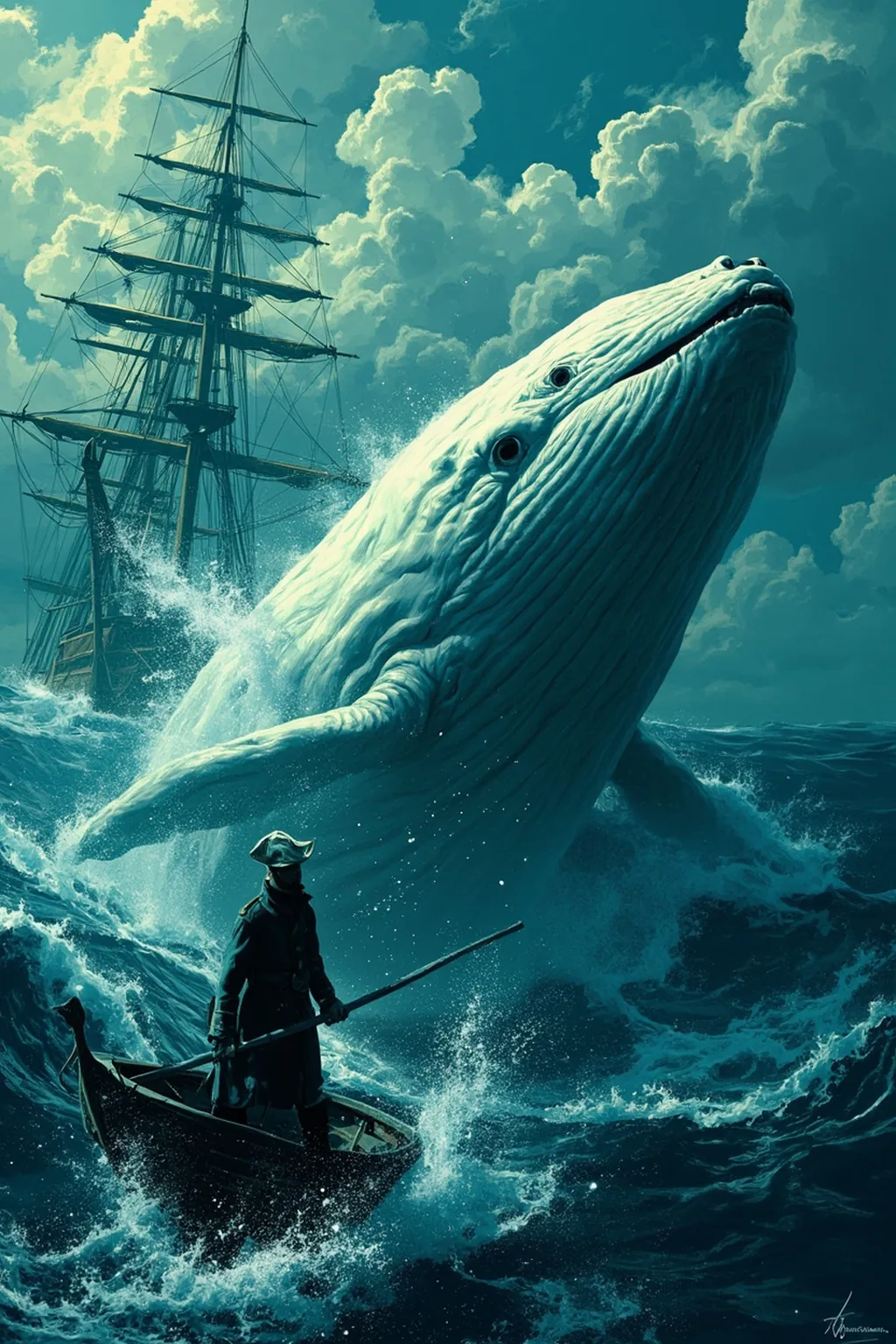
The time of tide arrives; the ship casts off her cables and glides to sea from the deserted wharf, careening toward Tarshish. This ship, Father Mapple remarks, was the first of recorded smugglers, with Jonah as the contraband. But the sea rebels and will not bear the wicked burden. A dreadful storm arises, the ship is like to break, and the boatswain calls all hands to lighten her. Boxes, bales, and jars clatter overboard; the wind shrieks, the men yell, and every plank thunders with trampling feet. Yet amid this raging tumult, Jonah sleeps his hideous sleep in his berth in the cabin, oblivious to the black sky, the reeling timbers, and the far rush of the mighty whale that even now cleaves the seas after him with open mouth.
The Casting of Lots
The frightened master comes to Jonah and cries out, “What meanest thou, O, sleeper! arise!” Startled from his lethargy, Jonah staggers to the deck, grasps a shroud, and looks out upon the sea, only to be struck by a panther billow leaping over the bulwarks. Wave after wave crashes into the ship, and the mariners come nigh to drowning. The white moon shows her affrighted face from the steep gullies overhead, and Jonah sees the rearing bowsprit pointing high upward, then beating down toward the tormented deep. The terrors of the God-fugitive become plain to the sailors, whose suspicions grow certain. To test the truth by referring the matter to high Heaven, they fall to casting lots to see for whose cause the tempest is upon them.
Jonah’s Confession
The lot falls upon Jonah, and the mariners furiously mob him with questions about his occupation, origin, country, and people. But Jonah’s behavior is remarkable: the eager mariners ask who he is and where from, yet they receive not only answers to those questions but also an unsolicited answer forced from him by the hard hand of God upon him. He cries, “I am a Hebrew,” and then confesses, “I fear the Lord the God of Heaven who hath made the sea and the dry land!” His confession makes the mariners more appalled, yet still pitiful. Though Jonah is wretched and knows the darkness of his deserts, he has not yet supplicated God for mercy; instead, he cries out to the sailors to take him and cast him into the sea, for he knows the tempest is for his sake.
Cast Into the Sea
The sailors mercifully turn from Jonah’s plea and seek by other means to save the ship, but all in vain. The indignant gale howls louder, and at last, with one hand raised invokingly to God, the mariners reluctantly lay hold of Jonah. He is taken up as an anchor and dropped into the sea. Instantly, an oily calmness floats out from the east, and the sea is still as Jonah carries down the gale with him, leaving smooth water behind. He goes down in the whirling heart of the masterless commotion, scarce heeding when he drops seething into the yawning jaws awaiting him, and the whale shoots-to all his ivory teeth upon his prison like so many white bolts.
Swallowed by the Whale
From the fish’s belly, Jonah prayed unto the Lord. But Father Mapple urges the congregation to observe his prayer and learn a weighty lesson. Sinful as he is, Jonah does not weep and wail for direct deliverance; he feels his dreadful punishment is just. He leaves all his deliverance to God, contenting himself with the fact that, spite of all his pains and pangs, he will still look toward His holy temple. Here is true and faithful repentance—not clamorous for pardon, but grateful for punishment. God was pleased with this conduct, as shown in the eventual deliverance of Jonah from the sea and the whale. Father Mapple places Jonah before the congregation not as a model for sin, but as a model for repentance: sin not, but if you do, take heed to repent of it like Jonah.
The original text of this work is in the public domain. This page focuses on a guided summary article, reading notes, selected quotes, and visual learning materials for educational purposes.