KAPITEL 41. Moby Dick.
This chapter explores the widespread fear, superstitious lore, and tangible threat posed by the white sperm whale Moby Dick to the global whaling community, alongside the origin and progression of Captain Ahab’s all-consuming obsession with hunting the whale that maimed him, framed through Ishmael’s account of joining the Pequod’s crew and swearing a collective oath of revenge against the creature. This chapter details Captain Ahab’s hidden monomaniacal obsession with hunting the white whale Moby Dick, his carefully constructed public performance of grief over his lost leg, the Nantucket community’s widespread misperception of his fitness to lead the Pequod, the moral weakness of the ship’s crew that leaves them open to aligning with his rage, and Ishmael’s own capitulation to the hunt’s momentum.
KAPITEL 41. Moby Dick.
This chapter explores the widespread fear, superstitious lore, and tangible threat posed by the white sperm whale Moby Dick to the global whaling community, alongside the origin and progression of Captain Ahab’s all-consuming obsession with hunting the whale that maimed him, framed through Ishmael’s account of joining the Pequod’s crew and swearing a collective oath of revenge against the creature.
Ishmael’s Oath to Hunt Moby Dick
Ishmael recounts joining the rest of the Pequod’s crew in swearing a binding oath of violence and revenge against Moby Dick, amplifying his own vow with extra fervor driven by the deep dread he felt in his soul. He fully aligns himself with Captain Ahab’s unquenchable feud against the whale, absorbing the full history of the “murderous monster” the crew has dedicated themselves to pursuing.
Moby Dick’s Elusive Reputation Among Whalers
Moby Dick’s reputation spread slowly and remained limited across the global sperm whaling fleet due to the scattered, isolated nature of whaling operations: ships were spread across vast stretches of ocean, voyages lasted for years, and communication between vessels was rare, so news of the whale rarely reached the wider community. Only a small number of whalers had knowingly seen or fought Moby Dick, with many isolated accounts of a massive, malignant sperm whale that escaped after attacking vessels sometimes attributed to him. Frequent violent attacks by sperm whales overall led many whalers to ascribe the terror linked to Moby Dick to the broader dangers of the sperm whale fishery rather than a single individual whale.
Superstitious Legends of Moby Dick
Whalers who first encountered Moby Dick initially faced him as readily as any other sperm whale, but repeated catastrophic attacks — which included fatal injuries, dismemberment, and destroyed boats — spread widespread terror through the community. Rumors amplified these real accounts, and the isolated, superstitious context of life at sea allowed these stories to grow to include supernatural elements, making Moby Dick a figure of such widespread dread that few hunters were willing to pursue him.
Whalemen’s Fear of Sperm Whales
Even outside of Moby Dick’s specific legend, sperm whales were widely feared across the global whaling community. Many non-American whalers, who had only hunted less dangerous right whales, regarded sperm whales with superstitious awe, and longstanding accounts from naturalists described the species as exceptionally ferocious, with claims that even sea creatures fled in terror at their approach. These longstanding beliefs about the inherent danger of sperm whales continued to shape whalers’ fears even as modern experience challenged some of the more extreme claims.
Moby Dick’s Distinctive Physical Appearance
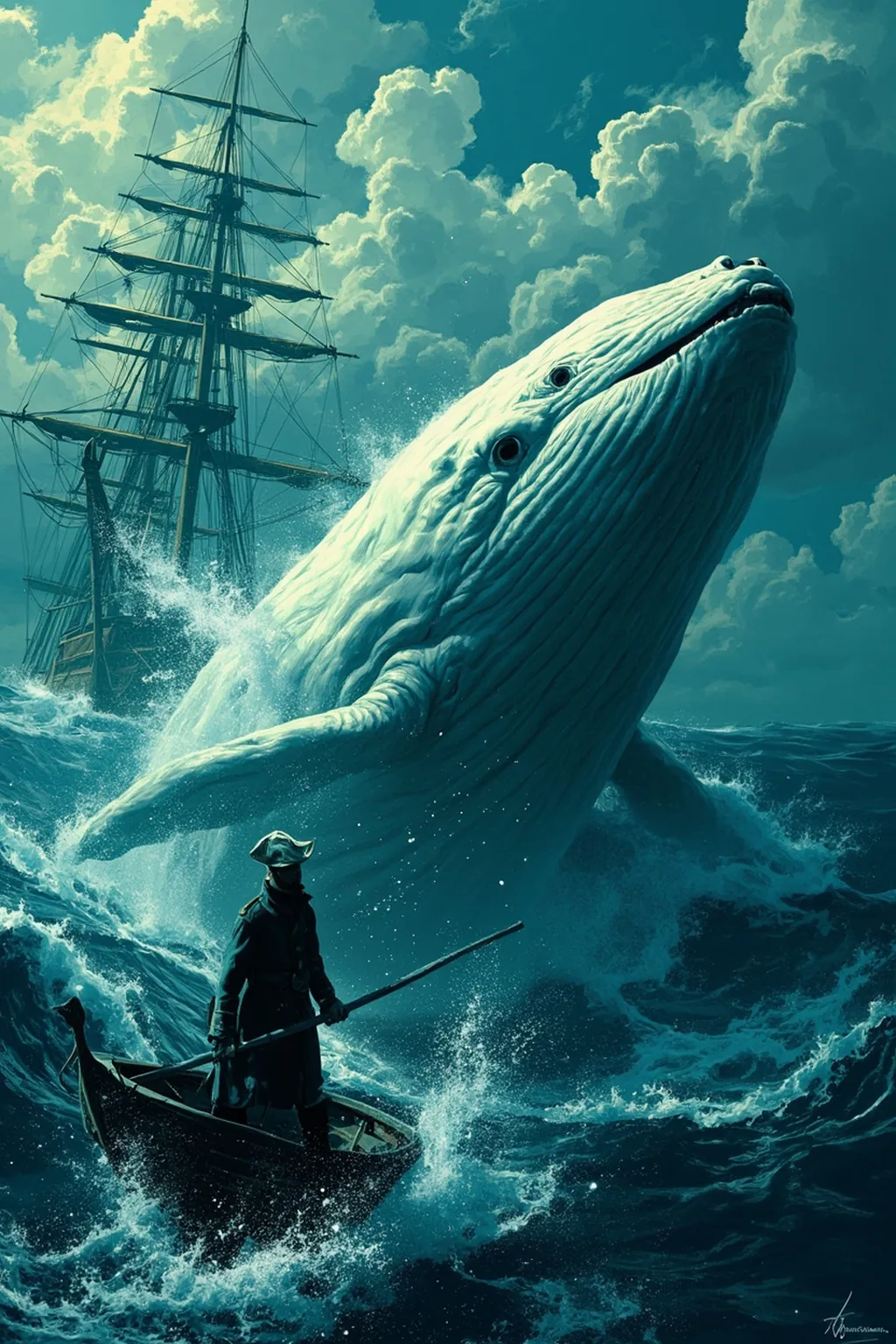
Moby Dick’s unusual physical appearance made him instantly recognizable and inherently terrifying to whalers, even beyond his reputation. His most prominent distinguishing features were a snow-white wrinkled forehead and a tall, pyramidical white hump, while the rest of his body was streaked and marbled with white, earning him his common name. When he swam through dark seas at noon, he left a distinct milky, foam-streaked wake that further set him apart from other sperm whales.
Moby Dick’s Malicious Attacks on Whalers
Moby Dick’s attacks were marked by an intelligent, deliberate malignity that distinguished him from other whales, as he often feigned alarm to lure pursuers before turning suddenly to smash boats and kill or maim crew members. In one such attack, he targeted Captain Ahab specifically, shearing off Ahab’s leg with his lower jaw in an act that seemed driven by personal malice rather than animal instinct, cementing his reputation as a uniquely vengeful adversary.
The original text of this work is in the public domain. This page focuses on a guided summary article, reading notes, selected quotes, and visual learning materials for educational purposes.