The French King’s Wish
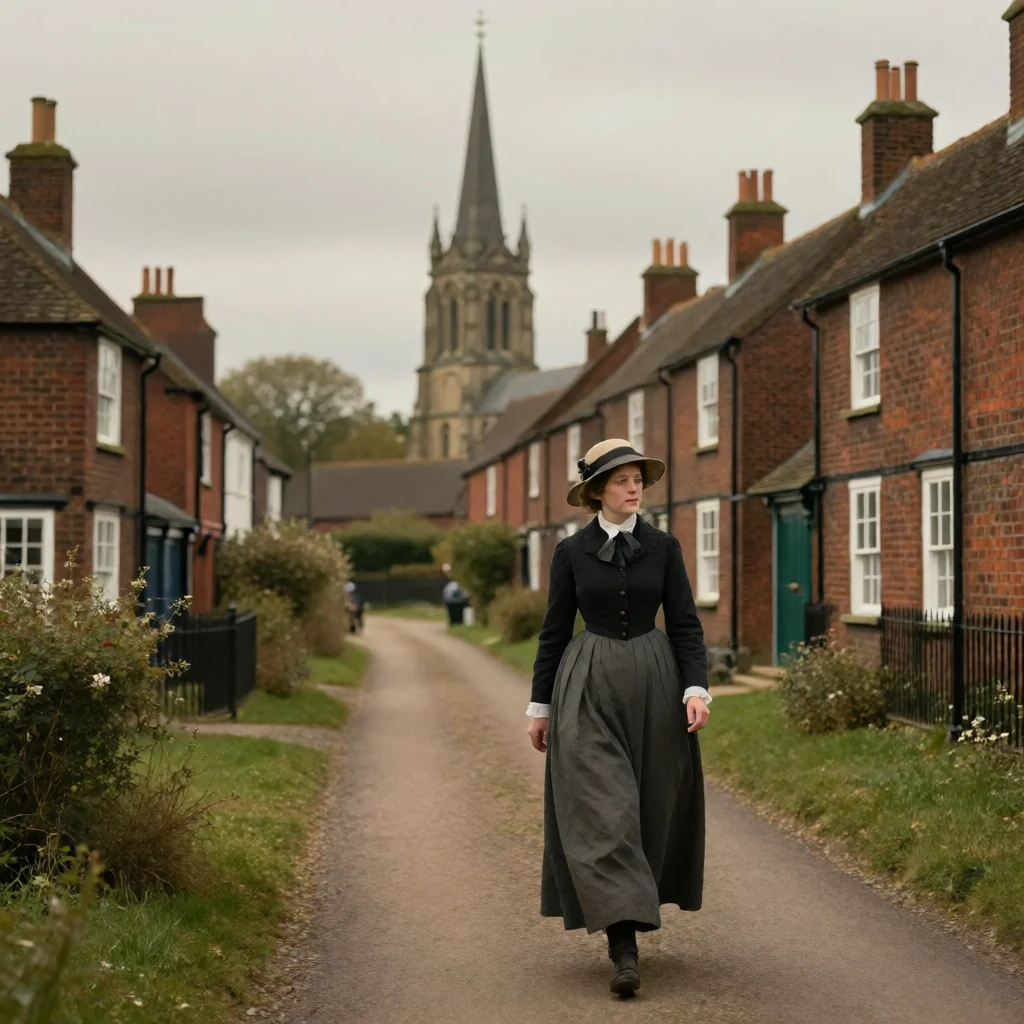
Mr. Brooke remarks on the plentiful speckled fowls and recalls the wish of a good French king that all his people might have a fowl in their pot. Dorothea indignantly dismisses this as a cheap aspiration, wondering that kings must be measured by such modest virtues. Celia mischievously asks whether the king wished them fat or skinny fowls, and Mr. Casaubon, smiling, suggests the word may have been understood rather than uttered, an explanation that makes Celia recoil.
Dorothea’s Discontent
On the way back to the house, Dorothea falls silent, ashamed of a small disappointment. She had hoped to find greater need around her, a parish where she might actively relieve suffering, and she regrets that Lowick leaves her with no clear occasion for usefulness. She consoles herself by picturing a future of complete devotion to Mr. Casaubon’s intellectual aims, trusting that new duties will emerge from their companionship.
The Young Artist
Taking a longer path toward a fine yew-tree, the family encounters a young man seated against the evergreens, sketching. His light-brown curls and youthful figure identify him as Celia’s earlier apparition.
Will Ladislaw
Mr. Casaubon identifies the young man as Will Ladislaw, his second cousin and the grandson of the aunt whose portrait hangs in the bow-windowed room. Will bears the family features of gray eyes set near together and an irregular nose, but his mouth and chin are more assertive than his grandmother’s. He rises without smiling, wearing a pouting air of discontent, and regards Dorothea with skeptical reserve.
The Sketch
Mr. Brooke picks up Ladislaw’s sketch-book in his unceremonious way and displays a colored drawing of stony ground, trees, and a pool, praising its brio. Ladislaw, flushing, insists that nothing in the book is worth seeing, and Dorothea, feeling unequal to judging, offers an open admission of her ignorance about art.
Art and Ignorance
Dorothea confesses that she cannot perceive the beauty others find in celebrated pictures, comparing the language of painting to a Greek sentence that conveys nothing to her. Casaubon bows approvingly at her humility, and Mr. Brooke, amused by such differences, lightly attributes her failure to a bad style of teaching and his own youthful indolence. Ladislaw, misreading Dorothea’s candor, concludes she is mocking him, though he cannot help being struck by the quality of her voice.
Mr. Brooke’s Invitation
Mr. Brooke, ever hospitable to talent, invites Ladislaw to come and look through his collection of Italian engravings, lamenting that rust gathers on a man in the country. He counsels the young man against the indolence that has blighted his own early promise. Ladislaw accepts the invitation and turns away, while Dorothea and Celia continue on with Casaubon toward the house.
CHAPITRE IX.
Chapter IX follows Mr. Casaubon’s decision to leave the young ladies, prompting a series of conversations in which the adults discuss Will Ladislaw’s future, his refusal to settle on a profession, and the terms under which Casaubon will allow him to travel; the chapter closes with a private exchange between the sisters about patience.
Ladislaw’s Amusement
Ladislaw’s Amusement While the others turn toward the house, Will Ladislaw sits down to sketch and is overcome by laughter. His amusement springs from three sources: his own drawing, the absurd image of his grave cousin Casaubon as a lover, and Mr. Brooke’s notion of the position Will might have held but for indolence. His sense of the ludicrous is described as pure, genial enjoyment entirely free of sneering or self-congratulation.
Mr. Casaubon’s Opinion of Will Ladislaw
Mr. Casaubon’s Opinion of Will Ladislaw As they walk on, Mr. Brooke asks Casaubon what his nephew (corrected to “cousin”) intends to do. Casaubon describes Will’s education as anomalous: he refused an English university, chose Heidelberg, and now wants to travel abroad without a definite object, preferring vague “culture” over a profession. Casaubon insists he is obligated only because he previously led Will and his friends to expect support for a scholarly education. Casaubon further reports that Will shows no interest in exploration or the sources of the Nile, preferring to leave some regions unknown as preserves for the poetic imagination, a position Casaubon finds unaccountable.
The original text of this work is in the public domain. This page focuses on a guided summary article, reading notes, selected quotes, and visual learning materials for educational purposes.