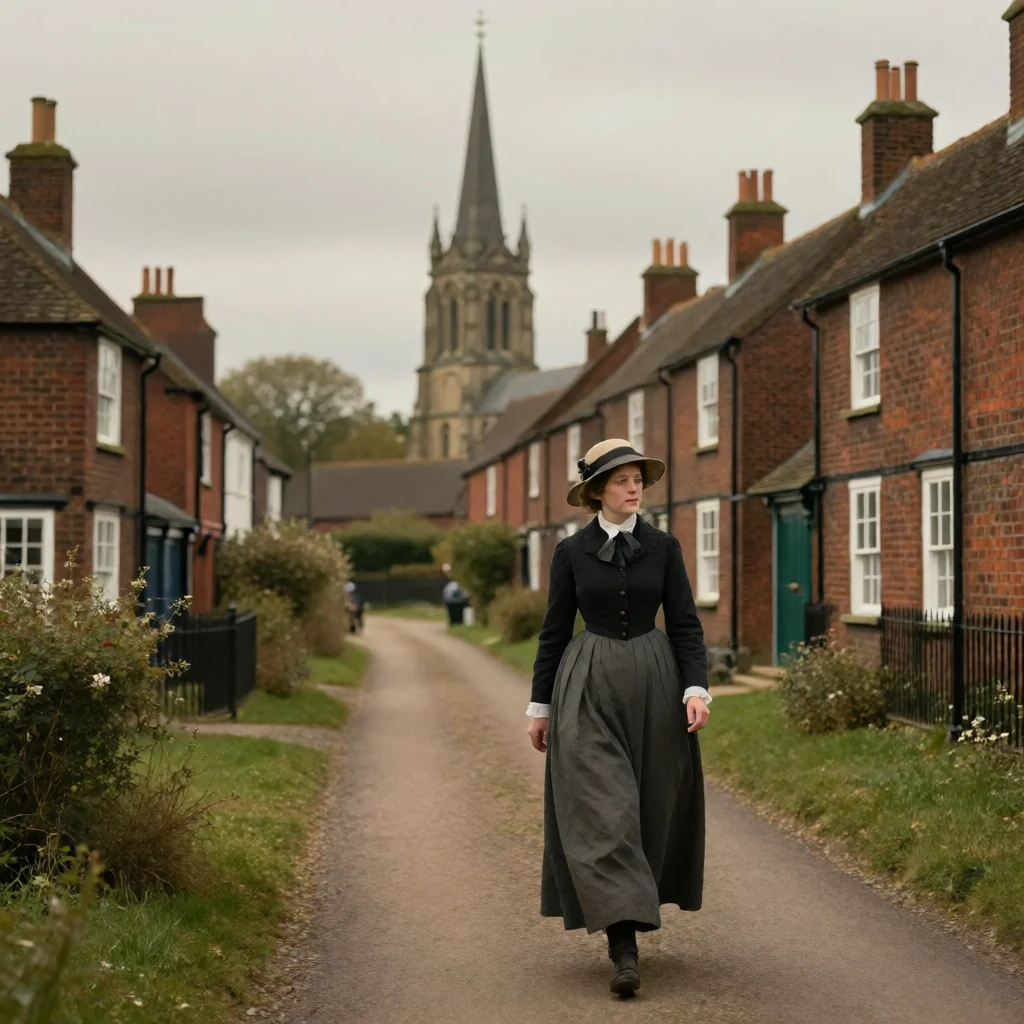
A Sudden Collapse
After half an hour of apparent quiet, a loud bang sounded as a book fell, and Dorothea saw Mr. Casaubon clinging to the library steps in evident bodily distress. She bounded toward him, offering support. He was unable to speak or move for several minutes, gasping for breath. When he finally descended and fell backward into the chair Dorothea drew close, he seemed helpless and about to faint.
A Call for Lydgate
Dorothea rang the bell violently, and Sir James Chettam arrived having heard that Mr. Casaubon had “had a fit.” He recommended sending for Lydgate, whose cleverness his mother had praised since his father’s death. Dorothea appealed to her husband, who silently approved. The messenger met Lydgate on the Lowick road, giving his arm to Miss Vincy.
Sir James Chettam Arrives
Sir James thought the illness was just what might have been expected from Casaubon’s condition. Entering the library, he found Casaubon able to make signs of usual politeness. Dorothea had been kneeling and sobbing by his side, then proposed sending for a medical man. Sir James observed her stretching her tender arm under her husband’s neck with unspeakable sorrow.
Celia’s Concern
Celia knew nothing of the trouble until Sir James told her. She felt grieved but confessed she never had liked Mr. Casaubon, thinking him not half fond enough of Dorothea. She wondered whether anyone else would have married him. Sir James called it a “horrible sacrifice” of Dorothea, and Celia agreed her sister never did what other people did.
Sir James’s Reflections
Sir James walked alone, remembering his original feelings about the engagement and feeling revived disgust at Mr. Brooke’s indifference. He reflected that if others had opposed the marriage, it might have been prevented. Though he no longer had personal regrets—satisfied with Celia—he retained a chivalrous nature, and his disregarded love for Dorothea had not turned bitter but produced “sweet odors” that clung to her with consecrating effect. He could remain her brotherly friend, interpreting her actions with generous trustfulness.
CHAPITRE XXX.
This chapter follows Lydgate’s medical counsel regarding Mr. Casaubon’s health and the complications arising from Will Ladislaw’s planned visit. After Lydgate prescribes rest and moderation for Casaubon’s heart condition, Mr. Brooke offers well-meaning but tone-deaf suggestions for amusement. Lydgate then privately informs Dorothea of the dual possibility: her husband may live fifteen years with careful management, or may die suddenly from his heart affliction. Dorothea’s desperate plea for guidance leads nowhere practical, as Lydgate can only recommend what she already knows to be impossible. Meanwhile, Will’s letters arrive announcing his imminent return to England and his plan to deliver the portrait “Dispute” to Lowick. Fearing her husband’s agitation, Dorothea asks Brooke to write and prevent the visit. However, Brooke’s letter expands beyond this simple purpose, inviting Will to Tipton Grange instead—unbeknownst to Dorothea, who assumes the letter merely warns Will away.
Lydgate’s Prescription for Mr. Casaubon
Lydgate attends Mr. Casaubon with particular scrutiny, using his stethoscope and observing the patient carefully. When Casaubon inquires about his condition, Lydgate explains that the illness stems from the common error of intellectual men—overmuch monotonous application. The prescribed remedy involves moderate work and varied relaxation. Brooke, present during the consultation, immediately suggests that Casaubon take up fishing, like Cadwallader, and establish a turning-room for making toys and table-legs. Casaubon responds bitterly that such diversions would feel like “tow-picking to prisoners in a house of correction.” Lydgate acknowledges to Brooke privately that amusement is an “unsatisfactory prescription” akin to telling people to keep up their spirits, and admits he should advise submitting to mild boredom rather than continuing work.
Mr. Brooke’s Suggestions for Amusement
Mr. Brooke elaborates enthusiastically on relaxation options for the invalid. He proposes backgammon with Dorothea in the evenings and shuttlecock for daytime recreation, though he admits Casaubon’s eyes might not tolerate the latter. He recommends “light study” such as conchology, or having Dorothea read aloud from Smollett—“Roderick Random” and “Humphry Clinker.” Brooke acknowledges these works are “a little broad” but reasons that Dorothea may read anything now that she is married. He recalls laughing immensely at a droll bit about a postilion’s breeches, lamenting that no such humor exists in the present age. Casaubon’s internal response would be “as new as eating thistles,” but he only bows with due respect and dryly observes the works Brooke mentions “served as a resource to a certain order of minds.”
The original text of this work is in the public domain. This page focuses on a guided summary article, reading notes, selected quotes, and visual learning materials for educational purposes.