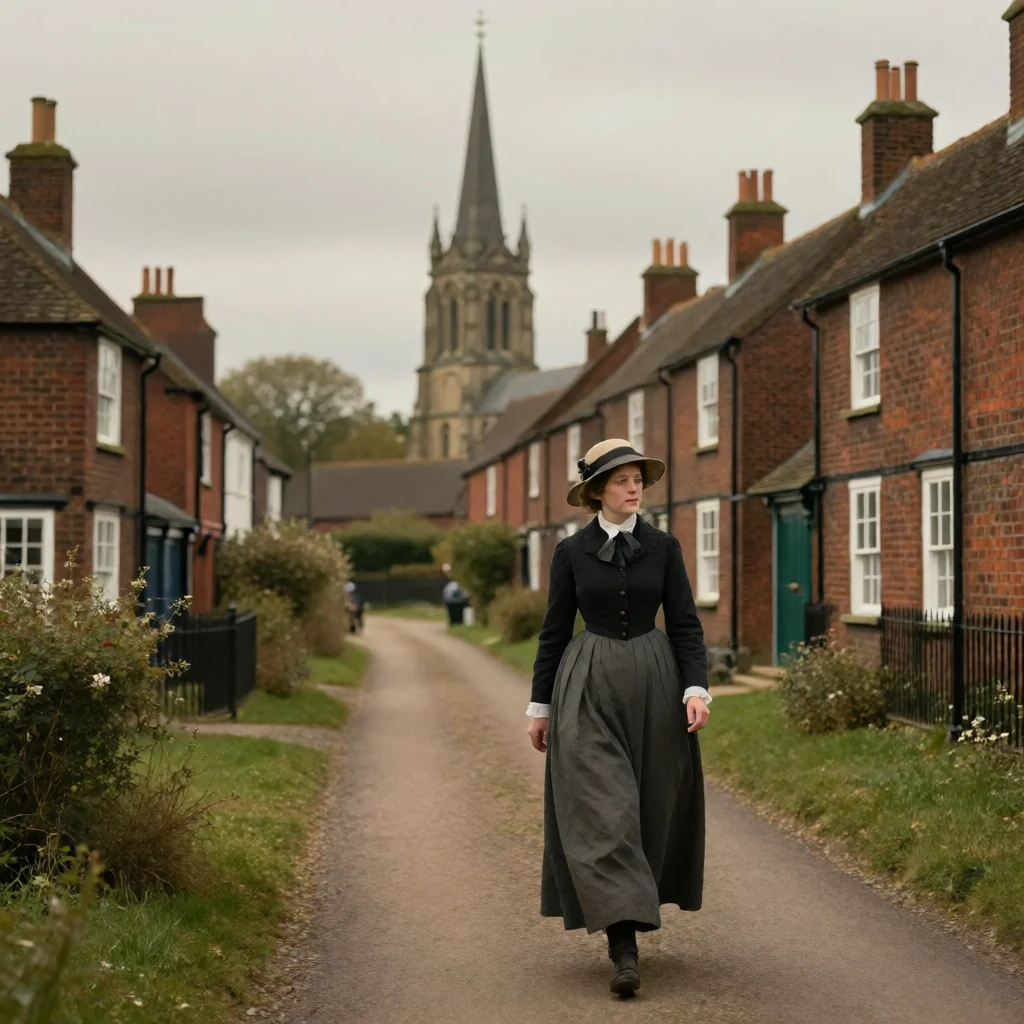
Rosamond Negotiates Her Father’s Consent to the Marriage
Rosamond suggests Lydgate write to her father to formally request his consent to the marriage, then mentions the couple’s wish to marry soon to Mr. Vincy while walking to a warehouse the next morning. She argues that Lydgate is a gentleman with high social connections, a growing and respected medical practice, and that she will never change her mind about the match. After initial resistance, Mr. Vincy relents and says Lydgate must write to him formally before he will give a response.
Mr. Vincy Demands Lydgate Insure His Life
Mr. Vincy’s formal response to Lydgate’s marriage request consists almost entirely of a demand that Lydgate purchase a life insurance policy, a condition Lydgate readily accepts, which reassures Mr. Vincy enough to allow the marriage to proceed.
Wedding Plans and Rosamond’s Wish to Visit Lydgate’s Uncle
As wedding plans take shape, the couple discusses their honeymoon itinerary, and Rosamond expresses a strong desire to visit Lydgate’s wealthy uncle, Sir Godwin Lydgate, at his estate Quallingham during their trip, hoping to see the home Lydgate grew up in and meet his titled relatives. Lydgate agrees to write to his uncle to arrange the visit, and Rosamond is delighted at the prospect of being able to look down on the baronet’s family from her position as Lydgate’s wife.
Rosamond’s Concerns About Her Family’s Social Standing
When Mrs. Vincy remarks that she hopes Sir Godwin will provide generous financial support for the couple, Rosamond blushes with embarrassment, worrying that Lydgate’s high-born relatives will look down on the Vincy family’s modest social standing if they visit Middlemarch. She resolves that the couple should eventually relocate to a more prestigious location where Lydgate can build a more distinguished career to match his family’s status.
Lydgate Sees Marriage as Enabling His Scientific Ambitions
Lydgate had previously shared his grand scientific ambitions with Rosamond, and is delighted that she listens to and supports his professional goals. He believes marriage will not obstruct his work, but instead provide a stable, comfortable home that lets him focus on his research and medical practice, in contrast to the chaotic, unpleasant domestic life of his colleague Wrench.
Lydgate’s Reflection on Complementary Gender Roles in Marriage
Lydgate reflects on what he sees as innate complementary gender roles in marriage, believing women are naturally submissive (which he compares to a goose to a man’s gander) and best suited to supporting their husbands’ work without interference. He idealizes Rosamond as the perfect wife who will efficiently manage the household, venerate his scientific work, and add beauty and romance to his life without overstepping what he sees as appropriate female bounds.
CHAPITRE XXXVII.
This chapter opens with a full excerpt from Edmund Spenser’s stanza poem celebrating the ideal happiness of a woman who is fully self-assured, steady in her convictions, and unmoved by either the prospect of improved fortune or fear of worsening circumstances, then situates its events in a period of widespread provincial political uncertainty following the death of King George IV, the dissolution of Parliament, and declining public support for the Tory Wellington and Peel ministries. It introduces confusion among Middlemarch newspaper readers navigating conflicting stances on the Catholic Question, reveals that local landowner Mr. Brooke of Tipton has secretly purchased the Liberal Pioneer newspaper and published a reform-focused article attributed to him, and follows local political discussions of Brooke’s secret activity, his introduction of young relative Will Ladislaw as the paper’s editor, resentment toward Brooke’s political ambitions from his family and local figures like Hawley and Hackbutt, the growing tension between Will and Mr. Casaubon, and the developing private bond between Will and Dorothea Casaubon, culminating in a private conversation in the Lowick library where Dorothea rejects Will’s suggestion that her husband hire a research secretary.
Spenser Stanza on Self-Assured Happiness
The chapter opens with a complete excerpt from Edmund Spenser’s stanza poem, which celebrates the ideal happiness of a woman who is fully self-assured, steady in her convictions, and unmoved by either the prospect of better fortune or fear of worse, framing a thematic throughline for the personal and marital uncertainties that unfold for other characters in the chapter.
The original text of this work is in the public domain. This page focuses on a guided summary article, reading notes, selected quotes, and visual learning materials for educational purposes.