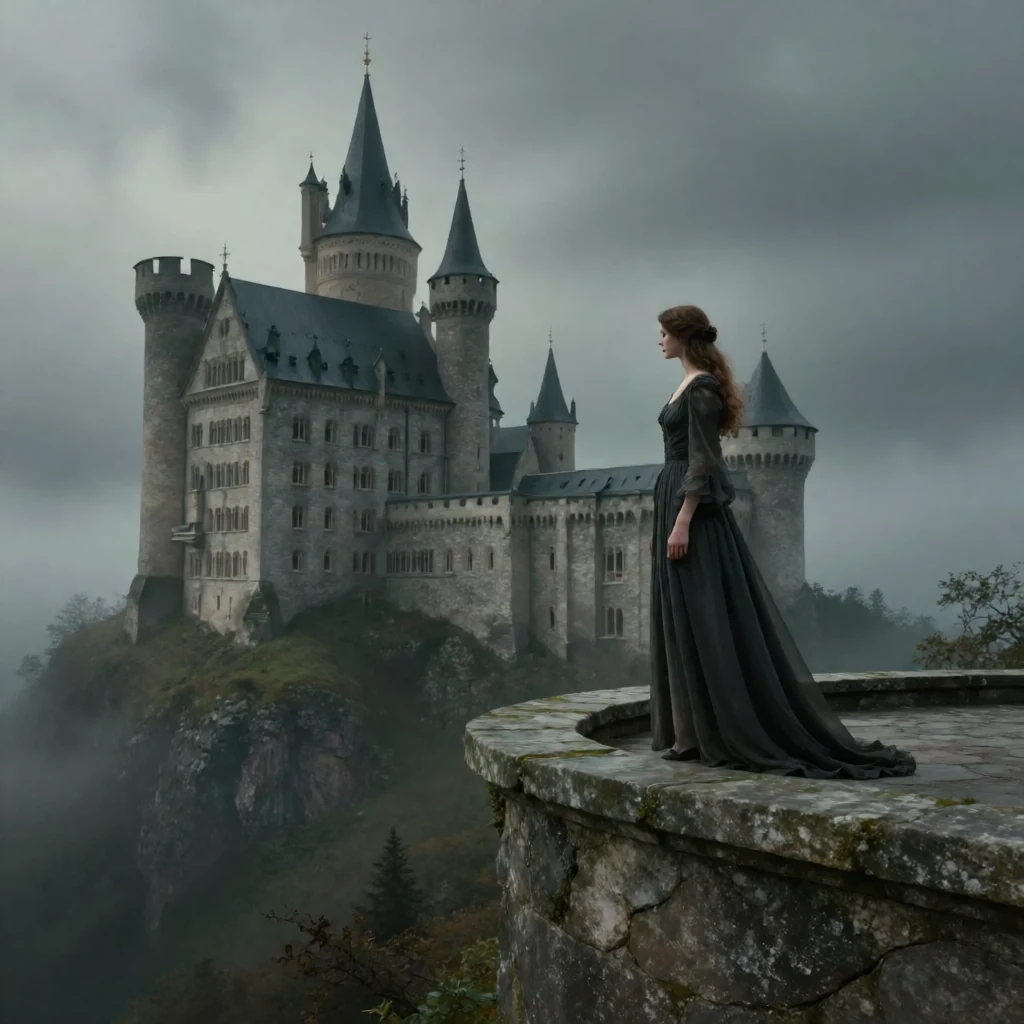
Emily Persuades a Delay in Their Departure for Toulouse
On entering the château, Madame Cheron expresses a desire that Emily put up what she thinks necessary to take to Toulouse, as she means to set off immediately. Emily tries to persuade her to defer the journey at least until the next day, and, at length, with much difficulty, prevails.
Emily Takes Final Leave of Her Childhood Home
The day passes in the exercise of petty tyranny on the part of Madame Cheron, and in mournful regret and melancholy anticipation on Emily’s part. When her aunt retires to her apartment for the night, Emily goes to take leave of every room in this her dear native home, which she is now quitting for she knows not how long, and for a world to which she is wholly a stranger. She cannot conquer a presentiment that frequently occurs to her this night—that she should never more return to La Vallée. Having passed a considerable time in her father’s study, having selected some of his favourite authors to put up with her clothes and shed many tears as she wiped the dust from their covers, she seats herself in his chair before the reading desk and sits lost in melancholy reflection, until Theresa opens the door. Emily gives her directions for keeping the château in readiness for her reception at all times. Theresa laments her departure, and Emily finds some comfort in the simple affection of this poor old servant, giving her such directions as may best conduce to her comfort during Emily’s absence. After dismissing Theresa to bed, Emily wanders through every lonely apartment of the château, lingering long in what had been her father’s bedroom, indulging melancholy yet not unpleasing emotions, and having often returned within the door to take another look at it, she withdraws to her own chamber.
Emily Finds Solace in the Nighttime Garden
From her window Emily gazes upon the garden below, shown faintly by the moon rising over the tops of the palm-trees, and the calm beauty of the night increases her desire of indulging the mournful sweetness of bidding farewell to the beloved shades of her childhood, until she is tempted to descend. Throwing over her the light veil in which she usually walks, she silently passes into the garden and hastens towards the distant groves, glad to breathe once more the air of liberty and to sigh unobserved. The deep repose of the scene, the rich scents floating on the breeze, the grandeur of the wide horizon and clear blue arch soothe and gradually elevate her mind to that sublime complacency which renders the vexations of this world so insignificant that we wonder they have had power for a moment to disturb us. Emily forgets Madame Cheron and all the circumstances of her conduct, while her thoughts ascend to the contemplation of the unnumbered worlds scattered in the depths of aether, and to that Great First Cause which pervades and governs all being. The idea of her father scarcely ever leaves her, but it is a pleasing idea, since she resigns him to God in the full confidence of a pure and holy faith. She pursues her way through the groves to the terrace, often pausing as memory awakens the pang of affection and as reason anticipates the exile into which she is going. The moon is high over the woods, touching their summits with yellow light, and on the rapid Garonne below the trembling radiance is faintly obscured by the lightest vapour. Emily long watches the playing lustre, listens to the soothing murmur of the current and the yet lighter sounds of the air as it stirs the lofty palm-trees, and pours out her lament at leaving the sweet groves and scenes of her infant delights. Then drying her tears and looking up, her thoughts rise again to the sublime subject she had contemplated; the same divine complacency steals over her heart and, hushing its throbs, inspires hope and confidence and resignation to the will of the Deity.
The original text of this work is in the public domain. This page focuses on a guided summary article, reading notes, selected quotes, and visual learning materials for educational purposes.