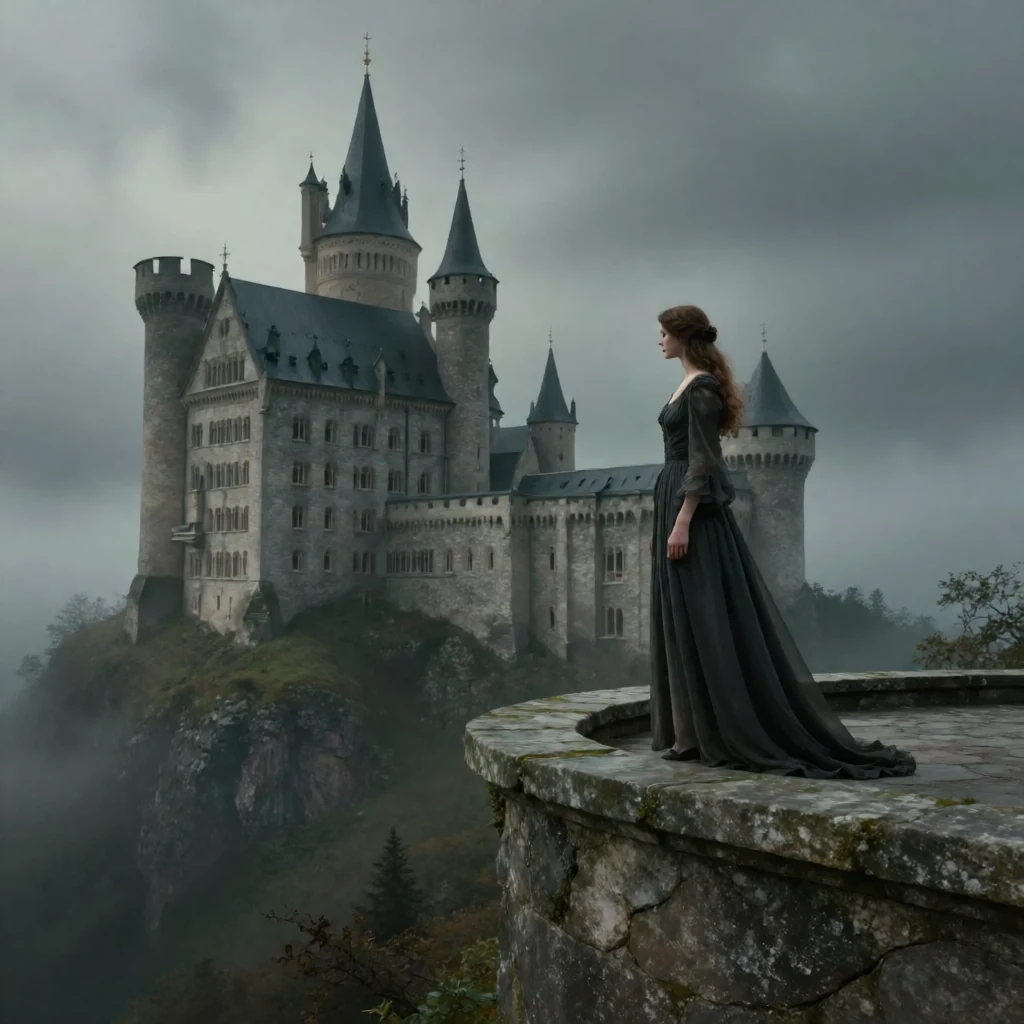
Emily Bids Farewell to the Plane-Tree and Fears Meeting Valancourt
Emily gazes long on the plane-tree and then seats herself, for the last time, on the bench under its shade, where she had so often sat with her parents and where only a few hours before she had conversed with Valancourt. At the remembrance of him, a mingled sensation of esteem, tenderness, and anxiety rises in her breast. With this remembrance occurs a recollection of his late confession—that he had often wandered near her habitation in the night, having even passed the boundary of the garden—and it immediately occurs to her that he might be at this moment in the grounds. The fear of meeting him, particularly after the declaration he had made, and of incurring a censure which her aunt might so reasonably bestow, makes her instantly leave her beloved plane-tree and walk towards the château. She casts an anxious eye around, and often stops for a moment to examine the shadowy scene before she ventures to proceed, but she passes on without perceiving any person, until, having reached a clump of almond trees not far from the house, she rests to take a retrospect of the garden and to sigh forth another adieu. As her eyes wander over the landscape she thinks she perceives a person emerge from the groves and pass slowly along a moonlight alley; but the distance and the imperfect light will not suffer her to judge with any degree of certainty whether this is fancy or reality. She continues to gaze for some time on the spot, until on the dead stillness of the air she hears a sudden sound and in the next instant fancies she distinguishes footsteps near her. Wasting not another moment in conjecture, she hurries to the château, and having reached it, retires to her chamber, where, as she closes her window, she looks upon the garden and again thinks she distinguishes a figure gliding between the almond trees she had just left. She immediately withdraws from the casement, and, though much agitated, seeks in sleep the refreshment of a short oblivion.
CHAPTER XI
Emily departs from her family château with Madame Cheron for Thoulouse, navigating farewells, a melancholy journey, and reflections on fortitude.
The Minstrel
The chapter opens with a brief poetic verse titled “The Minstrel,” evoking the innocence and beauty of childhood pathways and romantic landscapes before transitioning into prose.
Departure from the Château
At an early hour, the carriage arrives to take Emily and Madame Cheron to Thoulouse. Emily eats breakfast in melancholy silence while her aunt reproves her dejection. Reluctantly, Emily is permitted to bring her father’s favourite dog. Before departing, Emily takes a final look at the library and garden, and old Theresa stands at the door to bid her farewell with “God for ever keep you,” receiving only a silent hand pressure in return.
Farewell to the Pensioners
At the gate, several of Emily’s father’s pensioners have assembled to say goodbye, but Madame Cheron refuses to let the carriage stop. Emily distributes nearly all her money to them and sinks back into the carriage, yielding to her sorrow.
The Journey to Thoulouse
During the journey, Emily catches views of the château between steep banks—the Garonne winding below, vineyards and pastures, and the Pyrenees in the distance. These scenes, once objects of admiration, now bring only sorrow and regret. The conversation with Madame Cheron fades into profound silence as Emily becomes absorbed in mournful reflections.
Valancourt’s Reflections
Valancourt returns to Estuvière, occupied with thoughts of Emily and anxious about opposition from her family. As the younger son of an ancient Gascony family with a diminished fortune, he has been educated in accomplishments suitable for his era and enrolled in the army. He intends to declare himself to Emily’s family despite reasonably fearing their disapproval of his modest circumstances, though he believes his military prospects offer promising opportunities for advancement.
The original text of this work is in the public domain. This page focuses on a guided summary article, reading notes, selected quotes, and visual learning materials for educational purposes.