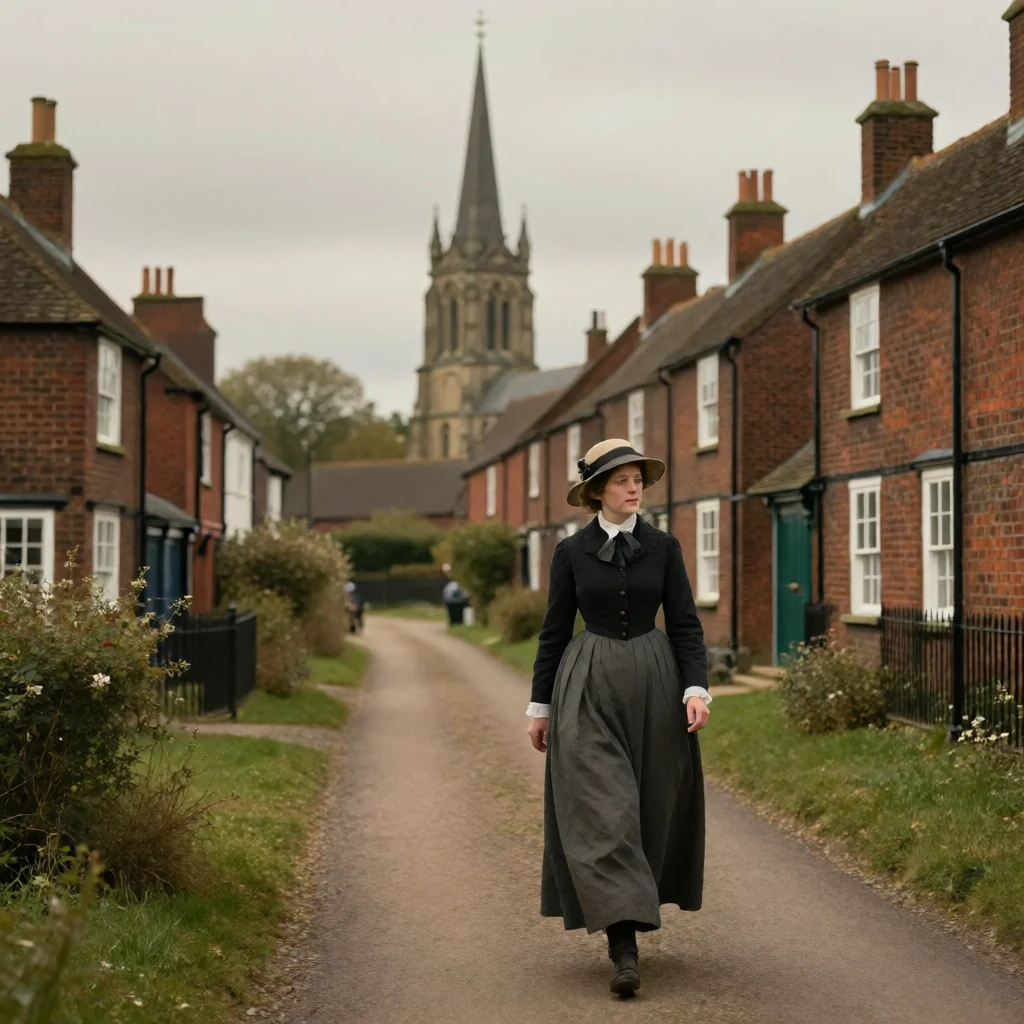
Fred’s Deposit with His Mother
Keen to preserve his reputation for truthfulness and avoid the accusation of duplicity, Fred takes the wise step of depositing eighty pounds with his mother. He prides himself on keeping clear of lies and even fibs, and would rather incur trouble and self-restraint than face the charge of falsehood. The deposit represents a careful management of his resources in the face of his father’s displeasure.
The Twenty Pounds of Seed-Corn
Fred had kept twenty pounds in his own pocket as seed-corn to multiply by judgment and luck into the additional sixty needed. He is not a true gambler afflicted by that specific disease, but participates in the diffusive form of gambling carried on with healthy, chyle-fed blood, sustaining a joyous imaginative activity that fashions events according to desire. Unfortunately, the seed-corn planted in the seductive green plot yielded nothing beyond what was dispersed by the roadside, leaving Fred close to the term of payment with no more than the eighty pounds deposited with his mother.
The Decision to Sell the Horse
Pressed by the imminent bill and his dread of breaking his word to Mr. Garth, Fred makes a heroic resolution inspired by his love for Mary and his awe of her opinion. He determines to sacrifice the broken-winded horse that was a gift from Uncle Featherstone, even though life without a horse would scarcely seem worth living. He reasons that the horse would hardly fetch more than thirty pounds, and there is no telling what good chance might arise to supplement the sum; it would be folly to balk himself of luck beforehand. He plans to ride to the Houndsley horse-fair with Bambridge and Horrock the vet, and to obtain the benefit of their opinion without asking anything expressly. Before departing, he collects the eighty pounds from his mother.
The Journey to Houndsley
Most observers see Fred riding out of Middlemarch with Bambridge and Horrock on his way to the horse-fair and assume he is pleasure-seeking as usual, and Fred himself nearly shares that illusion. Despite his refinement and disdain for the manners of young men without university education, Fred is drawn to Bambridge and Horrock by the mysterious influence of naming, which determines that what would otherwise be monotonous society is called “gay.” He arrives at the Red Lion in Houndsley on a drizzling afternoon, dining in a room furnished with a dirt-enamelled county map, a bad portrait of an anonymous horse, a depiction of George the Fourth, and various leaden spittoons—sustained only by the power of nomenclature that calls such pursuits pleasure.
CHAPITRE XXIII.
The chapter portrays Fred Vincy’s visit to the Houndsley horse fair, where he consults two contrasting authorities—Mr. Horrock and Mr. Bambridge—about his horse, then makes a speculative deal involving a dappled gray hunter named Diamond before heading home alone.
Mr. Horrock’s Sceptical Silence
Mr. Horrock is described as possessing an “apparent unfathomableness” that stimulates the imagination. His costume, with its upward-angled hat-brim, hints at a connection with horses, and his Mongolian eyes, nose, mouth, and chin create the impression of a “subdued unchangeable sceptical smile”—deemed the most tyrannical expression over a susceptible mind. When accompanied by adequate silence, this creates the reputation of an invincible understanding and a critical judgment. When Fred asks about his horse’s fetlock, Horrock turns sideways in his saddle, watches the horse’s action for three minutes, then turns forward without offering any verbal judgment, his profile remaining as sceptical as before. Fred feels a maddening mix of urges: to force Horrock’s opinion into speech and to retain the advantages of his friendship, hoping that Horrock may yet offer something invaluable.
Mr. Bambridge’s Boisterous Manners
Mr. Bambridge is described as loud, robust, and “given to indulgence”—chiefly in swearing, drinking, and beating his wife. He regards horse-dealing as the finest of the arts and has flourished like the green bay-tree. His conversation, though giving tone to certain Middlemarch circles and making him a distinguished figure at the Green Dragon, is limited in range and tends to circle repetitively like the old tune “Drops of brandy.” His retentive memory is chiefly engaged with horses he has bought and sold, about which he offers passionate asseveration supported by solemn swearing. He is presented as a man of pleasure and a gay companion.
The original text of this work is in the public domain. This page focuses on a guided summary article, reading notes, selected quotes, and visual learning materials for educational purposes.