Mary’s Resolute Refusal
Mary firmly refuses Featherstone’s demand, stating she will not touch his chest or will as doing so could expose her to suspicion. Featherstone insists he is fully of sound mind and has the right to do as he pleases at the end of his life, but Mary remains resolute, retreating a short distance from the bedside when he continues to press her.
The Rejected Bribe
When Mary continues to refuse, Featherstone attempts to bribe her, offering nearly two hundred pounds in cash (and more unaccounted for in his box) if she will comply with his request to burn the second will and summon only Fred Vincy to the room. Mary rejects the bribe outright, reiterating she will not touch his keys or money, and offers to get him cordial or summon other people to the room, but Featherstone refuses, grows enraged, and throws his stick at her in a futile attempt to hit her before lapsing into apparent stillness.
The Death of Peter Featherstone
As Mary waits by the low fire, a sudden flame illuminates the bed, and she sees Featherstone lying unnaturally still. After confirming he is no longer breathing by propping open the window curtains to let in natural light, she rings the bell to alert the household, confirming Peter Featherstone has died with his right hand clutching his keys and his left hand resting on the heap of cash he had offered to Mary.
LIVRE IV.
Book IV of this philosophical work marks the transition from earlier books that established the ideal state’s foundations to an exploration of more intimate human concerns. Having delineated the structure of justice in the polity, the dialogue now turns inward to examine the moral character of citizens and the complexities of personal relationships. This section bridges the broader political inquiry with deeper questions about human attachment and virtue.
Three Love Problems
The opening of this new book introduces a triad of conceptual investigations concerning the nature and role of love in the ideal society. These problems address questions that arise when examining how citizens relate to one another and to the commonwealth—particularly how affection, loyalty, and desire interact with civic duty. The examination of these love problems serves to test whether the seemingly harsh conclusions of earlier discussions might be softened or reconciled with more natural human sentiments.
CHAPITRE XXXIV.
The chapter opens with an epigraph from “The Two Gentlemen of Verona,” suggesting that even seemingly insignificant individuals (“feather” and “chips”) carry influence in unexpected ways. The focus then shifts to the funeral of Peter Featherstone, an elderly man who had specific wishes for his burial. Despite his known miserliness, Featherstone also derived satisfaction from spending money to assert power over others, including arranging a lavish funeral to impress those who would rather not attend. His instructions called for mourning coaches, pall-bearers, and a clergyman of higher standing—Mr. Cadwallader—specifically to avoid the rector of his own parish, Mr. Casaubon, whom he disliked.
Peter Featherstone’s Funeral
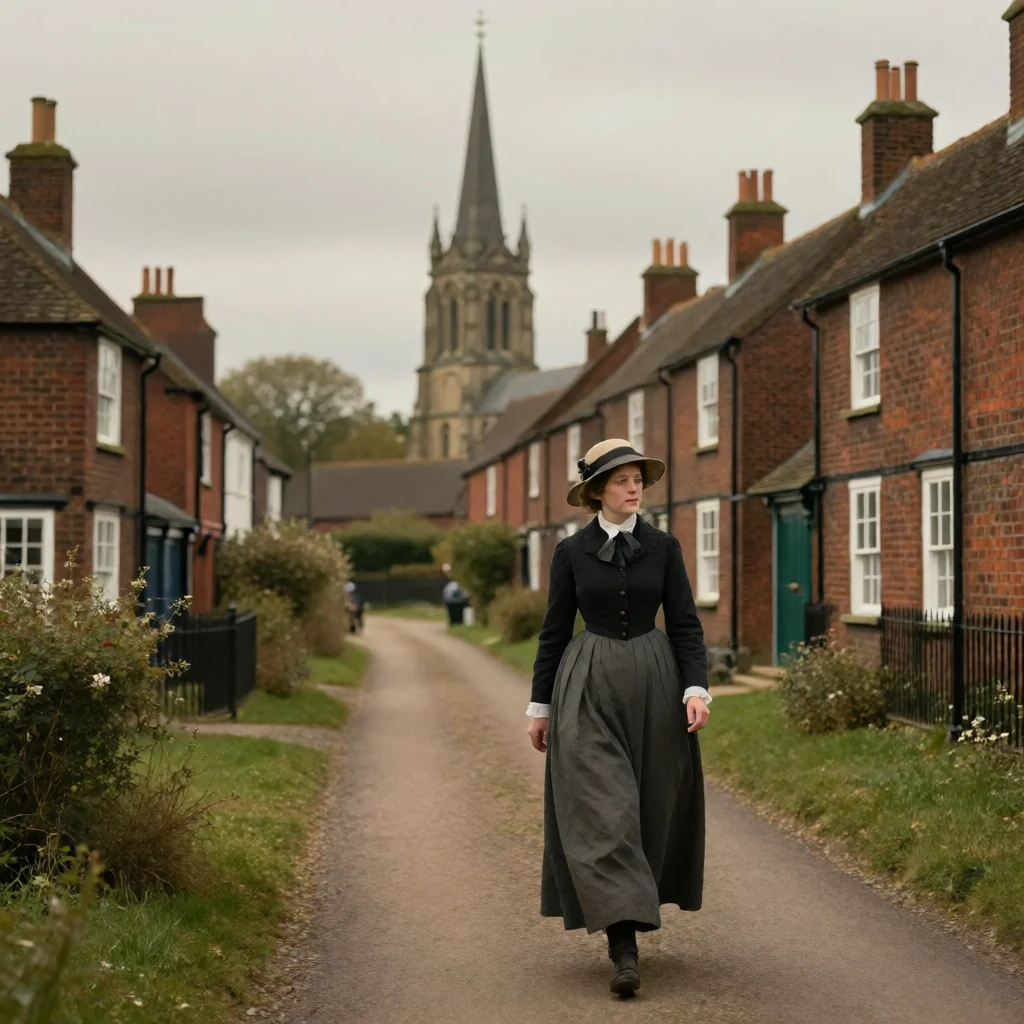
On a cold May morning with wind-swept blossoms, the funeral takes place at Lowick churchyard. The event draws a small crowd of country onlookers, curious about the “big burying.” Featherstone’s preparations include female relatives following him to the grave, though he avoided family members like his sister Martha during his lifetime. The arrival of Mrs. Vincy and her family underscores the mix of genuine grief, social obligation, and speculative hope among those present.
Featherstone’s Peculiar Tastes
Featherstone’s personality reflects a blend of frugality and extravagance. While he hoarded wealth, he delighted in spending it on eccentric displays, such as orchestrating a funeral that outshone others in status. His imagination led him to craft a theatrical posthumous scenario, savoring the control he would exert over others even after death. The narrative reflects on goodness and privacy, suggesting that virtue, when suppressed by vice, may retreat into obscurity.
The Funeral Procession
Three mourning coaches and horsemen bearing rich scarves proceed to the churchyard. Mr. Cadwallader, rector of Tipton and Freshitt, officiates at Featherstone’s request—a deliberate choice based on petty grievances against Mr. Casaubon and a desire for elevated company. The solemn procession contrasts with the pastoral setting, highlighted by blooming flowers and fleeting sunlight.
The original text of this work is in the public domain. This page focuses on a guided summary article, reading notes, selected quotes, and visual learning materials for educational purposes.