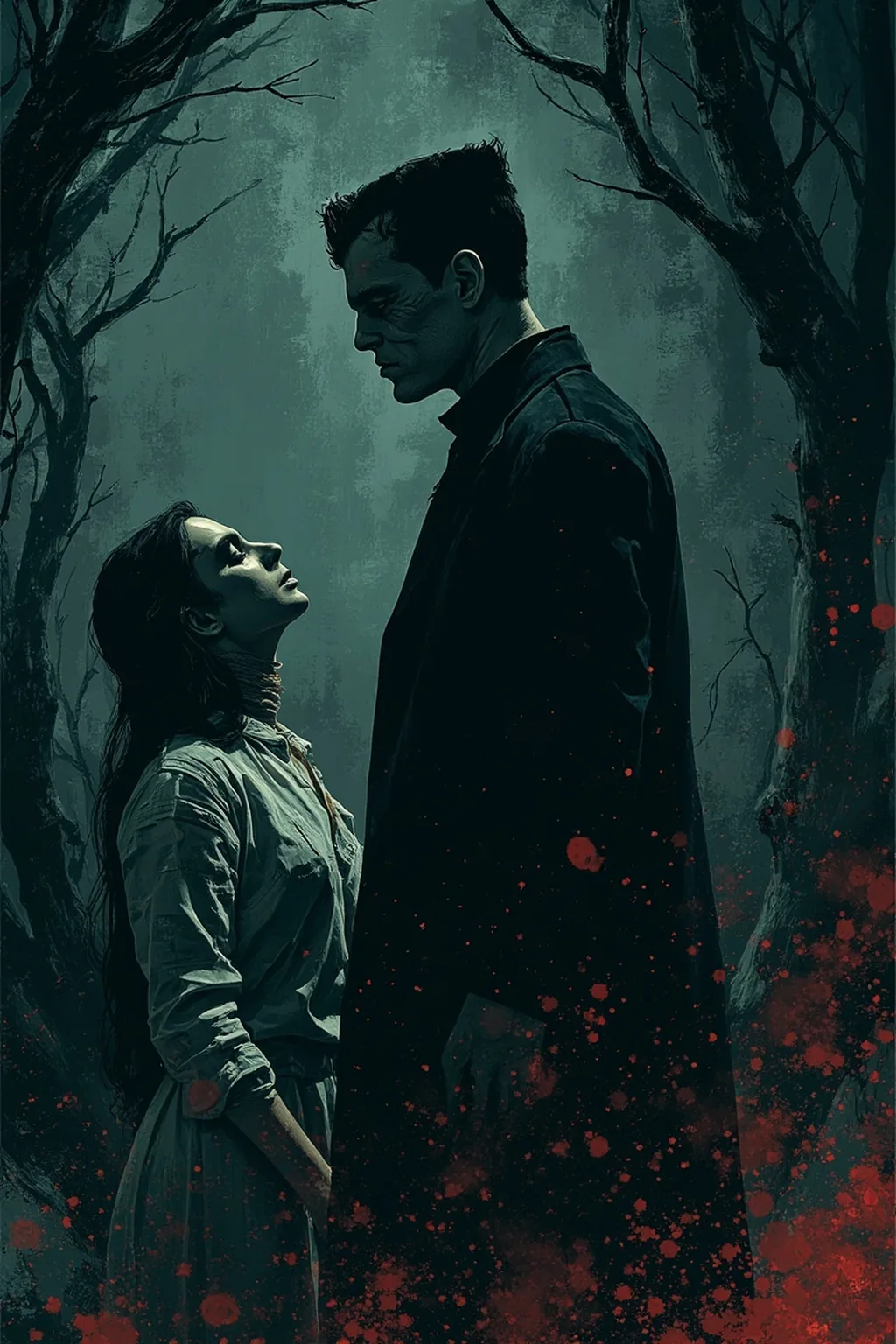
Frankenstein; or, the modern prometheus cover

Dangerous Knowledge

Frankenstein; or, the modern prometheus

この古典小説を、要約・人物ガイド・読書ノートで素早く理解できます。

Shelley, Mary Wollstonecraft 1993 240 min ビジュアル要約
ひと目でわかる

若き科学者ヴィクター・フランケンシュタインが創造した怪物の悲劇と復讐を描いたゴシック小説の傑作。

読み方

まず要約を読み、次に図解を開き、その後でノートと章ごとの要約で理解を深めてください。

一文要約

一文要約

若き科学者ヴィクター・フランケンシュタインが創造した怪物の悲劇と復讐を描いたゴシック小説の傑作。

クイック要約

クイック要約

スイスの科学者ヴィクター・フランケンシュタインは、死体の一部を集めて生命を吹き込み、恐ろしい怪物を創り出す。怪物はその醜さから社会に拒絶され、創造主であるヴィクターに復讐を誓う。この物語は、科学の限界、責任、そして人間の本質を探求する古典的なホラー作品である。

ビジュアル要約

ビジュアル要約

Open full view
Character Relationships and Conflicts

Character Relationships and Conflicts

This map shows key characters, their relationships, and the central conflicts driving the tragedy.

重要ポイント

重要ポイント

Knowledge Demands Responsibility

Victor’s tragic flaw lies not in creating life, but in abandoning his creation without guidance or moral responsibility. Unchecked ambition without ethical boundaries leads to destruction.

Rejection Breeds Violence

The creature’s transformation from benevolence to murder stems directly from relentless rejection. Isolation and dehumanization create the very monsters society fears.

Nature Cannot Cure Guilt

Victor repeatedly seeks solace in nature’s beauty, yet his guilt persists. Shelley suggests that external peace cannot heal wounds caused by moral transgression.

章ごとの要約

章ごとの要約

Letter 1

Read chapter

Writing from St. Petersburgh to his sister Margaret, Robert Walton assures her of his safety and expresses his unwavering confidence in his Arctic expedition. He describes how the northern breeze exhilarates him and fuels his imagination, envisioning the polar region not as a desolate wasteland but as a land of eternal light, beauty, and scientific marvels. Walton explains that his passion for a seafaring life began in childhood through reading accounts of voyages, despite his father's dying injunction against it. Although he briefly pursued poetry and failed, the inheritance of a fortune allowed him to return to his original ambition. For the past six years, he has rigorously prepared himself by enduring hardship on whaling expeditions and studying mathematics and medicine. He concludes by detailing his immediate travel plans to Archangel, where he will hire a ship and crew, acknowledging that the voyage will be long and dangerous, but driven by his desire for glory and benefit to mankind.

Letter 2

Read chapter

Writing from Archangel, Robert Walton informs his sister Margaret that he has hired a vessel and is assembling a crew of courageous men. He confesses to a profound sense of loneliness, lamenting the absence of a friend who could sympathize with his ambitions and regulate his mind, as he considers himself self-educated and too ardent in execution. He describes his lieutenant, an Englishman driven by professional advancement, and the ship's master, a man of renowned gentleness who once sacrificed his own fortune and romantic prospects to ensure the happiness of a Russian woman he loved. Despite the severe winter, Walton remains resolved to embark for the unexplored north as soon as the weather permits, driven by a mix of industrial perseverance and a passionate belief in the marvellous inspired by the works of poets like Coleridge.

Letter 3

Read chapter

Writing from a high latitude in July, Robert Walton hastily informs his sister Margaret that he is safe and making good progress on his voyage. He reports that his crew remains bold and undeterred by the floating sheets of ice and the dangers of the region, aided by favorable southern gales. Aside from minor incidents like stiff gales and a small leak, the journey has been smooth. Walton expresses confidence that success will crown his endeavors, vowing to remain cool and prudent, and asserts that a determined will can conquer the untamed elements.

Letter 4

Read chapter

Writing in August, Robert Walton recounts a series of strange and perilous events. His ship became surrounded by ice and fog, but upon the mist clearing, the crew spotted a gigantic figure driving a sledge across the distant ice. Hours later, the ice broke and freed the vessel, and the next morning they discovered a second sledge carrying a European man in near-death condition. Walton rescued the stranger, who gradually recovered under his care. The stranger revealed he was pursuing the gigantic figure seen earlier, whom he referred to as a demon. Walton and the stranger formed a deep bond, and the stranger expressed intense grief and despair when Walton spoke of his own ambition for glory and discovery. The stranger began to share his history, warning Walton that his tale would make him abandon his dangerous quest, but his narrative was interrupted by his weakened state.

Chapter 1

Read chapter

Victor Frankenstein begins his narrative by describing his distinguished Genevese family and the honorable character of his father. He recounts the story of his father's friend Beaufort, who fell into poverty and died, leaving his daughter Caroline destitute. Victor's father rescued Caroline, eventually marrying her after a period of guardianship. Victor describes his parents' deep devotion to him and their travels through Europe, during which he was born. While in Italy, his mother encountered a beautiful orphan named Elizabeth Lavenza, the daughter of a Milanese nobleman and a German woman. Touched by the child's situation, Caroline adopted Elizabeth, presenting her to Victor as a cherished gift. Victor interpreted this literally, regarding Elizabeth as his more-than-sister to protect and love for the rest of his life.

Chapter 2

Read chapter

Victor describes his childhood companionship with Elizabeth and his close friendship with Henry Clerval, contrasting his own intense thirst for knowledge with Elizabeth's calmer disposition and Henry's romantic adventurousness. He recounts his early fascination with the hidden laws of nature, sparked at age thirteen by discovering the works of Cornelius Agrippa. Despite his father's dismissal of the author as trash, Victor pursued the studies of Agrippa, Paracelsus, and Albertus Magnus, becoming obsessed with alchemy and the elixir of life. However, after witnessing a magnificent oak tree destroyed by lightning and hearing a visitor explain the theory of electricity and galvanism, Victor became disillusioned with his former heroes and abandoned natural philosophy for the more secure foundations of mathematics.

Chapter 3

Read chapter

At the age of seventeen, Victor prepares to leave for the University of Ingolstadt, but his departure is delayed when Elizabeth catches scarlet fever. Victor's mother nurses Elizabeth back to health but contracts the disease herself and dies, leaving a final wish for Victor and Elizabeth to eventually marry. After a period of mourning, Victor departs with his father, Elizabeth, and Henry Clerval bidding him farewell. Upon arriving at Ingolstadt, he meets Professor Krempe, who harshly criticizes Victor's previous studies in alchemy as useless and outdated. Although initially repelled by Krempe, Victor attends a lecture by Professor Waldman, who contrasts the empty promises of ancient alchemists with the miraculous, though realistic, achievements of modern chemistry. Waldman's eloquence inspires Victor, rekindling his passion for science and directing it toward the study of modern natural philosophy.

Chapter 4

Read chapter

Victor immerses himself in the study of natural philosophy and chemistry at Ingolstadt, making rapid progress and earning the esteem of his professors. His focus shifts to physiology as he becomes obsessed with discovering the principle of life. Through intense study of anatomy and the decay of the human body in charnel-houses, he succeeds in uncovering the secret of bestowing animation upon lifeless matter. Driven by this astonishing power, he resolves to create a living being of gigantic stature. Victor works with feverish and solitary intensity in his workshop, collecting bones from graveyards and neglecting his health, his friends, and the beauty of the surrounding summer to complete his creation.

Chapter 5

Read chapter

On a dreary November night, Victor succeeds in infusing life into his creation, but he is immediately horrified by its grotesque appearance. Overcome with disgust and fear, he rushes out of the room and spends a restless night plagued by nightmares where the creature transforms into Elizabeth and then his dead mother. In the morning, Victor encounters his friend Henry Clerval, whose arrival brings him a moment of calm. Fearing the monster is still in his apartment, Victor nervously checks his room and finds it empty. Relieved but emotionally unstable, Victor suffers a breakdown and collapses. Henry nurses him through a severe nervous fever for several months, concealing the severity of Victor's condition from his family in Geneva.

Chapter 6

Read chapter

Henry gives Victor a letter from Elizabeth, who expresses relief at news of his recovery and provides updates on family and friends in Geneva. She details the history of Justine Moritz, a servant girl beloved by the family who recently returned after the death of her mother. Victor writes a reassuring reply to his family and begins to recover his health. He introduces Henry to the university professors, but suffers intense anxiety when they praise his scientific accomplishments, as the subject reminds him of his secret misery. To escape these thoughts and avoid idleness, Victor joins Henry in studying Oriental languages, finding consolation in their shared literary pursuits.

Chapter 7

Read chapter

Victor receives a letter from his father Alphonse revealing that his youngest brother, William, has been murdered. The letter explains that William was found strangled in Plainpalais and that a valuable miniature of their mother was stolen from him. Elizabeth is particularly distraught, blaming herself because William had been wearing her picture. Victor departs for Geneva immediately with Henry Clerval. Delayed by a storm near Secheron, Victor attempts to visit the site of the murder. During the tempest, he sees a gigantic, hideous figure in the lightning and instantly recognizes it as his creation. Overcome with horror and conviction that the monster is the murderer, Victor watches the creature flee up the mountain side and spends the rest of the night in anguish.

Chapter 8

Read chapter

Justine Moritz is tried for the murder of William Frankenstein. Despite her character Witnesses and Elizabeth's impassioned defense, the circumstantial evidence—including the missing miniature found in her pocket and her confused behavior near the crime scene—weighs heavily against her. Victor attends the trial in agony, knowing the creature is the true murderer but unable to speak without being deemed mad. Justine is condemned after a false confession, which she later reveals to Elizabeth and Victor was made under the pressure of her confessor to obtain absolution. Victor is consumed by remorse and despair over the injustice.

Chapter 9

Read chapter

Victor is consumed by guilt and despair following the executions of William and Justine, feeling responsible for the deaths caused by his creation. His father attempts to console him, but Victor finds no relief and seeks solitude, often contemplating suicide on the lake. However, he restrains himself out of love for Elizabeth and his family. Tormented by the thought of the monster still at large, Victor eventually leaves home to find solace in the majestic scenery of the Alpine valleys, traveling towards Chamounix. While the grandeur of nature occasionally offers him a temporary respite from his misery, his grief and fear of the creature inevitably return.

Chapter 10

Read chapter

Victor seeks solace in the majestic scenery of the Alpine valleys, traveling to the summit of Montanvert. While gazing at the glacier, he is suddenly confronted by the monster, who approaches with superhuman speed. Overcome with rage and hatred, Victor threatens to destroy his creation, but the creature argues that he is Victor's responsibility and deserves compassion. The monster, claiming he was once benevolent but became a fiend due to misery and rejection, demands that Victor listen to his story before passing judgment. He urges Victor to accompany him to a nearby hut to hear his tale, which will determine whether he becomes a harmless being or a scourge to humanity.

Chapter 11

Read chapter

The creature begins his narrative by describing his earliest memories of confusion and sensory overload as he awoke in the forest near Ingolstadt. He learned to distinguish light, sound, and physical sensations, discovering fire and how to use it for warmth and cooking. Driven by hunger and the cold, he wandered into the open country, where his attempts to interact with humans were met with horror and violence. Fleeing a village attack, he took refuge in a hovel attached to a cottage, where he secretly observed the inhabitants—an old man, a young man, and a gentle girl—while remaining hidden to avoid further abuse.

Chapter 12

Read chapter

The creature continues hiding in the hovel attached to the De Lacey cottage, secretly observing the family's daily life. He learns that the old man is blind and that the family—Felix, Agatha, and their father—lives in poverty but shares deep affection. Moved by their struggle, the creature stops stealing their food and instead anonymously gathers firewood and clears their path of snow to assist them. Through careful observation, he begins to understand human speech, identifying the occupants and learning basic words. He also discovers his own hideous reflection in a pool, leading to despair, but resolves to master their language to eventually win their acceptance.

Chapter 13

Read chapter

A beautiful Arabian stranger named Safie arrives at the cottage, bringing immense joy to Felix and the family. Although she does not speak their language initially, her presence dispels the household's melancholy. The creature observes as Felix teaches Safie to read and speak using Volney's *Ruins of Empires*. By secretly listening to these lessons, the creature significantly improves his own language skills and gains a cursory knowledge of history, human society, and the concept of family. This new understanding leads him to realize the full extent of his isolation, as he possesses no wealth, lineage, or companions, and is horrified by his own hideous deformity compared to humans.

Chapter 14

Read chapter

The creature recounts the history of the De Lacey family, learned from the papers he found. He explains that the family was once wealthy and respected in France but was ruined after Felix aided the unjust imprisonment of Safie's father, a Turkish merchant. Felix fell in love with Safie during the rescue and helped her father escape to Italy, expecting to marry her. However, the treacherous Turk betrayed Felix, fleeing with his daughter and stripping the De Laceys of their fortune. The family was imprisoned and eventually exiled to Germany. Safie, rejecting her father's plan to return to Turkey, used her knowledge of Felix's location to escape and travel to Germany to reunite with him.

Chapter 15

Read chapter

The creature discovers a satchel containing three books—*Paradise Lost*, *Plutarch’s Lives*, and *The Sorrows of Werther*—which deeply influence his understanding of human nature, virtue, and his own isolation. He also finds and reads Victor Frankenstein's journal, which details his creation and reveals the horrific circumstances of his origin and deformity. Despite this despair, he resolves to introduce himself to the cottagers, believing that if he can first win the trust of the blind old man, the family might overlook his appearance and accept him.

Chapter 16

Read chapter

After being violently rejected by the De Lacey family, the creature burns their cottage in a rage and vows eternal war against humanity. He travels towards Geneva to find his creator, enduring a harsh winter and isolation. En route, he saves a drowning girl but is shot by her companion, cementing his resolve for vengeance against mankind.

Chapter 17

Read chapter

The creature finishes his narrative and demands that Victor create a female companion for him to alleviate his isolation. Victor initially refuses, fearing the potential destruction that a pair of monsters could cause. However, the creature argues that his malevolence stems from loneliness and that a companion would allow him to live peacefully in exile in South America. Moved by the justice of this reasoning and the creature's threats, Victor reluctantly agrees to the task on the condition that the creature and his mate leave Europe forever.

Chapter 18

Read chapter

Victor delays creating the female companion due to revulsion and fear, but his health and spirits improve. His father, believing his melancholy stems from uncertainty about marrying Elizabeth, encourages an immediate union. Victor, bound by his promise to the creature, cannot marry until the task is complete. He requests permission to travel to England to consult with philosophers, concealing his true motives. His father agrees, arranging for Henry Clerval to join him. Victor departs, comforted by the hope that the creature will follow him, sparing his family from danger.

Chapter 19

Read chapter

Victor and Henry arrive in London, where Victor collects scientific information while Henry enjoys the society of intellectuals. After several months, they receive an invitation to Scotland and decide to tour the British Isles, visiting Windsor, Oxford, Matlock, and the Lake District. Victor remains tormented by his secret task and the fear that the creature is harming his family. Upon reaching Perth, he insists on traveling alone to the Orkney Islands to complete the creation of the female monster in isolation.

Chapter 20

Read chapter

While working on the female creature, Victor is overcome by the fear that she might be even more malignant than the male or that they might propagate a race of monsters. He destroys the unfinished form. The creature appears, and after a furious confrontation where Victor refuses to continue, the creature vows to be with him on his wedding night and departs. Victor receives a letter from Henry urging him to join him in Perth, and he clears his laboratory of the remains of his work before leaving the island.

Chapter 21

Read chapter

Victor is arrested and brought before a magistrate after the body of Henry Clerval is found murdered on the Irish coast. Witnesses testify to seeing Victor's boat near the scene, and the marks of fingers on Henry's neck confirm Victor's fear that the creature is responsible. Upon seeing Henry's corpse, Victor collapses and falls into a two-month fever, during which he raves about his guilt. He awakens in prison, where Mr. Kirwin treats him with kindness and eventually informs him that his family is well and that a friend has arrived to visit him.

Chapter 22

Read chapter

He writes back affirming his love and promising to reveal his secret after their marriage. They return to Geneva, where Victor's mental state fluctuates between fury and despair, soothed only by Elizabeth. His father proposes an immediate marriage, to which Victor silently consents.

Chapter 23

Read chapter

On his wedding night, Victor waits anxiously with a pistol, fearing the creature's threat. He sends Elizabeth to bed for her safety, but soon hears a scream and rushes to find her strangled and lifeless. The creature appears at the window, mocking him, and escapes into the lake when Victor fires. Overcome by grief and exhaustion, Victor returns to Geneva, where his father dies from the shock of the news. Victor is imprisoned for madness but eventually released, after which he informs a magistrate of the creature's crimes and demands justice.

Chapter 24

Read chapter

Victor leaves Geneva to pursue the creature across the world, driven by a vow of vengeance made at the graves of his family. He tracks the monster through Europe, Tartary, and Russia, enduring extreme hardships and following clues left by the creature. The chase leads them northward to the frozen Arctic Ocean, where Victor continues his pursuit despite the lethal cold and the creature's head start.

読書ノート

読書ノート

Open notes page

Epistolary Frame

The novel opens with Robert Walton’s letters to his sister, creating distance and paralleling Victor’s ambition. Both men pursue glory at the expense of human connection.

Scientific Context

Shelley drew on galvanism and contemporary debates about animation, reflecting Romantic-era anxieties about the boundaries of scientific discovery.

Parallel Narratives

The creature’s account (Chapters 11-16) mirrors Victor’s, revealing how creation begets responsibility and how isolation distorts both creator and created.

重要な引用

重要な引用

Browse all quotes

“Beware; for I am fearless, and therefore powerful.”

Chapter 10 · The creature declares his power born from isolation, warning Victor that rejection has consequences.

“I ought to be thy Adam; but I am rather the fallen angel.”

Chapter 10 · The creature compares himself to Adam, denied paradise by his creator's abandonment.

“Nothing is so painful to the human mind as a great and sudden change.”

Chapter 7 · Victor's reflection on how rapidly his happiness transformed into despair upon seeing his creation.

学習ガイド

学習ガイド

Open study guide
discussion

Nature of the Monster

Is the creature inherently evil, or does society make him a monster? Compare his initial gentleness with the De Lacey family to his later violence. What role does Victor’s abandonment play in his transformation?

essay

Creator and Creation

Analyze the parallel between Victor and the creature. Both are isolated, both pursue knowledge, and both are destroyed by their ambitions. How does Shelley use this symmetry to comment on responsibility?

背景

Romantic Context

Frankenstein emerged from the Romantic era and the 1816 ‘Year Without a Summer.’ How do themes of nature, individualism, and scientific hubris reflect Romantic anxieties about the Industrial Revolution?

原文を読む

原文を読む

Project Gutenberg

出典と版

出典と版

The original text of this work is in the public domain. This page includes a concise summary, reading notes, selected quotes, and visual learning materials for educational purposes.