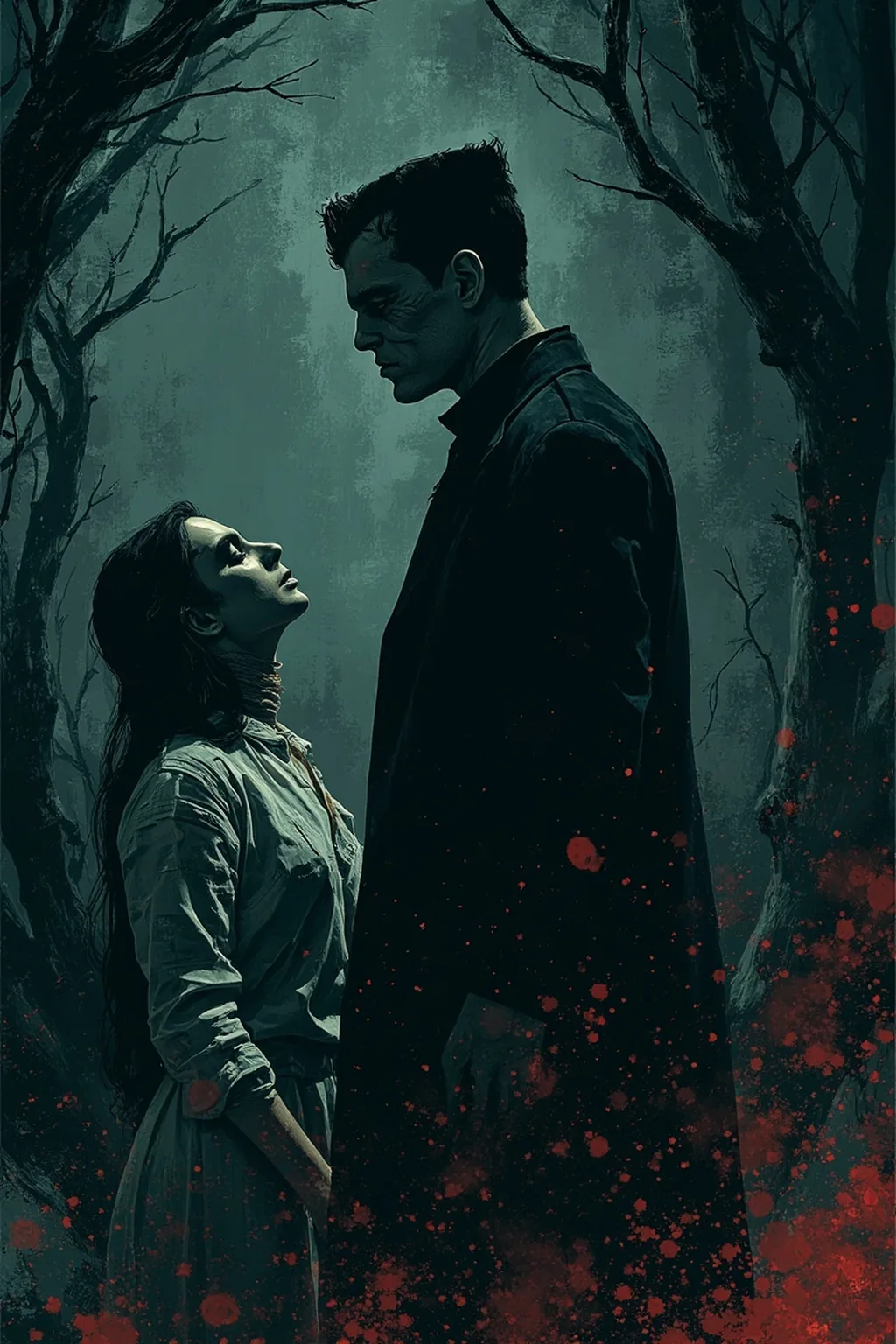
Frankenstein; or, the modern prometheus cover

Dangerous Knowledge

Frankenstein; or, the modern prometheus

Eine schnelle Zusammenfassung, Figurenübersicht und Lesennotizen für diesen klassischen Roman.

Shelley, Mary Wollstonecraft 1993 240 min Visuelle Zusammenfassungen
Auf einen Blick

Das obsessive Streben eines Wissenschaftlers nach Erkenntnis führt ihn dazu, ein monströses Wesen zu erschaffen, das er verstößt und damit einen tragischen Kreislauf von Rache und Zerstörung in Gang setzt.

Lesepfad

Beginne mit der Zusammenfassung, öffne dann die Karte und vertiefe das Ganze mit Notizen und Kapitelzusammenfassungen.

Ein-Satz-Zusammenfassung

Ein-Satz-Zusammenfassung

Das obsessive Streben eines Wissenschaftlers nach Erkenntnis führt ihn dazu, ein monströses Wesen zu erschaffen, das er verstößt und damit einen tragischen Kreislauf von Rache und Zerstörung in Gang setzt.

Kurzzusammenfassung

Kurzzusammenfassung

Victor Frankenstein, ein junger Schweizer Wissenschaftler, entdeckt, wie man leblose Materie belebt, und erschafft ein groteskes Wesen. Entsetzt über seine Schöpfung, verlässt er sie. Das Geschöpf, trotz seiner sanften Natur abgelehnt und isoliert, wird mörderisch und tötet Victors Bruder William, seinen besten Freund Henry Clerval und seine Braut Elizabeth. Victor verfolgt seine Schöpfung bis in die Arktis, wo beide ihr tragisches Ende finden, während das Geschöpf über Victors Leiche trauert.

Visuelle Zusammenfassungen

Visuelle Zusammenfassungen

Open full view
Beziehungen der Hauptfiguren

Beziehungen der Hauptfiguren

Diese Visualisierung zeigt die komplexen Beziehungen zwischen Victor Frankenstein, seinem Geschöpf und den anderen Figuren des Romans.

Wichtigste Punkte

Wichtigste Punkte

Wissen verlangt Verantwortung

Victors tragischer Fehler liegt nicht im Erschaffen von Leben, sondern darin, seine Schöpfung ohne Führung oder moralische Verantwortung zu verlassen. Ungezähelter Ehrgeiz ohne ethische Grenzen führt zur Zerstörung.

Ablehnung gebiert Gewalt

Die Verwandlung des Geschöpfs von Güte zum Mord entspringt direkt aus unerbittlicher Ablehnung. Isolation und Entmenschlichung erschaffen genau die Monster, vor denen die Gesellschaft sich fürchtet.

Natur kann Schuld nicht heilen

Victor sucht wiederholt Trost in der Schönheit der Natur, doch seine Schuld bleibt. Shelley deutet an, dass äußerer Frieden keine Wunden heilen kann, die durch moralische Verfehlungen entstanden sind.

Kapitelzusammenfassungen

Kapitelzusammenfassungen

Letter 1

Read chapter

Von St. Petersburg aus schreibt Robert Walton an seine Schwester Margaret, versichert ihr seine Sicherheit und drückt sein unerschütterliches Vertrauen in seine Arktis-Expedition aus. Er beschreibt, wie die nördliche Brise ihn belebt und seine Fantasie anregt, wobei er die Polarregion nicht als öde Einöde, sondern als Land ewigen Lichts, Schönheit und wissenschaftlicher Wunder sieht.

Letter 2

Read chapter

Aus Archangelsk schreibt Robert Walton seiner Schwester Margaret, dass er ein Schiff angeheuert und eine Mannschaft mutiger Männer zusammenstellt. Er bekennt ein tiefes Einsamkeitsgefühl und beklagt das Fehlen eines Freundes, der mit seinen Ambitionen mitfühlen könnte.

Letter 3

Read chapter

Aus einer hohen Breite im Juli schreibt Robert Walton seiner Schwester Margaret hastig, dass er sicher ist und auf seiner Reise gute Fortschritte macht. Er berichtet, dass seine Mannschaft mutig bleibt und sich von den treibenden Eisschollen nicht abschrecken lässt.

Letter 4

Read chapter

Im August schreibt Robert Walton über eine Reihe seltsamer und gefährlicher Ereignisse. Sein Schiff wurde von Eis und Nebel umgeben, doch als der Dunst sich lichtete, entdeckte die Mannschaft eine riesige Gestalt auf einem Schlitten. Später retteten sie einen Fremden, der sich als Victor Frankenstein entpuppte.

Chapter 1

Read chapter

Victor Frankenstein beginnt seine Erzählung mit der Beschreibung seiner angesehenen Genfer Familie. Er erzählt, wie seine Mutter Caroline Elizabeth Lavenza adoptierte, ein Waisenmädchen, das Victor als sein besonderes Geschenk betrachtete.

Chapter 2

Read chapter

Victor beschreibt seine Kindheitsfreundschaft mit Elizabeth und seine enge Beziehung zu Henry Clerval. Er erzählt von seiner frühen Faszination für die verborgenen Gesetze der Natur, geweckt durch die Werke von Cornelius Agrippa und anderen Alchemisten.

Chapter 3

Read chapter

Im Alter von siebzehn Jahren bereitet sich Victor vor, an die Universität Ingolstadt zu gehen. Seine Mutter stirbt an Scharlachfieber, nachdem sie Elizabeth gepflegt hatte, und äußert den letzten Wunsch, dass Victor und Elizabeth heiraten sollen.

Chapter 4

Read chapter

Victor immerses himself in the study of natural philosophy and chemistry at Ingolstadt, making rapid progress and earning the esteem of his professors. His focus shifts to physiology as he becomes obsessed with discovering the principle of life. Through intense study of anatomy and the decay of the human body in charnel-houses, he succeeds in uncovering the secret of bestowing animation upon lifeless matter. Driven by this astonishing power, he resolves to create a living being of gigantic stature. Victor works with feverish and solitary intensity in his workshop, collecting bones from graveyards and neglecting his health, his friends, and the beauty of the surrounding summer to complete his creation.

Chapter 5

Read chapter

On a dreary November night, Victor succeeds in infusing life into his creation, but he is immediately horrified by its grotesque appearance. Overcome with disgust and fear, he rushes out of the room and spends a restless night plagued by nightmares where the creature transforms into Elizabeth and then his dead mother. In the morning, Victor encounters his friend Henry Clerval, whose arrival brings him a moment of calm. Fearing the monster is still in his apartment, Victor nervously checks his room and finds it empty. Relieved but emotionally unstable, Victor suffers a breakdown and collapses. Henry nurses him through a severe nervous fever for several months, concealing the severity of Victor's condition from his family in Geneva.

Chapter 6

Read chapter

Henry gives Victor a letter from Elizabeth, who expresses relief at news of his recovery and provides updates on family and friends in Geneva. She details the history of Justine Moritz, a servant girl beloved by the family who recently returned after the death of her mother. Victor writes a reassuring reply to his family and begins to recover his health. He introduces Henry to the university professors, but suffers intense anxiety when they praise his scientific accomplishments, as the subject reminds him of his secret misery. To escape these thoughts and avoid idleness, Victor joins Henry in studying Oriental languages, finding consolation in their shared literary pursuits.

Chapter 7

Read chapter

Victor receives a letter from his father Alphonse revealing that his youngest brother, William, has been murdered. The letter explains that William was found strangled in Plainpalais and that a valuable miniature of their mother was stolen from him. Elizabeth is particularly distraught, blaming herself because William had been wearing her picture. Victor departs for Geneva immediately with Henry Clerval. Delayed by a storm near Secheron, Victor attempts to visit the site of the murder. During the tempest, he sees a gigantic, hideous figure in the lightning and instantly recognizes it as his creation. Overcome with horror and conviction that the monster is the murderer, Victor watches the creature flee up the mountain side and spends the rest of the night in anguish.

Chapter 8

Read chapter

Justine Moritz is tried for the murder of William Frankenstein. Despite her character Witnesses and Elizabeth's impassioned defense, the circumstantial evidence—including the missing miniature found in her pocket and her confused behavior near the crime scene—weighs heavily against her. Victor attends the trial in agony, knowing the creature is the true murderer but unable to speak without being deemed mad. Justine is condemned after a false confession, which she later reveals to Elizabeth and Victor was made under the pressure of her confessor to obtain absolution. Victor is consumed by remorse and despair over the injustice.

Chapter 9

Read chapter

Victor is consumed by guilt and despair following the executions of William and Justine, feeling responsible for the deaths caused by his creation. His father attempts to console him, but Victor finds no relief and seeks solitude, often contemplating suicide on the lake. However, he restrains himself out of love for Elizabeth and his family. Tormented by the thought of the monster still at large, Victor eventually leaves home to find solace in the majestic scenery of the Alpine valleys, traveling towards Chamounix. While the grandeur of nature occasionally offers him a temporary respite from his misery, his grief and fear of the creature inevitably return.

Chapter 10

Read chapter

Victor seeks solace in the majestic scenery of the Alpine valleys, traveling to the summit of Montanvert. While gazing at the glacier, he is suddenly confronted by the monster, who approaches with superhuman speed. Overcome with rage and hatred, Victor threatens to destroy his creation, but the creature argues that he is Victor's responsibility and deserves compassion. The monster, claiming he was once benevolent but became a fiend due to misery and rejection, demands that Victor listen to his story before passing judgment. He urges Victor to accompany him to a nearby hut to hear his tale, which will determine whether he becomes a harmless being or a scourge to humanity.

Chapter 11

Read chapter

The creature begins his narrative by describing his earliest memories of confusion and sensory overload as he awoke in the forest near Ingolstadt. He learned to distinguish light, sound, and physical sensations, discovering fire and how to use it for warmth and cooking. Driven by hunger and the cold, he wandered into the open country, where his attempts to interact with humans were met with horror and violence. Fleeing a village attack, he took refuge in a hovel attached to a cottage, where he secretly observed the inhabitants—an old man, a young man, and a gentle girl—while remaining hidden to avoid further abuse.

Chapter 12

Read chapter

The creature continues hiding in the hovel attached to the De Lacey cottage, secretly observing the family's daily life. He learns that the old man is blind and that the family—Felix, Agatha, and their father—lives in poverty but shares deep affection. Moved by their struggle, the creature stops stealing their food and instead anonymously gathers firewood and clears their path of snow to assist them. Through careful observation, he begins to understand human speech, identifying the occupants and learning basic words. He also discovers his own hideous reflection in a pool, leading to despair, but resolves to master their language to eventually win their acceptance.

Chapter 13

Read chapter

A beautiful Arabian stranger named Safie arrives at the cottage, bringing immense joy to Felix and the family. Although she does not speak their language initially, her presence dispels the household's melancholy. The creature observes as Felix teaches Safie to read and speak using Volney's *Ruins of Empires*. By secretly listening to these lessons, the creature significantly improves his own language skills and gains a cursory knowledge of history, human society, and the concept of family. This new understanding leads him to realize the full extent of his isolation, as he possesses no wealth, lineage, or companions, and is horrified by his own hideous deformity compared to humans.

Chapter 14

Read chapter

The creature recounts the history of the De Lacey family, learned from the papers he found. He explains that the family was once wealthy and respected in France but was ruined after Felix aided the unjust imprisonment of Safie's father, a Turkish merchant. Felix fell in love with Safie during the rescue and helped her father escape to Italy, expecting to marry her. However, the treacherous Turk betrayed Felix, fleeing with his daughter and stripping the De Laceys of their fortune. The family was imprisoned and eventually exiled to Germany. Safie, rejecting her father's plan to return to Turkey, used her knowledge of Felix's location to escape and travel to Germany to reunite with him.

Chapter 15

Read chapter

The creature discovers a satchel containing three books—*Paradise Lost*, *Plutarch’s Lives*, and *The Sorrows of Werther*—which deeply influence his understanding of human nature, virtue, and his own isolation. He also finds and reads Victor Frankenstein's journal, which details his creation and reveals the horrific circumstances of his origin and deformity. Despite this despair, he resolves to introduce himself to the cottagers, believing that if he can first win the trust of the blind old man, the family might overlook his appearance and accept him.

Chapter 16

Read chapter

After being violently rejected by the De Lacey family, the creature burns their cottage in a rage and vows eternal war against humanity. He travels towards Geneva to find his creator, enduring a harsh winter and isolation. En route, he saves a drowning girl but is shot by her companion, cementing his resolve for vengeance against mankind.

Chapter 17

Read chapter

The creature finishes his narrative and demands that Victor create a female companion for him to alleviate his isolation. Victor initially refuses, fearing the potential destruction that a pair of monsters could cause. However, the creature argues that his malevolence stems from loneliness and that a companion would allow him to live peacefully in exile in South America. Moved by the justice of this reasoning and the creature's threats, Victor reluctantly agrees to the task on the condition that the creature and his mate leave Europe forever.

Chapter 18

Read chapter

Victor delays creating the female companion due to revulsion and fear, but his health and spirits improve. His father, believing his melancholy stems from uncertainty about marrying Elizabeth, encourages an immediate union. Victor, bound by his promise to the creature, cannot marry until the task is complete. He requests permission to travel to England to consult with philosophers, concealing his true motives. His father agrees, arranging for Henry Clerval to join him. Victor departs, comforted by the hope that the creature will follow him, sparing his family from danger.

Chapter 19

Read chapter

Victor and Henry arrive in London, where Victor collects scientific information while Henry enjoys the society of intellectuals. After several months, they receive an invitation to Scotland and decide to tour the British Isles, visiting Windsor, Oxford, Matlock, and the Lake District. Victor remains tormented by his secret task and the fear that the creature is harming his family. Upon reaching Perth, he insists on traveling alone to the Orkney Islands to complete the creation of the female monster in isolation.

Chapter 20

Read chapter

While working on the female creature, Victor is overcome by the fear that she might be even more malignant than the male or that they might propagate a race of monsters. He destroys the unfinished form. The creature appears, and after a furious confrontation where Victor refuses to continue, the creature vows to be with him on his wedding night and departs. Victor receives a letter from Henry urging him to join him in Perth, and he clears his laboratory of the remains of his work before leaving the island.

Chapter 21

Read chapter

Victor is arrested and brought before a magistrate after the body of Henry Clerval is found murdered on the Irish coast. Witnesses testify to seeing Victor's boat near the scene, and the marks of fingers on Henry's neck confirm Victor's fear that the creature is responsible. Upon seeing Henry's corpse, Victor collapses and falls into a two-month fever, during which he raves about his guilt. He awakens in prison, where Mr. Kirwin treats him with kindness and eventually informs him that his family is well and that a friend has arrived to visit him.

Chapter 22

Read chapter

He writes back affirming his love and promising to reveal his secret after their marriage. They return to Geneva, where Victor's mental state fluctuates between fury and despair, soothed only by Elizabeth. His father proposes an immediate marriage, to which Victor silently consents.

Chapter 23

Read chapter

On his wedding night, Victor waits anxiously with a pistol, fearing the creature's threat. He sends Elizabeth to bed for her safety, but soon hears a scream and rushes to find her strangled and lifeless. The creature appears at the window, mocking him, and escapes into the lake when Victor fires. Overcome by grief and exhaustion, Victor returns to Geneva, where his father dies from the shock of the news. Victor is imprisoned for madness but eventually released, after which he informs a magistrate of the creature's crimes and demands justice.

Chapter 24

Read chapter

Victor leaves Geneva to pursue the creature across the world, driven by a vow of vengeance made at the graves of his family. He tracks the monster through Europe, Tartary, and Russia, enduring extreme hardships and following clues left by the creature. The chase leads them northward to the frozen Arctic Ocean, where Victor continues his pursuit despite the lethal cold and the creature's head start.

Lesenotizen

Lesenotizen

Open notes page

Briefroman-Rahmen

Der Roman beginnt mit Robert Waltons Briefen an seine Schwester, schafft Distanz und spiegelt Victors Ehrgeiz wider. Beide Männer streben nach Ruhm auf Kosten menschlicher Verbindungen.

Wissenschaftlicher Kontext

Shelley schöpfte aus dem Galvanismus und zeitgenössischen Debatten über Belebung und spiegelte damit die Ängste der Romantik vor den Grenzen wissenschaftlicher Entdeckungen wider.

Parallele Erzählungen

Der Bericht des Geschöpfs (Kapitel 11–16) spiegelt Victors Erzählung und offenbart, wie Schöpfung Verantwortung gebiert und wie Isolation sowohl Schöpfer als auch Geschöpf verzerrt.

Wichtige Zitate

Wichtige Zitate

Browse all quotes

“Beware; for I am fearless, and therefore powerful.”

Kapitel 10 · Das Geschöpf erklärt seine aus der Isolation geborene Macht und warnt Victor, dass Ablehnung Konsequenzen hat.

“I ought to be thy Adam; but I am rather the fallen angel.”

Kapitel 10 · Das Geschöpf vergleicht sich mit Adam, dem das Paradies durch die Verlassenheit seines Schöpfers verwehrt wird.

“Nothing is so painful to the human mind as a great and sudden change.”

Kapitel 7 · Victors Reflexion darüber, wie rasch sein Glück bei dem Anblick seiner Schöpfung in Verzweiflung umschlug.

Study Guide

Study Guide

Open study guide
discussion

Das Wesen des Monsters

Ist das Geschöpf von Natur aus böse, oder macht die Gesellschaft es zum Monster? Vergleichen Sie seine anfängliche Sanftmut mit der Familie De Lacey mit seiner späteren Gewalt. Welche Rolle spielt Victors Verlassenheit bei seiner Verwandlung?

essay

Schöpfer und Schöpfung

Analysieren Sie die Parallele zwischen Victor und dem Geschöpf. Beide sind isoliert, beide streben nach Wissen, und beide werden durch ihre Ambitionen zerstört. Wie nutzt Shelley diese Symmetrie, um Verantwortung zu thematisieren?

Kontext

Romantischer Kontext

Frankenstein entstand aus der Romantik und dem „Jahr ohne Sommer“ 1816. Wie spiegeln Themen wie Natur, Individualismus und wissenschaftlicher Hochmut die romantischen Ängste vor der Industriellen Revolution wider?

Originaltext lesen

Originaltext lesen

Project Gutenberg

Quelle und Ausgabe

Quelle und Ausgabe

The original text of this work is in the public domain. This page includes a concise summary, reading notes, selected quotes, and visual learning materials for educational purposes.