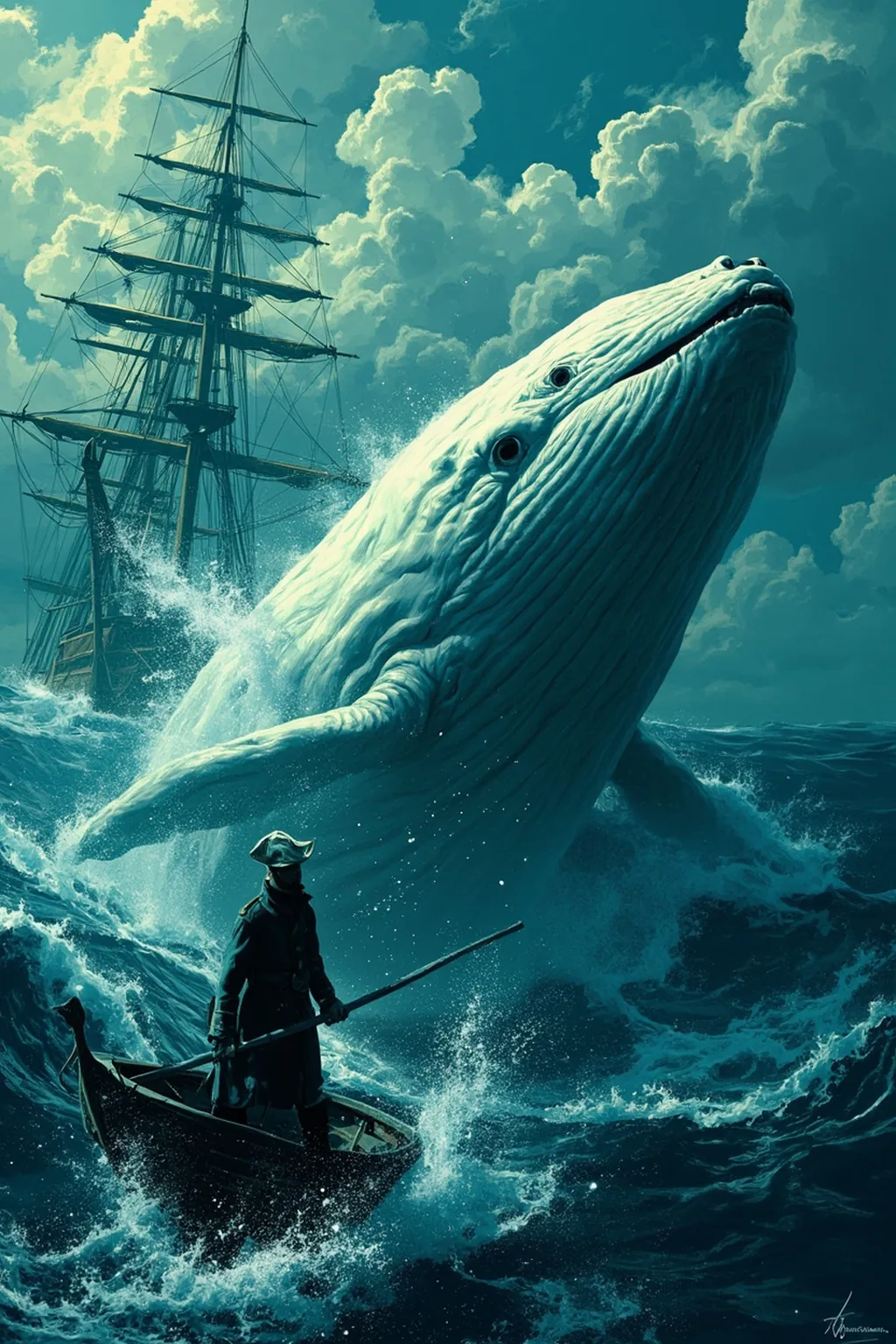
第十四章 Nantucket.
This chapter describes the narrator’s arrival at Nantucket after a fine run, introducing the island through a series of playful anecdotes and contrasts that establish its unique character as a remote, sandy outpost distinctly different from places like Illinois.
Nantucket Geography and Local Anecdotes
Nantucket occupies a solitary position off the shore, described as more lonely than the Eddystone lighthouse. The island is characterized as a mere hillock and elbow of sand with no background, composed almost entirely of beach. The narrator employs humorous exaggeration to emphasize the abundance of sand, claiming there is more than would be used in twenty years as blotting paper. Various whimsical anecdotes follow: residents must plant weeds since they don’t grow naturally, import Canada thistles, send beyond seas for a spile to repair oil casks, and treasure pieces of wood like relics of the true cross in Rome. Additional playful details include planting toadstools for shade, one blade of grass constituting an oasis, wearing quicksand shoes like Laplander snow-shoes, and finding small clams adhering to furniture as they would to sea turtles. These extravaganzas serve to illustrate that Nantucket is fundamentally different from the prairie states.
Indigenous Settlement Legend
The chapter presents a traditional story explaining how the island was first settled by Native Americans. According to the legend, an eagle once swooped down upon the New England coast and carried off an infant Indian in its talons. The parents watched with loud lament as their child was borne out of sight over the wide waters, and they resolved to follow in the same direction. After a perilous passage in their canoes, they discovered the island and found an empty ivory casket—the poor little Indian’s skeleton. This legend provides a mythological foundation for the island’s human history.
The original text of this work is in the public domain. This page focuses on a guided summary article, reading notes, selected quotes, and visual learning materials for educational purposes.