Maritime Livelihood Progression
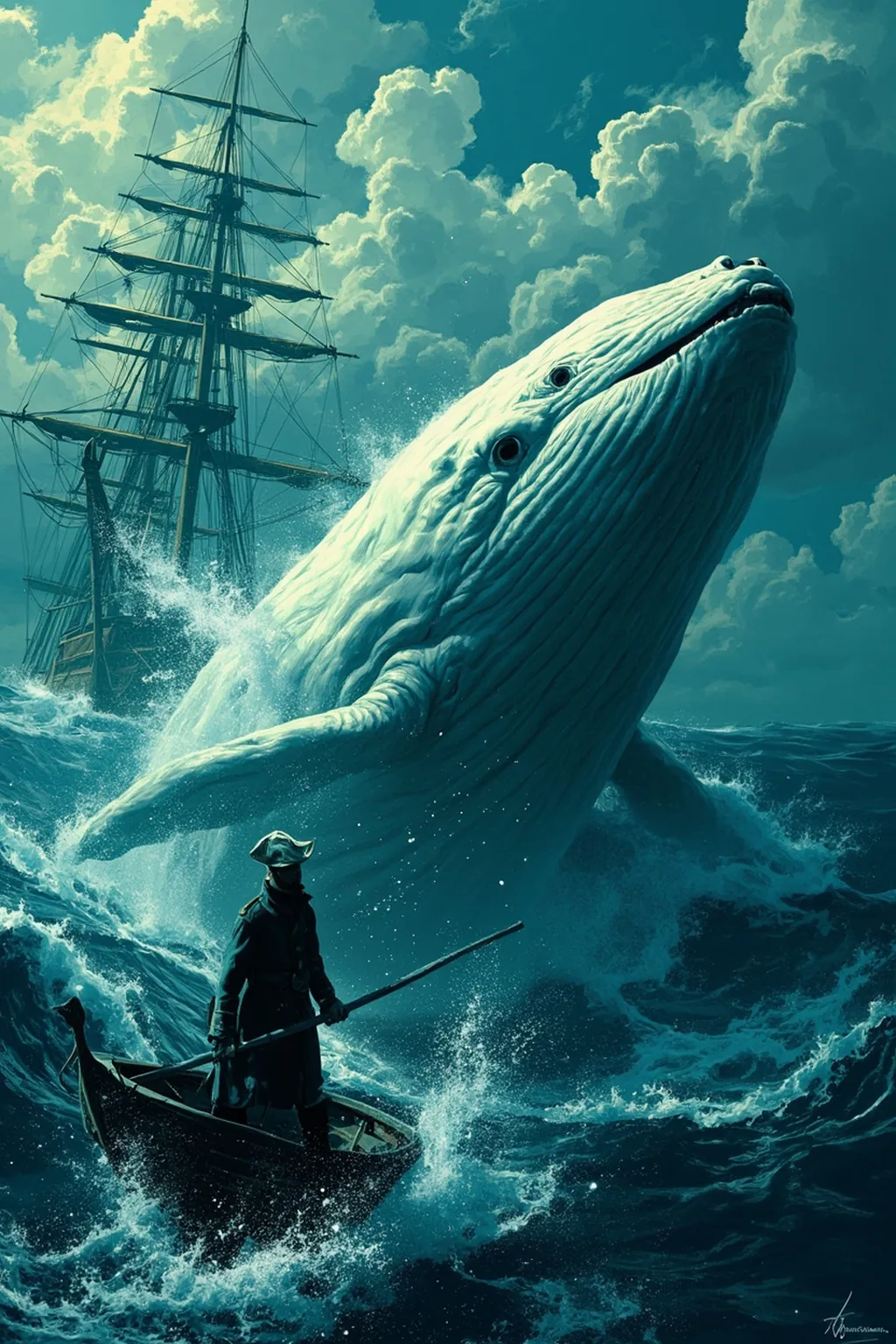
The narrative traces the evolution of Nantucket’s economy from modest beginnings to industrial-scale whaling. The inhabitants, born on a beach, naturally took to the sea for a livelihood. They began by catching crabs and quohogs in the sand, then grew bolder and waded out with nets for mackerel. With increasing experience, they pushed off in boats to capture cod. Eventually, they launched a navy of great ships to explore the watery world, creating an uninterrupted belt of circumnavigations, peeking in at Behring’s Straits, and declaring everlasting war against the mightiest animated mass that survived the flood—the monstrous and mountainous sperm whale. This progression illustrates how the Nantucketers developed from simple shore-based fishing to becoming masters of the whale fishery.
Nantucketers’ Sea-Dwelling Identity
The chapter celebrates the unique relationship between Nantucketers and the ocean. Described as naked sea hermits, they issued from their ant-hill in the sea to overrun and conquer the watery world like Alexanders, parceling out the Atlantic, Pacific, and Indian oceans among themselves. The narrator emphasizes that the sea belongs to the Nantucketer as empires belong to Emperors, with other seamen having only a right of way through it. Merchant ships are compared to extension bridges and armed ones to floating forts, while even pirates merely plunder other ships without drawing sustenance from the bottomless deep. The Nantucketer alone resides and riots on the sea, going down to it in ships as his special plantation. He lives on the sea as prairie cocks live in the prairie, hides among waves like chamois hunters climbing the Alps, and knows the land so little that upon returning, it smells like another world. Like the landless gull rocked to sleep between billows, the Nantucketer at nightfall furls his sails and rests while walruses and whales rush beneath his pillow.
The original text of this work is in the public domain. This page focuses on a guided summary article, reading notes, selected quotes, and visual learning materials for educational purposes.