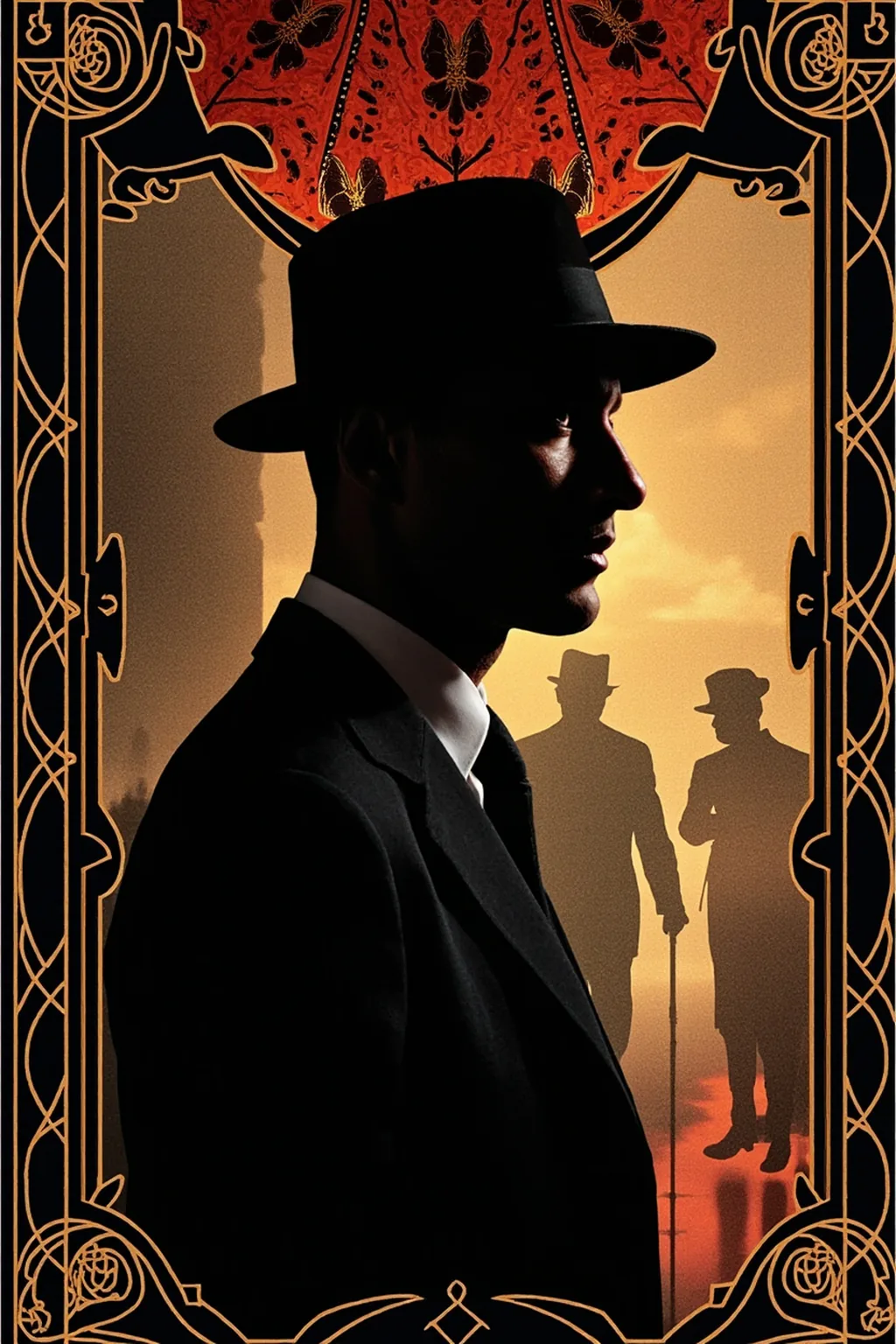
Nick Carraway, a Midwesterner bondsman, rents a cottage in West Egg next to the mysterious millionaire Jay Gatsby. Drawn into the world of his cousin Daisy and her brutish husband Tom, Nick becomes the confidant for Gatsby's singular, five-year obsession: to win back Daisy and recreate a perfect past, a dream that ultimately collides with reality and ends in violence.
With Tom’s exposure of his persona still fresh, Gatsby began to speak. He confessed that his love for Daisy had been the true engine of his ambition, the reason he had built a new identity from nothing. She represented a world of grace and security he had never known. He had let her believe he belonged to her stratum, that he could provide stability, though he had only a uniform and a dream. He had meant to seize a moment, but instead had bound himself to a consuming quest.
He then described the precise instant that dream had ignited. As a young officer in Louisville, penniless and adrift, he had first seen Daisy Fay. She was the golden girl, her voice and manner steeped in the casual assurance of wealth. Her home awed him not merely for its beauty but for the effortless way she inhabited it, a place alive with lingering echoes of romance and the presence of other admirers. He had been captivated by the very breathlessness of her existence, by the mystery of upstairs bedrooms and the freshness of a life untouched by want. In that instant, he resolved to have her, and to have her he would have to become someone else entirely.
The war separated them. Gatsby returned from France a decorated major, only to be diverted to Oxford by administrative confusion. Daisy’s letters grew strained, filled with nervous desperation. She was young, caught in a whirl of social engagements and orchestrated pleasures, yet something within her cried out for a definitive shape. That shape arrived with Tom Buchanan, whose solid, old-money presence offered an immediate and unquestionable answer. Gatsby, still overseas, received the news of her marriage while in England. He returned to Louisville after the war, walking the streets they had known, haunting the places of their past, feeling with each step that he was losing the freshest, brightest part of her forever.
Dawn broke, painting the house in shifting greys and golds. Gatsby turned from the window, insisting Daisy had never loved Tom, that she had merely been frightened by Tom’s brutal accusations. Nick listened to the futile rationalizations. The gardener appeared, proposing to drain the pool before leaves clogged the pipes. Gatsby countermanded the order abruptly; he had never used the pool that summer, but now he intended to. Nick delayed his departure, missing train after train, unable to abandon the hollow figure before him. When he finally left, he called back across the lawn that the Buchanans and their circle were a rotten crowd, that Gatsby was worth all of them combined. Gatsby’s face broke into a radiant, understanding smile, as if this single validation had made everything worthwhile.
The original text of this work is in the public domain. This page focuses on a guided summary article, reading notes, selected quotes, and visual learning materials for educational purposes.