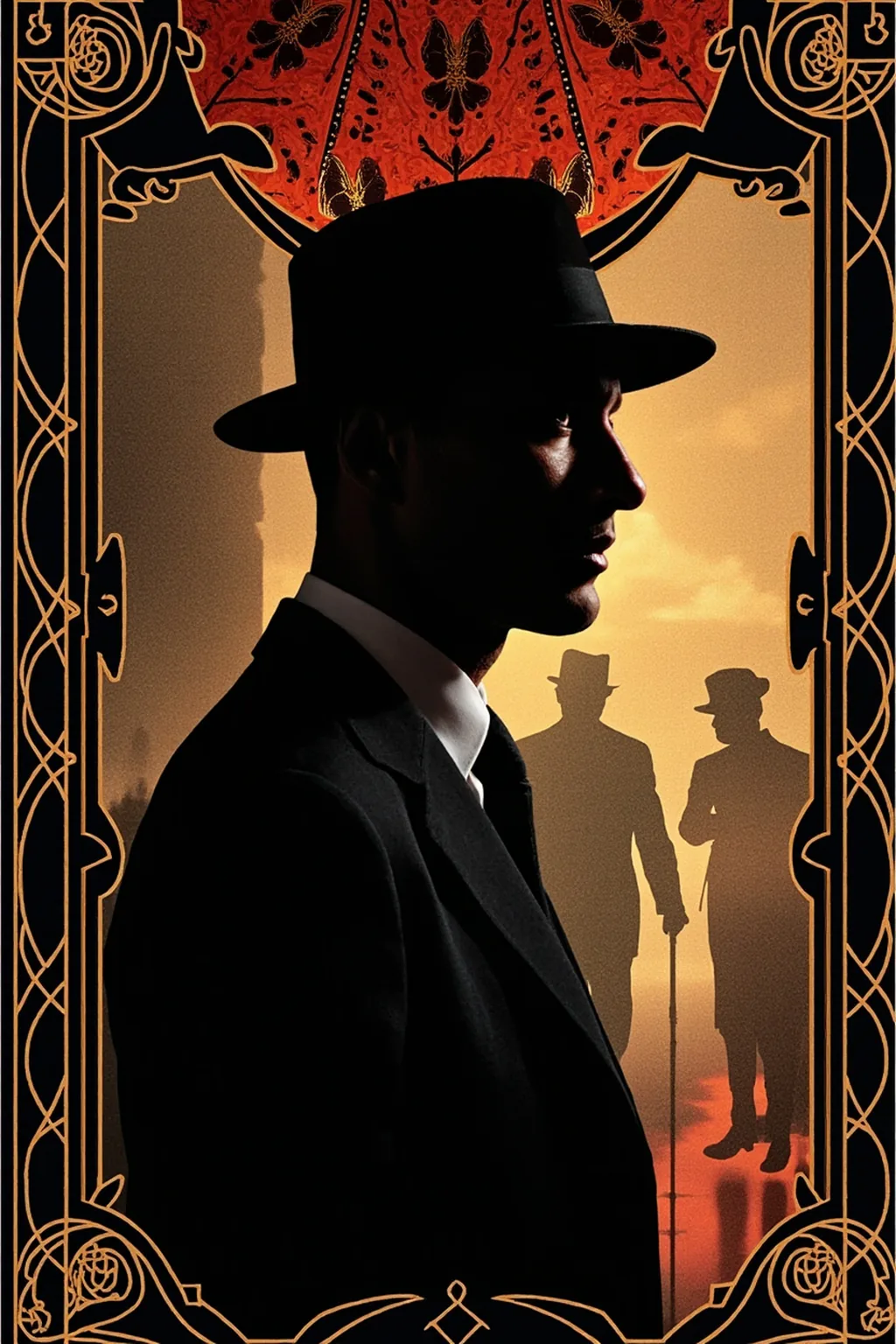
Nick Carraway, a Midwesterner bondsman, rents a cottage in West Egg next to the mysterious millionaire Jay Gatsby. Drawn into the world of his cousin Daisy and her brutish husband Tom, Nick becomes the confidant for Gatsby's singular, five-year obsession: to win back Daisy and recreate a perfect past, a dream that ultimately collides with reality and ends in violence.
In the city, Nick struggled to focus on work. Jordan Baker called, her voice unusually harsh; she had left Daisy’s house. Their conversation died into a tense silence. Nick tried repeatedly to reach Gatsby, only to be told the line was reserved for a long-distance call from Detroit.
While Gatsby waited, George Wilson sat in the gloom of his garage office, rocking back and forth. The night had bleached his grief into a terrible certainty. He had found an expensive dog leash in Myrtle’s drawer—a thing of braided silver she could not have afforded. It was proof of her secret life, of the lover who had driven the yellow car. His eyes, glazed with madness, fixed on the looming advertisement of Doctor T. J. Eckleburg. Those pale, enormous eyes became, in his unraveling mind, the eyes of God, witnessing every sin. He pressed his face to the window, muttering that God knew what she had done. At dawn, he rose and walked out, determined. He moved from garage to garage, asking about a yellow car, until someone gave him a name. By mid-afternoon, he was in West Egg, asking for directions to Gatsby’s mansion.
At two o’clock, Gatsby changed into his bathing suit. He instructed the butler to bring any telephone messages to him at the pool. He took an air mattress, had the chauffeur inflate it, and then walked alone toward the water, disappearing among the yellowing trees. He swam out into the chill, waiting. The dream that had sustained him had finally evaporated, leaving only a hollow ache. The world around him felt solid yet unreal, a place where poor ghosts drifted on dreams as thin as air.
The chauffeur, one of Wolfshiem’s men, heard the shots but did not register their meaning. Nick arrived from the station and rushed up the steps, his alarm sending the household spilling toward the pool. The mattress floated on the water’s surface, moving in a slow, irregular drift, a faint red stain spreading from its burden. As they lifted Gatsby from the pool, the gardener called out from the grass. Wilson’s body lay there, the revolver nearby. The holocaust was complete—two lives extinguished, one by a dream that died, the other by a vengeance that could not restore what was lost.
The double death at Gatsby’s pool ended the personal drama, but immediately transformed into a grotesque public spectacle as police and press swarmed his house, turning tragedy into
The original text of this work is in the public domain. This page focuses on a guided summary article, reading notes, selected quotes, and visual learning materials for educational purposes.