Rosamond Sings
Rosamond is called upon to perform. Her piano playing, trained by an excellent provincial musician at Mrs. Lemon’s school, is rendered with the executant’s instinct and produces the startling impression of a hidden soul flowing from her fingers; Lydgate is deeply moved and sits silent rather than offering easy compliments. Her singing is well trained and sweet, though she offers the popular songs of her day rather than purely classical repertoire. The family watches with delight—her father glowing in others’ admiration, her mother beating time with her youngest child’s hand on her lap, and even sceptical Fred listening in perfect allegiance. Lydgate reflects that the Vincys embody a readiness to enjoy life as a merry lot, exceptional in a county town where Evangelical suspicion lingers over surviving amusements.
Mr. Farebrother Joins the Party
Before the music ends, Mr. Farebrother arrives: a handsome but small, threadbare man of about forty whose brilliance resides entirely in his quick gray eyes. He dispenses lively, affectionate chatter, claims from Lydgate the fulfilment of a promise to visit and see his beetles, and turns eagerly to the whist-tables, rubbing his hands and declaring they must now be serious. Lydgate observes that the clergyman whom Bulstrode finds so objectionable has found a comfortable haven in this unlearned but genial household, though he himself has no intention of making such visits a habit, considering them a wretched waste of his evenings. He plans, after a little more conversation with Rosamond, to excuse himself and depart.
CHAPITRE XVI.
Chapter XVI. presents the aftermath of Lydgate’s first evening at the Vincys’, contrasting his inward scientific preoccupations with Rosamond’s inward romantic preoccupations. After a brief but charged conversation with Rosamond and an observant encounter with Mr. Farebrother at the card table, Lydgate walks home pondering his professional future and his views on marriage. The chapter closes by shifting perspective to Rosamond, whose idle, ruminating mind has already cast Lydgate as the hero of a preconceived romance rooted in his good birth and gentlemanly distinction.
A Conversation with Rosamond
A Conversation with Rosamond At the Vincy gathering, Rosamond warns Lydgate that Middlemarch will disappoint him after the more cosmopolitan society he is used to. Lydgate replies with easy good humor, saying he has already found charms in the town closer than the scenic rides toward Tipton and Lowick. The exchange turns to dancing, with Rosamond inquiring whether a clever man might condescend to it and Lydgate making a half-flirtatious reply that she receives with a deprecatory laugh. The brief, teasing dialogue establishes the spark between them without any declaration.
Watching Mr. Farebrother
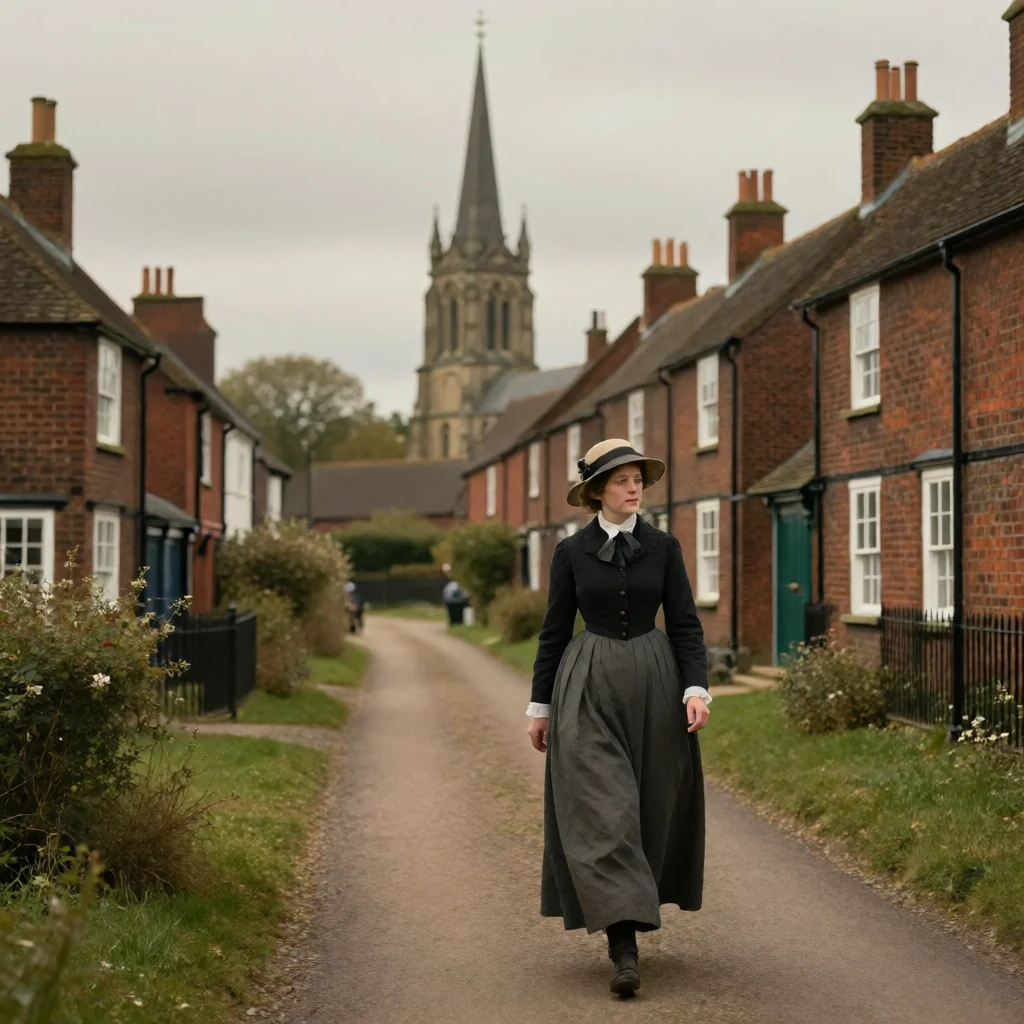
Watching Mr. Farebrother Before leaving, Lydgate is drawn to observe Mr. Farebrother’s masterful card play and the striking blend of shrewdness and mildness in his face. He notices that Farebrother drinks only water while winning. On his walk past St. Botolph’s—the oldest church in Middlemarch, whose vicarage is worth barely four hundred a year—Lydgate reflects that many things would be simpler if Bulstrode proved generally justifiable, and resolves to use whatever brains the town offers.
Lydgate’s Thoughts on Love and Marriage
Lydgate’s Thoughts on Love and Marriage Although he thinks of Rosamond and her music, Lydgate registers no agitation and feels no new current setting into his life. He intends not to marry for several years and is not ready to entertain love for a girl he merely admires. He does, however, dwell at length on the kind of wife he would someday want: a creature with polished, refined, docile intelligence, enshrined in a body expressive of that womanhood—someone whose very beauty, moulded for pure and delicate joys, is by nature virtuous. He believes himself amply informed about love and marriage through literature and male conversation.
The Pathology of Fever
The Pathology of Fever With marriage postponed, Lydgate turns to what he calls his more pressing business: Louis’ new book on Fever. He had known Louis in Paris and had pursued anatomical demonstrations to distinguish typhus from typhoid. He reads deep into the smallest hour, applying a more testing vision of details and relations to this pathological study than he would ever dream of applying to the complexities of love.
The original text of this work is in the public domain. This page focuses on a guided summary article, reading notes, selected quotes, and visual learning materials for educational purposes.