Scientific Imagination
Scientific Imagination Lydgate distinguishes genuine imaginative work from the cheap inventions of ignorance. He scorns profuse indifferent drawing, Luciferian spectaclure, and exaggerated wantonness, valuing instead the disciplined power that combines and constructs with a clear eye for probabilities and full obedience to knowledge. What captivates him is the arduous invention that is the eye of research itself—provisionally framing its object and correcting it toward ever more exact relation—penetrating the minute, invisible processes that prepare human misery and joy.
Lydgate’s Professional Ambitions
Lydgate’s Professional Ambitions Stretched before the dying embers, Lydgate congratulates himself on having escaped the blinkers of dull draught-horse work. He prizes a profession that calls forth the highest intellectual strain while keeping him in warm contact with his neighbors, and finds medicine uniquely suited to combining an exclusive scientific life with parish-level fellowship. He regards Farebrother as an anomaly among clergymen for managing a similar balance. His ardor is presently absorbed in work and in the ambition to make his life a recognized factor in the better life of mankind, like other heroes of science who began in obscure country practice.
Rosamond’s Preconceived Romance
Rosamond’s Preconceived Romance Rosamond has registered every look and word from Lydgate and estimated them as the opening incidents of a preconceived romance whose climax she has already foreseen. For her, Lydgate’s significance lies less in his inward life than in his good birth, which distinguishes him from Middlemarch’s other admirers and presents marriage as a path of rising in rank toward a more celestial social condition. Subtle in discerning the faintest aroma of rank, she had envied the plainly dressed Miss Brookes when she saw them seated among the aristocracy at the county assizes. The narrator compares the thrill of imagining a man of family to the influence of red cloth and epaulets, noting that our passions share a common table of notions.
Rosamond’s Accomplishments and Admirers
Rosamond’s Accomplishments and Admirers Rosamond, though never doing anything disagreeable, is industrious and constantly active—sketching landscapes and portraits, practising her music, and holding herself to her own exacting standard of a perfect lady, sustained by an inner and sometimes an outer audience. She finds time for the best and second-best novels and knows much poetry by heart, her favorite being “Lalla Rookh.” Elderly visitors pronounce her the best girl in the world, rejected suitors plan to try again in a town with few coming rivals, Mrs. Plymdale thinks her accomplishments pitched ridiculously high for a wife, and her aunt Bulstrode wishes her a more serious turn of mind and a husband whose wealth matches her habits.
CHAPITRE XVII.
Lydgate calls upon the Reverend Camden Farebrother at the old stone parsonage overlooking the church, where he is received by three elderly ladies—Mrs. Farebrother, her white-haired and decisive mother; Miss Winifred, her subdued elder sister; and the tiny, frilled Miss Noble, who secretly saves sugar from her tea to give to poor children. Mrs. Farebrother dominates the conversation with her rigid moral certainties and proud defense of her son’s preaching abilities, while the Vicar himself appears gentler and more reserved at home than elsewhere, though he readily acknowledges his own limitations. In the Vicar’s spare study, the two men discuss Lydgate’s professional ambitions, entomology, and the local ecclesiastical politics surrounding Bulstrode and the hospital, with Farebrother revealing both his genuine affection for his hobbies and his awareness that he occupies a position rivaled by others.
Opening Folk Rhyme of the Promise Maid
The chapter opens with a brief folk rhyme: “Promise was a pretty maid, / But being poor she died unwed.” This poignant verse establishes themes of poverty, unfulfilled potential, and social constraint that resonate throughout the chapter.
Lydgate Visits the Farebrother Parsonage
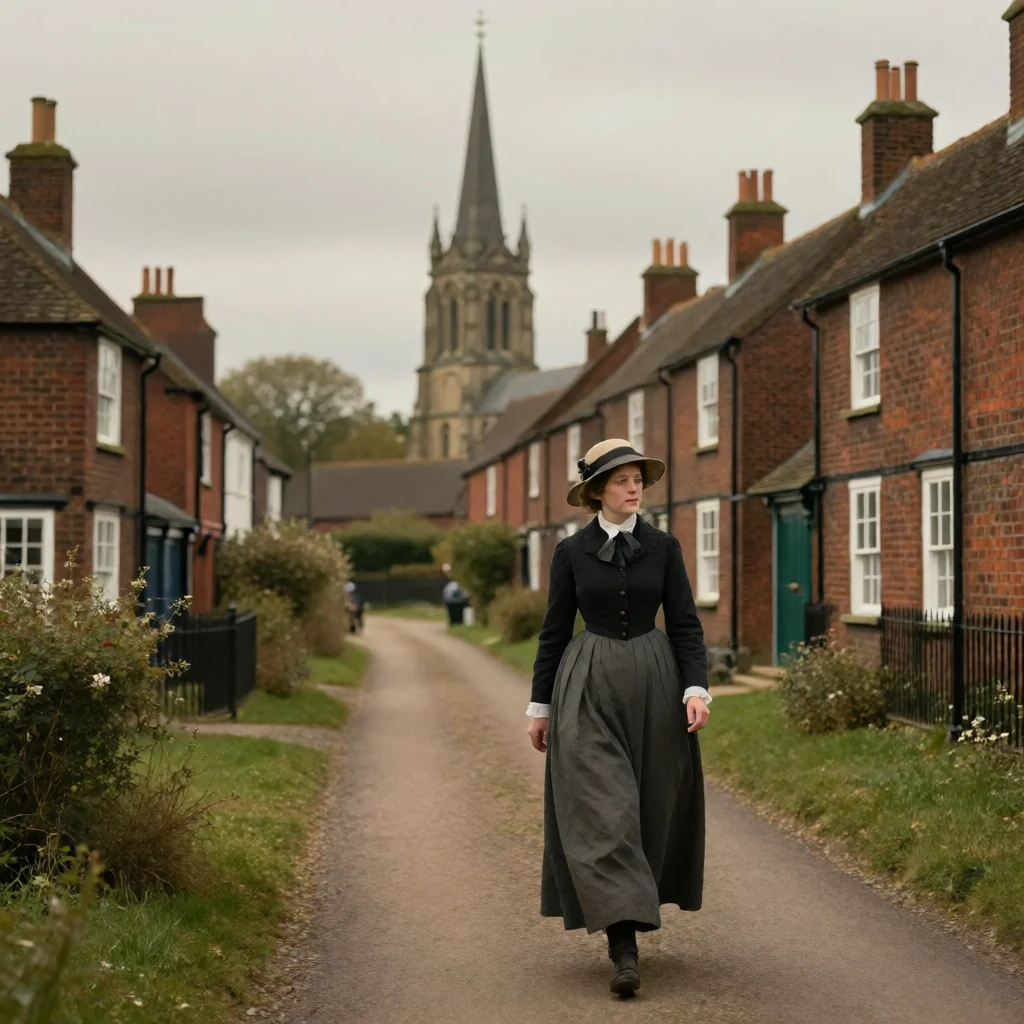
Lydgate visits the Rev. Camden Farebrother at his parsonage the next evening. The old stone parsonage matches the venerable church it faces. The interior contains furniture from Mr. Farebrother’s father and grandfather’s era—white painted chairs with gilding and wreaths, lingering red silk damask, engraved portraits of celebrated lawyers, old pier-glasses, satin-wood tables, and sofas resembling “a prolongation of uneasy chairs,” all set against dark wainscot.
The original text of this work is in the public domain. This page focuses on a guided summary article, reading notes, selected quotes, and visual learning materials for educational purposes.