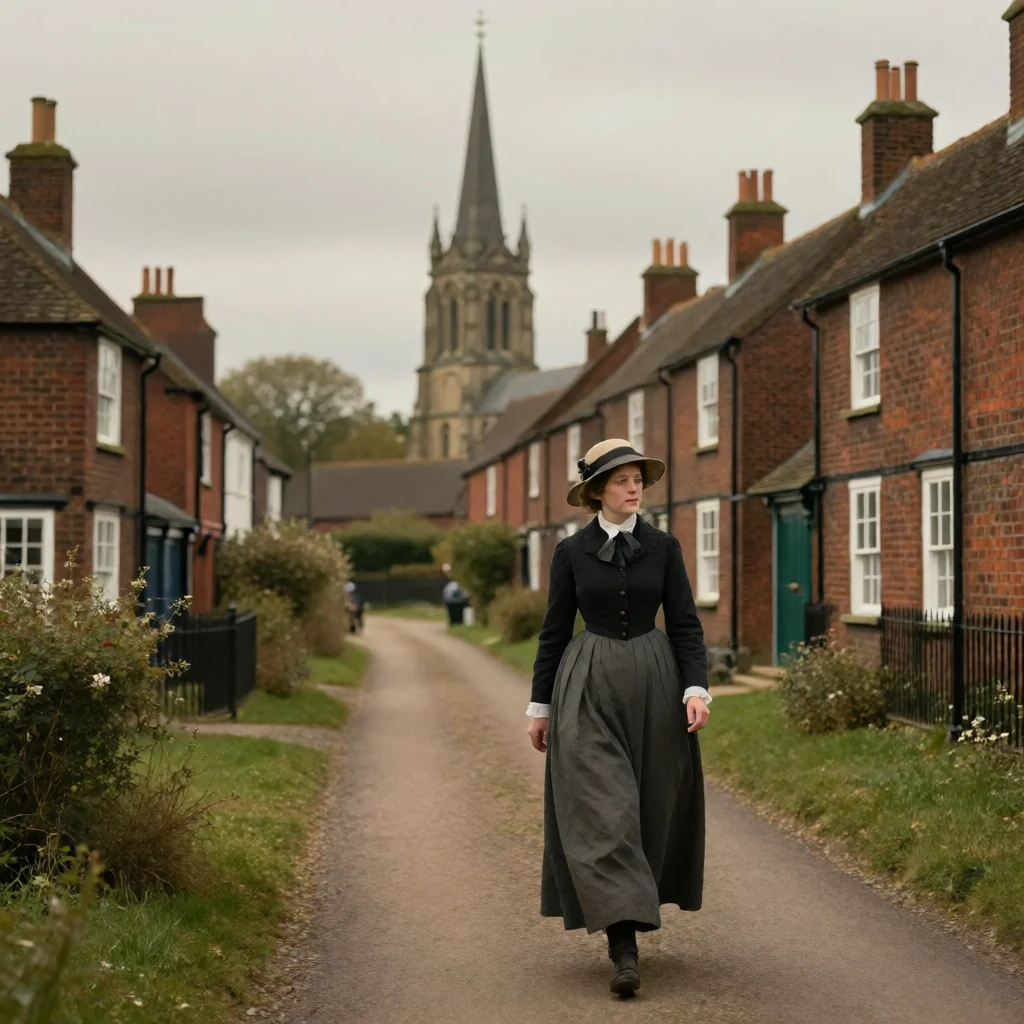
Dorothea’s Indignant Clarification of Her Request
Dorothea responds with indignant resentment, clarifying that she only asked him to pursue work he had repeatedly mentioned planning to publish, and never intended to criticize his process or question his judgment. She stresses that her only goal was to be of use to him. The couple is left shocked by their mutual display of anger, a particularly distressing experience given that they are on their wedding trip, an outing explicitly meant to isolate them as each other’s entire world.
Tense Post-Argument Outing to the Vatican
Dorothea refuses to cancel their planned outing to the Vatican to avoid appearing to hold onto anger, as her ideal is to offer tenderness rather than demand justice. The pair travels to the Vatican together in stiff, awkward silence, struggling to make conversation and moving through the site in a strained, distant manner, with even small, mundane interactions feeling fraught.
Vatican Encounter with Naumann and Ladislaw
At the Vatican, Dorothea first draws the attention of the artist Naumann when she is still with Casaubon; Naumann is there to meet Will Ladislaw to settle a bet about the origins of a puzzling medieval-style sculpture. After the two men examine the figure and debate its identity, they part ways, with Ladislaw lingering behind while Naumann heads to the Hall of Statues, where he spots Dorothea again in a brooding, abstracted state.
Dorothea’s Brooding Reflection on Her Ideals
Wandering the Vatican museums listlessly, Dorothea is barely aware of the art and sunlight around her, lost in thought about the gap between her ideal of a life of joyful, devoted partnership with Casaubon at Lowick and the tense, confusing reality of their early marriage. She returns to her core belief in striving for the fullest truth and greatest possible good, and senses that there is a path forward for her beyond the anger and despondency she currently feels.
CHAPITRE XXI.
The chapter opens with an epigraph from Chaucer about woman’s plain speech, and returns to Dorothea sobbing alone after a troubling morning. This moment of solitude is interrupted by a knock at the door.
Dorothea’s Solitary Sorrow
Dorothea’s Solitary Sorrow
After ensuring she is alone, Dorothea gives way to tears. Her sorrow stems from the morning’s tensions with her husband, though the specific cause remains implicit. She hastily dries her eyes upon hearing the knock at her door.
Tantripp Delivers Will Ladislaw’s Card
Tantripp Delivers Will Ladislaw’s Card
Tantripp enters with a calling card and announces that a gentleman waits in the lobby—a relation of Mr. Casaubon who insisted on seeing only Mrs. Casaubon. Dorothea agrees to receive him without hesitation.
Dorothea Agrees to See Will Ladislaw
Dorothea Agrees to See Will Ladislaw
She instructs Tantripp to show the visitor into the salon. Her decision is driven by her recollection of Will Ladislaw’s earlier visit to Lowick and her awareness of Mr. Casaubon’s generosity toward him. She feels the visit offers an opportunity for “active sympathy” and a chance to be reminded of her husband’s goodness.
First Meeting of Dorothea and Will Ladislaw
First Meeting of Dorothea and Will Ladislaw
Signs of weeping give Dorothea’s face a youthful, appealing quality as she meets Will with a warm smile, extending her hand. Will, though older, appears younger in that moment—flushing with shyness unlike his usual easy manner. He explains he saw her at the Vatican Museum that morning and sought out their address to pay his respects. Dorothea invites him to sit and suggests he leave his address so Mr. Casaubon can write to him.
Dorothea and Will Discuss Art and Career Paths
Dorothea and Will Discuss Art and Career Paths
Will proposes calling again when Mr. Casaubon is home, and Dorothea explains her husband spends his days at the Vatican Library. She mentions he will likely want Will to dine with them. Will reflects privately on the contrast between Dorothea and her husband. They discuss art—Dorothea confesses she feels ignorant about painting, unable to perceive beauty that critics admire. Will explains art appreciation must be learned but admits he has no intention of becoming a painter. Dorothea asks directly if he means to make painting his profession, and Will replies he has deliberately chosen against it, finding the studio-bound life too narrow.
The original text of this work is in the public domain. This page focuses on a guided summary article, reading notes, selected quotes, and visual learning materials for educational purposes.